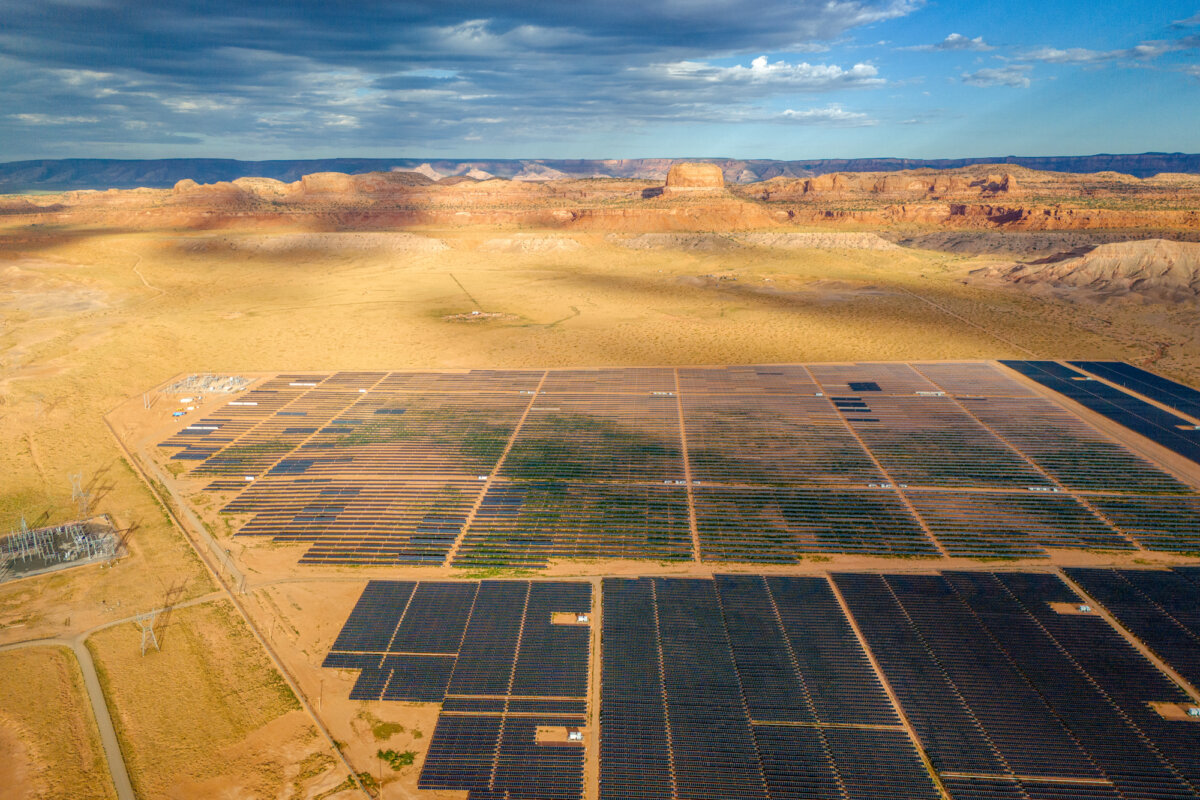

The Trump administration’s proposed budget for the coming fiscal year pulls the plug on federal funding for solar and wind development.
It cuts energy efficiency programs by nearly 70 percent, eliminates state and local weatherization subsidies, and continues to “claw back” billions in congressional allocations for renewable energy projects.
Under the president’s “Energy Dominance Agenda,” the administration is boosting federal funding for fossil fuel production, and nuclear and geothermal power are subsidiary focuses.
Initiatives include the proposed creation of an Office of Baseload Power, which would have a first-year $3.5 billion budget to subsidize coal and natural gas expansions for electricity generation.
The Trump administration incorporated these priorities in the spending plans for the Department of Energy, the Department of the Interior, and the Environmental Protection Agency, totaling more than $74 billion.
If the debates that accompanied their April and May introductions before congressional committees are prognostic, then the budget battles that will unfold this summer in Congress will define party lines at the ballot box in fall’s midterm elections.
With residential electricity costs nationwide rising and projected to continue surging in tandem with demand, largely attributed to data centers and artificial intelligence computing, Republicans and Democrats are at odds about what policies have aggravated energy inflation and which party is offering the better plan to affordably power a 21st-century economy.
Democrats insist that Trump administration policies are targeting renewable energies just as solar and wind developments spurred by investments induced by 2021’s Bipartisan Infrastructure Law, 2022’s CHIPS and Science Act, and the Inflation Reduction Act are emerging to boost much-needed grid capacity.
According to the Lawrence Berkeley National Laboratory, wind and solar are the largest generators of electricity being added to the grid nationwide.
A University of Chicago analysis reads, “At the end of 2025 the queue for renewable, solar, wind and storage, was over six times larger than that for gas.”
Republicans in spring hearings on proposed budgets presented by Energy Secretary Chris Wright, Interior Secretary Doug Burgum, and Environmental Protection Agency Administrator Lee Zeldin say renewable energies are weather-reliant, are “intermittent,” and require utilities to retain “baseload” backup provided by always-on options such as natural gas, coal, and nuclear generation.
Under that framework, they argue, utility customers are forced to finance new infrastructure.
The best way to expand the grid with affordable energies, they say, is to ditch renewables—or, at least, federal subsidies for them—and double down on the nation’s ample natural gas and coal resources.
Over the past 15 years, residential electricity customers, industrial developers, and investors have been caught between pendulum swings from all-of-the-above energy policies of the first 15 years of the 21st century to President Joe Biden’s green energy edicts and President Donald Trump’s fossil fuel-fired “energy dominance” policies.
All have paid the freight for sharp reversals in federal direction and commitments with successive administrations.
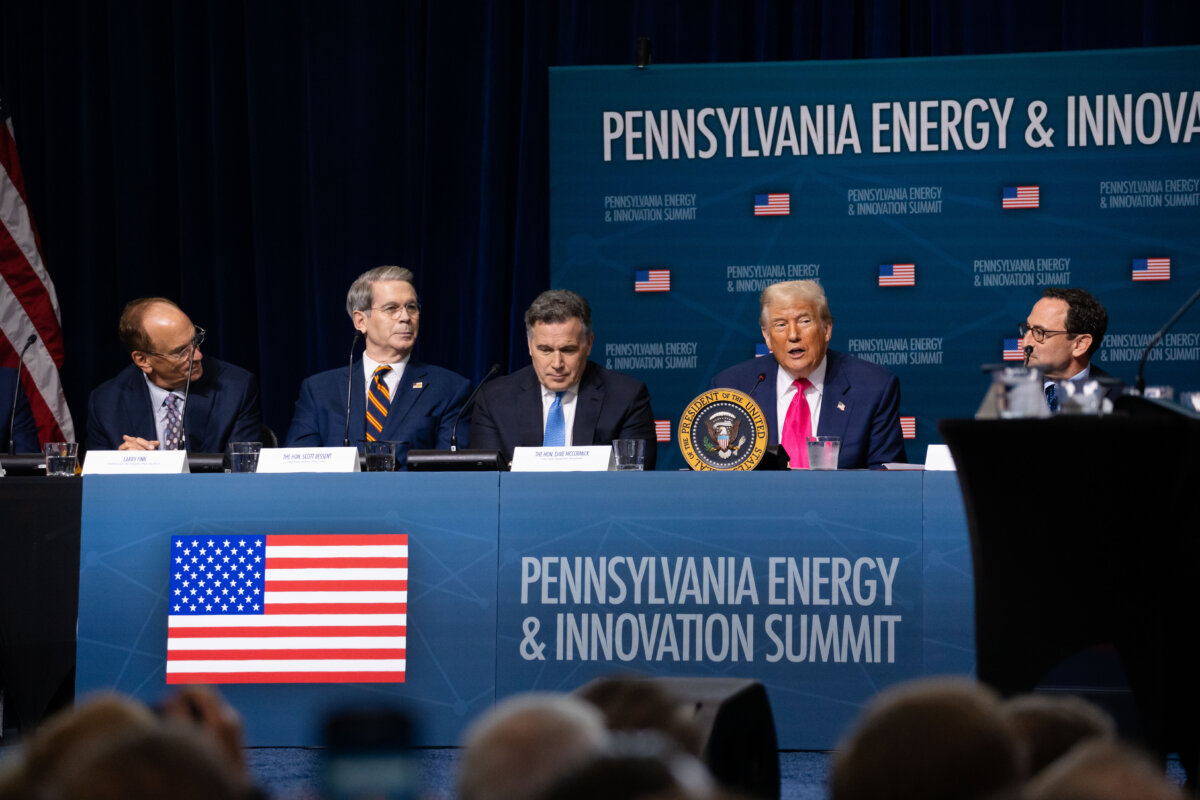
Administration Actions
Biden administration Energy Secretary Jennifer Granholm told a House committee on May 1, 2024, that, under Biden’s now-nixed 30-percent tax credit for “clean energy” development, nearly $650 billion in private capital had been invested, 600 projects launched, and more than 400,000 jobs created in the 18 months since Biden signed the Bipartisan Infrastructure Law and the Inflation Reduction Act.
Many of the Biden-era allocations were suspended under the One Big Beautiful Bill Act signed into law by Trump in July 2025.
The following October, the administration “clawed back” $8 billion in allocations for 223 renewable energy projects.
Shortly after the bill’s July adoption, the president issued his “Unleashing American Energy” executive order, which requires that “all decisions, actions, and routine permits regarding wind and solar energy projects undergo an elevated three-tiered review, culminating in personal sign-off by the interior secretary.”
A February 2025 National Economic Research Associates study for the Corporate Energy Buyers Association, which represents $40 trillion in collective market value, calculated that repealing the Inflation Reduction Act credits “would raise average U.S. residential electricity prices by nearly 7 percent by 2026, equating to an average yearly increase of more than $110 for the average American residential customer.”
BloombergNEF calculated in August 2025 that investments in U.S. renewable energies had declined by 36 percent in response to the “changing [renewable energies] landscape” during the first six months of 2025.
Among 16 executive actions Trump signed on Jan. 20, 2025, was an order indefinitely pausing new offshore leases and permit reviews for wind projects, and repealing incentives for wind projects.
In December 2025, the Interior Department issued 90-day stop-work orders for five wind projects off New York, Massachusetts, Rhode Island, Connecticut, and Virginia.
The administration said it was acting in response to Pentagon concerns that rotating turbine blades and reflective towers “clutter” military radars, potentially obscuring targets and generating false signals.
States and owners sued. The orders were withdrawn. Since then, two developers have pulled plans to build offshore wind projects and, instead, have invested in domestic oil and gas projects.
Wright has issued five 2025 emergency orders under the Federal Power Act mandating that decades-old coal-fired generators in Michigan, Washington, Indiana, and Colorado that were slated to be shut down by utilities remain operable.
This would ensure that regional transmission electrical grids have baseload capacity to provide power during extreme weather, the orders say. States are challenging those orders.
In January, a judge for the U.S. District Court for the District of Columbia ruled that the administration’s cancellation of more than $7.5 billion in Inflation Reduction Act grants violated the Fifth Amendment’s equal protection guarantee and were “vindictively” targeted at states that voted for Vice President Kamala Harris, a Democrat, in the 2024 presidential election.
In April, a district judge in Massachusetts issued a preliminary injunction pausing Interior Department directives restricting wind and solar developments, determining that the administration exceeded federal authority and failed to provide a valid legal rationale for suspending permit reviews.
Nevertheless, the administration’s proposed fiscal year 2027 budget rescinds up to $15.2 billion more in Biden-era allocations approved through the mid-2030s.
In addition, the Department of Energy’s request cancels $8.8 billion in home energy rebates for weatherization upgrades over the next decade.
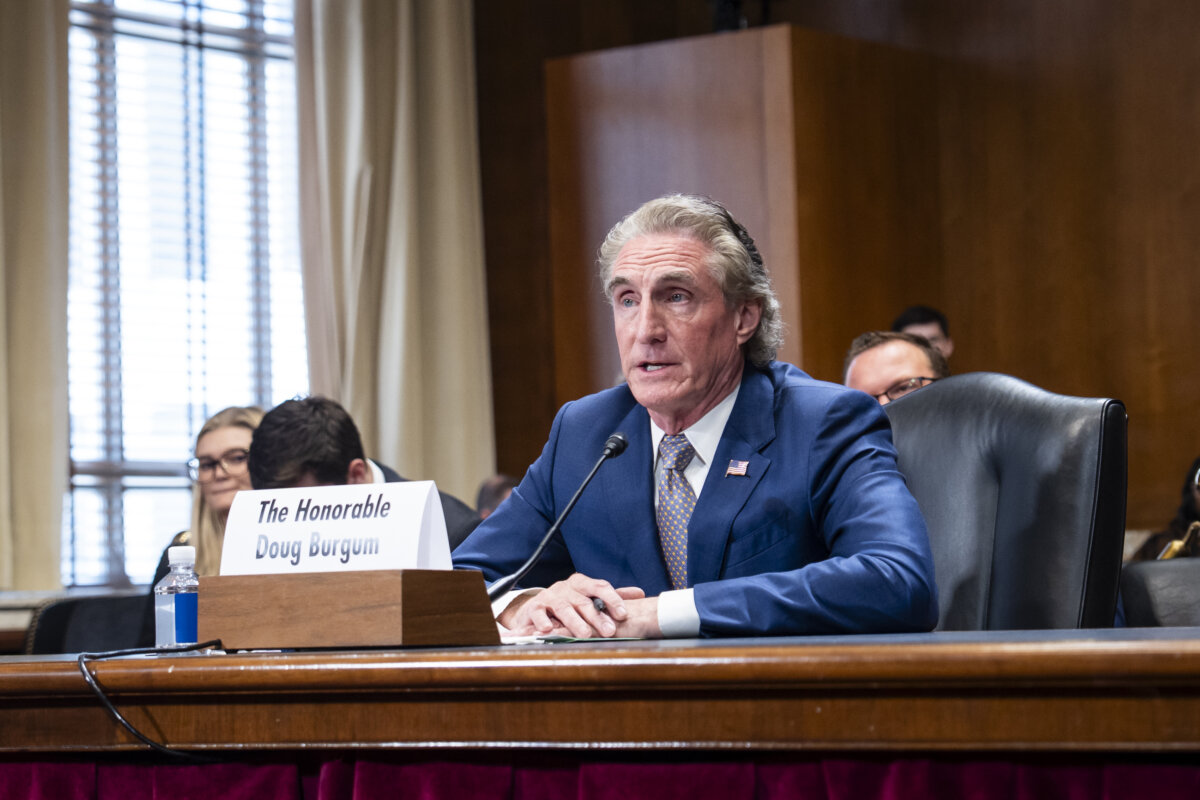
Rallying For Renewables Revival
Democrats in April and May budget hearings maintain that these actions don’t make sense and are among reasons why residential electricity bills are spiking and efforts to grow domestic manufacturing and other industries are stalling.
They point to U.S. Energy Information Administration electricity projections that renewable energies will be less expensive on a utility-wide scale than other generation sources by 2030—solar at $58 per megawatt hour, wind at $56, and combined-cycle turbine natural gas at $77.
A 2025 study by Lazard, the world’s largest independent investment bank, said that “wind and solar are the clear cheapest choice when accounting for capital, fuel operations, and maintenance costs.”
During a May 13 House Natural Resources Committee hearing on the Interior Department’s proposed budget, Rep. Dave Min (D-Calif.) said that while electricity rates are “at a 10-year-high,” the president’s July 2025 order requiring wind and solar permits to undergo “an elevated three-tiered review” has created a nationwide bottleneck in grid queues.
This has prevented utilities from adding nearly 50 gigawatts of electricity–enough to power 50 million homes–as demand spikes.
Rep. Susie Lee (D-Nev.) said 93 percent of “new power generation on queues waiting to go online in Nevada is solar and wind,” but despite Republican Gov. Joe Lombardo’s support—and his assurances from Trump in December that the permits would advance—they remain in limbo.
Burgum said the permits are in stasis until appeals of the District of Columbia, Massachusetts, and other rulings are resolved, repeatedly disputing analyses that renewable energies are less expensive than fossil fuels since those costs don’t include the base load backup the intermittent sources require.
During an April 21 Senate Energy and Natural Resources Committee hearing, Sen. Martin Heinrich (D-N.M.) repeated references to the $100 million the oil industry contributed to Trump’s 2024 campaign, telling Wright, “It has become abundantly clear that politics are indeed calling the shots in your Department of Energy.”
Wright, like Burgum—who as governor of North Dakota touted his state’s wind energy industry—said he’s not opposed to renewable energies but objects to federal subsidies for intermittent electrical generation reliant on imported parts and machinery.
“You’ve spent a lot of time disparaging wind and solar,” Sen. Angus King (I-Maine) said. “The market doesn’t seem to agree with you.”
King noted that the U.S. Energy Information Administration projects a 51 percent increase in solar power, 28 percent increase in battery storage, 11 percent increase in wind power, and 6 percent increase in natural gas power by 2030.
“In other words, the market is saying solar, wind, and storage are where the action is,” he said.
Texas, he said, with “no subsidies, pure economics,” has gone from 2 percent solar energy generation in 2020 to 14 percent in 2025, and battery storage has doubled in the past year-and-a-half.
“That’s the market telling us these technologies work and are economic,” King said. “We’re not talking about Texas as being a blue state and lots of climate concerns. This is pure economics.”
Wright said subsidies for renewable energy projects that had broken ground before the rescissions “encouraged this build-out of wind and solar,” but otherwise, “there’s a lot of distortions in that data,” and the largest share of new energy investment has been in natural gas development.
“My passion is to get rid of market-distorting subsidies for intermittent resources,” he said. “Let them compete and we’ll see how the marketplace responds.”
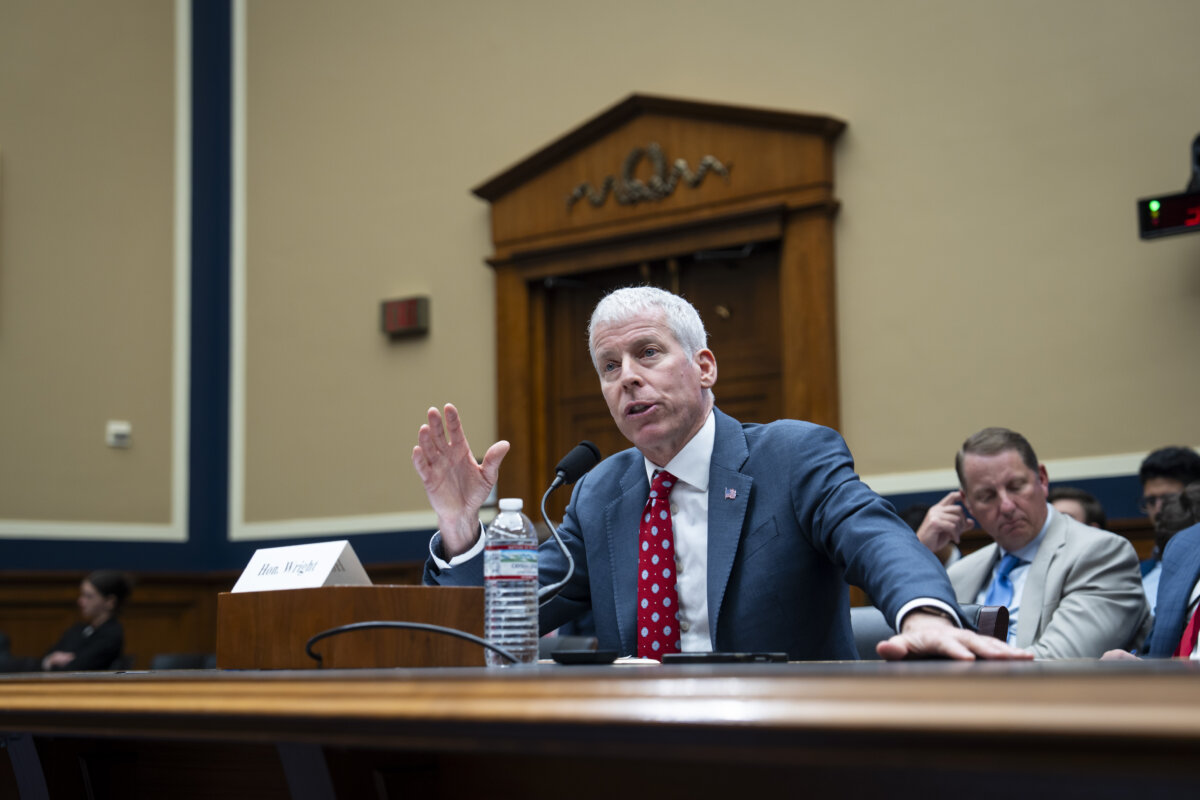
Debt And Doubt
Republicans in spring budget hearings maintain that Biden-era green energy subsidies, on top of the March 2020–August 2022 congressional spending spree spurred by the COVID-19 pandemic, added $7 trillion to the nation’s debt.
They argue that Biden’s 2035 goal of a carbon-free electricity grid and 2050 carbon-free economy forced a premature transition at the expense of the nation’s oil and gas industries, making investors wary of financing needed improvements and planned expansions, fostering the surge in electricity prices they are attempting to remedy.
“During the Biden administration, energy policy shifted away from reliability and toward favored sources, toward favored outcomes, and long, brittle supply chains that begin overseas,” Sen. Mike Lee (R-Utah) said during the April 21 Senate Energy and Natural Resources Committee hearing.
“They assumed the system would hold together anyway, and it didn’t.”
The “claw backs” are justified, he said.
“In the final months of the Biden administration, nearly $90 billion in loans—that’s billion with a ‘B’–were pushed out the door in just a matter of a few weeks,” he said.
While Democrats claim that Trump is targeting renewables on behalf of oil industry campaign donors, Lee said that before leaving office, Granholm “earmarked billions of dollars in green energy loans to utility companies” in her “home state of Michigan, despite warnings from the department’s very own inspector general, who called for the program to be paused over conflict-of-interest concerns.”
During the May 13 House Natural Resources Committee hearing, Rep. Tom Tiffany (R-Wis.) said subsidies “for these intermittent sources of power” cost taxpayers $50,000 per acre in many farming communities.
“We are destroying some of the most productive farmland in America as we speak, including in places like the great state of Wisconsin,” he said.
“And guess what’s happened to their utility rates since then. We went from the second-lowest in the Midwest to the second-highest.”
Rep. Tom McClintock (R-Calif.) said California leads the nation in wind- and solar-generated electricity and is second only to Hawaii in electricity costs.
“That’s … a choice made by the leftists in California and directly affects the affordability of life in California,” he said.
“The energy transition was always a lie,” Burgum said.
“It was energy subtraction, and the idea that you could take baseload energy and replace it with renewables, without maintaining all of the baseload, without adding trillions of dollars of transmission, which are not included in [many analyses], that’s how you end up with higher energy prices.”
 Friends Read Free
Copy
Facebook
Tweet
Friends Read Free
Copy
Facebook
Tweet