
Three California residents are suing a fuel pricing company and several gas station operators, alleging that they use artificial intelligence-based pricing systems to raise gasoline prices in an uncompetitive manner.
“Californians are being forced to pay surcharges that cannot be explained by crude oil costs, refining costs, environmental regulation, or taxes,” said the June 22 class action lawsuit, filed at the U.S. District Court for the Eastern District of California, Sacramento Division.
“Part of the cause of California’s astronomical fuel prices is an illegal algorithmic price-fixing scheme orchestrated by the algorithmic pricing company Kalibrate and some of the state’s largest fuel retailers.”
The company’s Kalibrate Fuel Pricing software, an algorithmic, AI-based pricing system, “connects directly to gas stations’ pumps and signs. Instead of lowering prices to attract drivers, Kalibrate Fuel Pricing relies on the data of competing gas stations to coordinate high prices and wring more money from the pockets of consumers throughout the state,” the lawsuit states.
This is contradictory to historical trends where gas stations have competed to secure customers by “aggressively undercutting” retail prices, the lawsuit said.
The “artificial surcharge” from the algorithmic pricing scheme inflicts a “severe, daily financial toll” on millions of Californians, the lawsuit said. For people whose livelihoods are tied to road transport, such as truck drivers, the higher gas prices eat into their incomes.
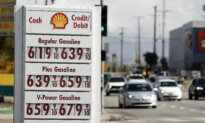
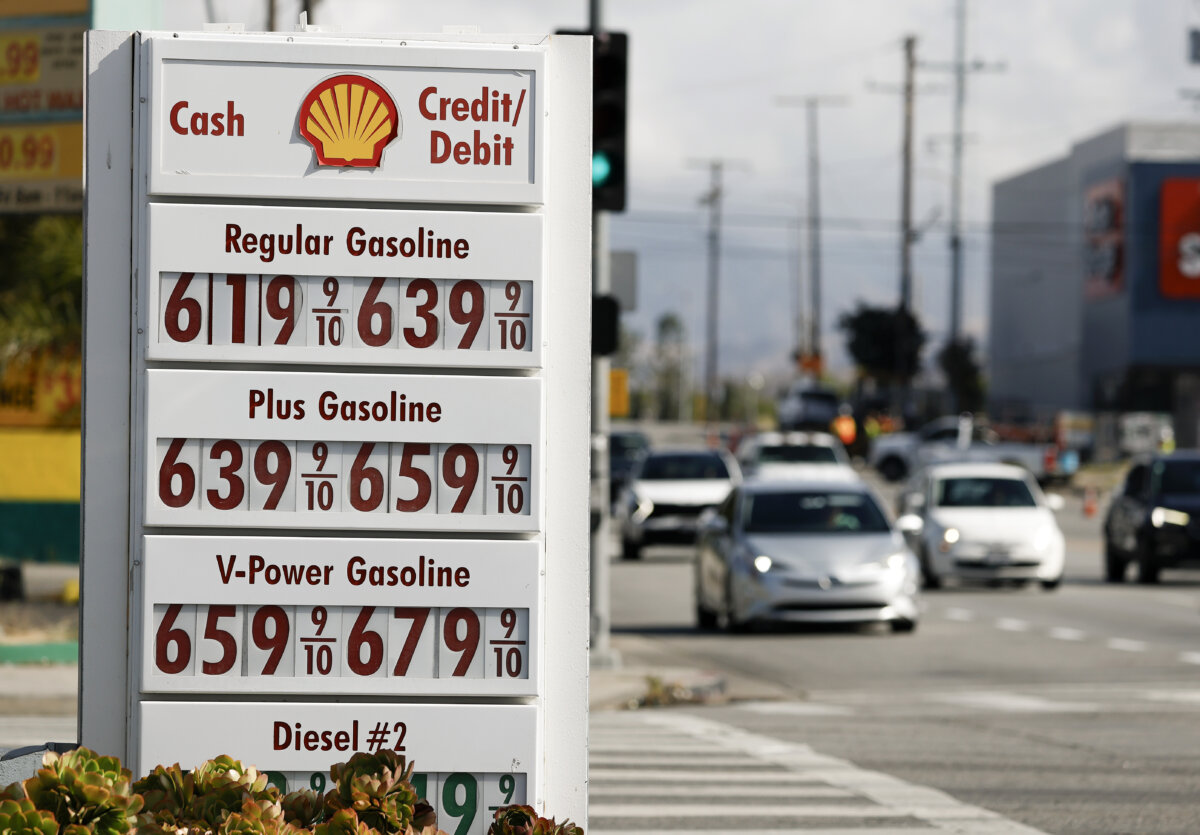
According to data from the American Automobile Association, a gallon of regular gasoline costs $5.56 on average in California as of June 23, the highest in the country.
A month ago, prices were at $6.11 per gallon amid U.S.–Iran war tensions. A year ago, prices were still close to $5 at $4.66 per gallon.
California’s current gasoline price of $5.56 per gallon is more than $1.6 higher than the $3.92 national average.
In their lawsuit, the defendants said that Kalibrate Fuel Pricing even has a feature that enables almost all gas stations in a market to raise gasoline prices simultaneously.
In addition to Kalibrate, the complaint lists 14 gas station operators and 10 unidentified gasoline fuel retail companies as defendants. Some of the major gas station operators include 7-Eleven, Walmart, Sam’s Club, and BP.
The plaintiffs—Joel Casciani from Chula Vista, Paola Hartman from Homeland, and Crystal Turnbough from Marysville—allege that the gas station defendants’ actions amount to a “modern, digital iteration of traditional price-fixing and combination that California law expressly forbids.”
They asked the court to stop “Defendants’ unlawful combination and collusion, restore competition to California’s retail fuel markets, and make California drivers whole by compensating them for the substantial overcharges Defendants have extracted from them through their illegal scheme.”
The Epoch Times reached out to Kalibrate, 7-Eleven, Walmart, Sam’s Club, and BP for comment but did not receive a response by publication time.
According to Kalibrate, its pricing software is used in more than 20 nations across five continents. The company says on its website that the Kalibrate Fuel Pricing platform delivers “competitive, profitable prices at speed,” powered with AI-driven intelligence.
The software delivers 8.3 million fuel prices every month. More than 25,000 fuel sites are actively priced with Kalibrate Fuel Pricing, with the average weekly profit per site rising by $331 from AI optimization, the company said.
California’s Gasoline Crisis
Meanwhile, California is experiencing an energy crisis resulting from decades of environmental regulations that stifled domestic oil production, defense and engineering expert Mike Fredenburg said in a Feb. 23 commentary published by The Epoch Times.
“Refining capacity has plummeted to about 1.3 million barrels per day today from 2.5 million barrels per day in 1982—a drop of 48 percent,” Fredenburg said.
“During this same period, oil pumped from California wells dropped to a little more than 300,000 from more than 1 million barrels per day, a 70 percent decrease.”
Fredenburg attributed the huge premium paid by Californians for gasoline partly to the “general hostility” of the state to the oil and gas sector.
This has created a situation in which many oil and gas companies are moving away from the state. As such, California is left to buy crude oil from foreign nations and even pay other countries to produce the state’s special gas and diesel formulation, Fredenburg said.
In May, a group of lawmakers introduced the Transportation Fuel Market Transparency Act to crack down on market manipulation and protect people from price spikes at gas pumps, according to a May 5 statement from the office of Sen. Alex Padilla (D-Calif.).
The bill seeks to create a Transportation Fuel Monitoring and Enforcement Unit within the Federal Trade Commission to “proactively monitor fuel markets for fraud, manipulation, and anti-competitive behavior that can artificially inflate prices,” the statement said.
The measure “would also increase transparency across fuel markets and significantly raise penalties for bad actors,” it said.
 Friends Read Free
Copy
Facebook
Tweet
Friends Read Free
Copy
Facebook
Tweet