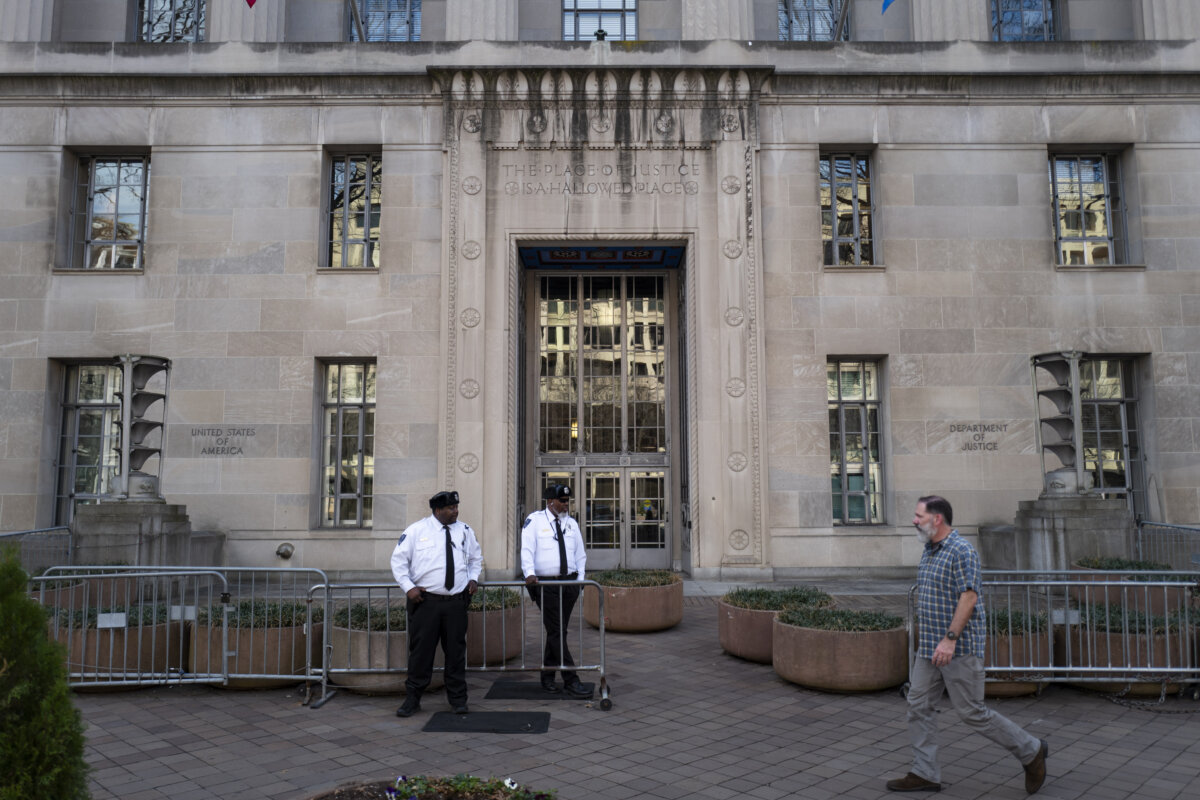

A man from New York who was engaged in a nationwide cocaine trafficking conspiracy was sentenced on May 29 to 275 months in prison, the Department of Justice (DOJ) said in a June 17 statement. [source]
Brahmananda Prasad, 65, from Queens, engaged in a “coast-to-coast cocaine-trafficking conspiracy” that involved regularly flying to California to meet with cocaine suppliers and purchasing several kilograms of the drugs, the DOJ said.
“Prasad then shipped the cocaine back to New York, directing others to pose as representatives of his ostensibly legitimate shipping company to evade detection,” the department said.
In the East Coast, the drugs were handed over to multiple sub-distributors across New York and Maryland, who then went on to sell them in Delaware and other places.
According to the DOJ, Prasad routinely bought 20 to 24 kilograms (approx. 44 to 53 pounds) of cocaine at a time, with the quantity sometimes reaching as much as roughly 48 kilograms (approx. 106 pounds).
Prasad has been shipping cocaine from California since at least 2021 and has bought a minimum of 956 kilograms (approx. 2,107 pounds) of drugs in total back to the East Coast for sales.
“That drug weight is approximately six times the volume attributed to any other drug defendant prosecuted in the District of Delaware in recent memory,” the department said. The prosecution is part of the Homeland Security Task Force initiative.
The task force was set up pursuant to a January 2025 executive order issued by President Donald Trump, and was tasked with ending the presence of foreign gangs and criminal cartels in the country.
The order highlighted the “unprecedented flood” of illegal immigrants into the United States under the prior administration, with many of these individuals posing “significant threats to national security and public safety.”
Prasad faces fines in addition to the prison sentence. The court ordered a forfeiture of more than $2.49 million, which the DOJ said was the gross proceeds of Prasad’s cocaine business.
The investigation into the cocaine trafficking activity involved almost four months of wiretaps, analysis of shipping and flight records, surveillance, and drug seizures. The case was investigated by Homeland Security Investigations (HSI), the Internal Revenue Service, and the United States Postal Inspection Service.
Acting special agent in charge of HSI Philadelphia Nathan Abel said that Prasad’s sentencing “sends a clear message to those who would attempt to profit from poisoning our communities with dangerous drugs.”
Another case under the Homeland Security Task Force that led to the sentencing of an individual trafficking drugs was announced by the Drug Enforcement Administration on June 16.
The trafficker, a Mexican national, was sentenced to 14 years in prison for his role in a conspiracy that sought to bring roughly 1,900 kilograms (approx. 4,188 pounds) of cocaine into the United States.
Operation Viper
Last month, the White House released its 2026 National Drug Control Strategy report. The strategy seeks to secure the global supply chains that are being exploited by transnational criminal organizations and foreign terrorist organizations to further the drug trade.
The Trump administration will use the “full weight” of the U.S. federal government to cripple logistics used by transnational criminal organizations, including applying financial sanctions, increasing rewards to bring leaders of such groups to justice, and maximizing criminal prosecutions, the report said.
“The Administration will hold countries accountable for their failure to regulate the chemical and pharmaceutical industries that facilitate the drug crisis,” according to the report.
“Furthermore, the Strategy will update and enforce regulations on drug-making equipment, such as tableting and encapsulating machines. Also, the Administration will impose significant costs, including financial sanctions and legal prosecutions, on any commercial entity or person, foreign or domestic, that facilitates the illicit drug trade.”
The strategy also aims to ensure that addiction treatments are “more accessible than continued drug use.”
In a May 7 statement, Libby Jones from the Global Health Advocacy Incubator raised concerns about whether the National Drug Control Strategy matches the Trump administration’s budget request for fiscal year 2027, which cut funding for some addiction programs.
Jones highlighted the $261 million cut made to the Substance Abuse Prevention program and the $576 million reduction from the Mental and Behavioral Health subtotal.
“A strategy that says treatment should be easier to obtain than illicit drugs must have the infrastructure to make that real,” Jones said.
Meanwhile, agencies continue to crack down on drug trafficking. In a June 16 statement, the Drug Enforcement Administration said that Operation Viper, a high-intensity fugitive apprehension initiative, resulted in the arrests of 39 individuals and the seizure of roughly 100 pounds of marijuana as well as large quantities of fentanyl and other illicit pills.
On June 17, the Drug Enforcement Administration announced the unsealing of an indictment against two individuals charged with distributing gamma-butyrolactone (GBL), also known as date rape drugs.
“GBL is a dangerous substance on its own, and can also be converted into GHB. Both are powerful depressants that are often used in drug-facilitated sexual assaults,” said New York Enforcement Division special agent in charge Farhana Islam.
“By removing this massive quantity from the supply chain, the DEA and our partners disrupted a significant threat to public safety, and the prevention of countless people who might otherwise have been victimized.”
 Friends Read Free
Copy
Facebook
Tweet
Friends Read Free
Copy
Facebook
Tweet