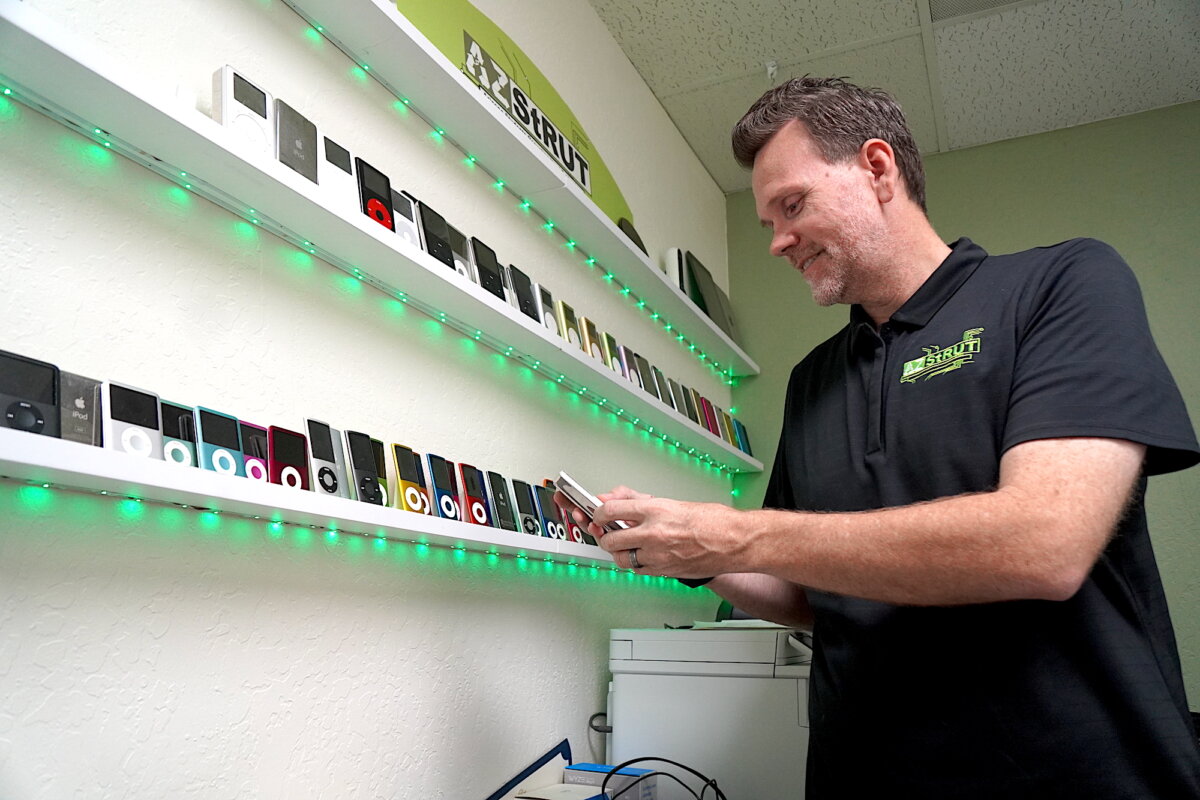

PHOENIX—Two shelves in Jared Bodine’s office hold nearly every Apple iPod ever made, a full spectrum of models, shapes, sizes, and colors.
Most no longer work, but that hardly matters to Bodine, who says there is beauty in their simplicity, in their vintage appeal.
Their value now rests less in utility than in nostalgia—a reminder of the moment technology first became something people carried everywhere, almost like extensions of themselves.
“They don’t get the obsolete factor,” said Bodine, executive director of Arizona StRUT, a nonprofit that refurbishes, restores, and distributes old technology in working condition. “They still play the music just fine. They don’t need updates. They’re not web-connected.
“Now, folks still use iPods, even now. It’s kind of like a nostalgia thing, and it’s making a comeback. It’s all retro stuff.”
Old Tech, New Life
Retro or not, old technology can still find a second life. That’s where Arizona StRUT finds its calling and its niche.
The organization began taking shape in 1997 and was later formalized as a joint effort between employees of Intel and Motorola, both major players in the Phoenix area.
Bodine said there was also growing awareness of electronic waste and the need for workforce development, leading to the creation of the nonprofit around those twin goals.
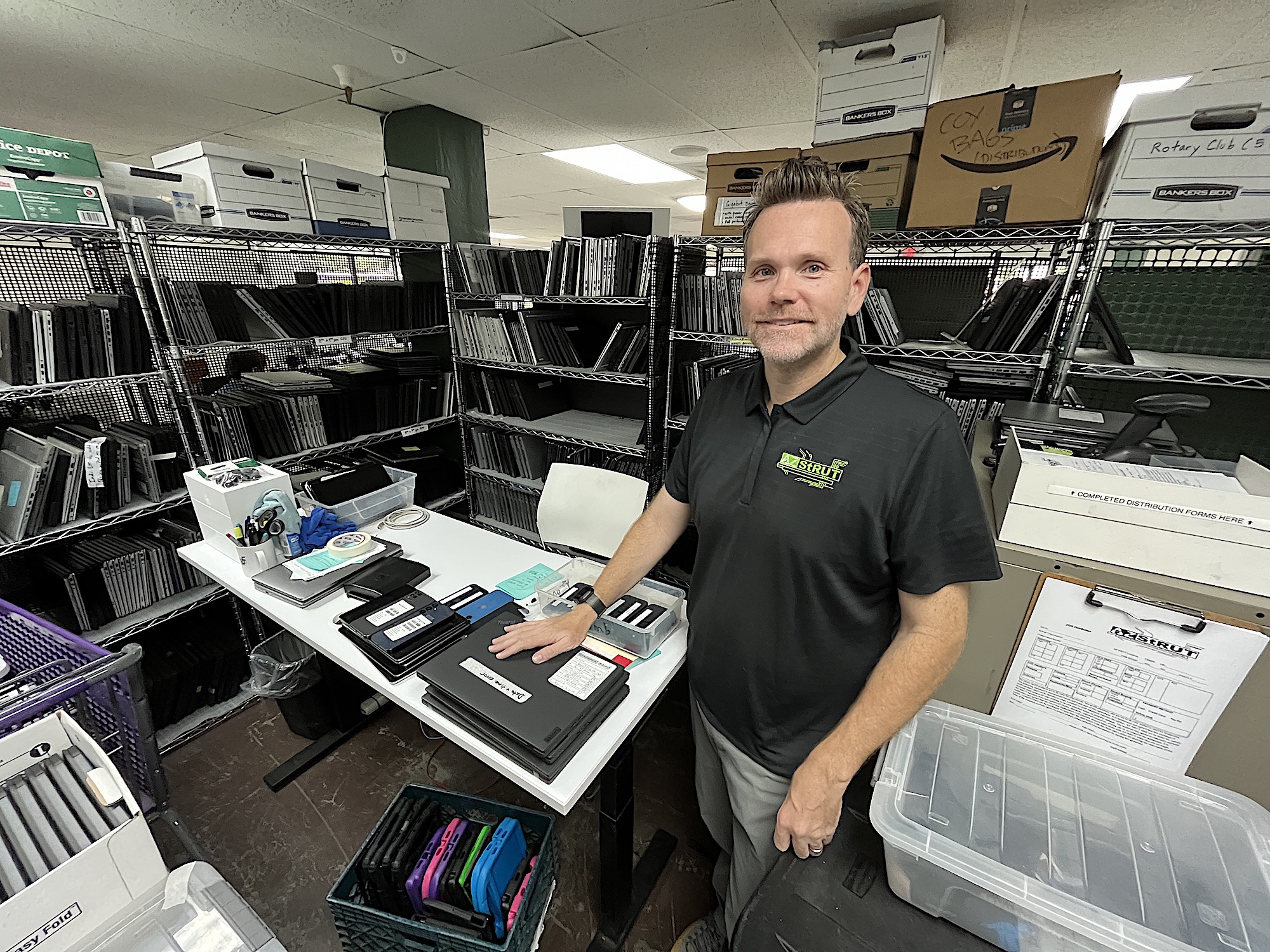 Jared Bodine, executive director of Arizona StRUT shows the workspace where old technology is brought back to life in Tempe, Ariz., on May 20, 2026. (Allan Stein/The Epoch Times)
The aim is to expand access to old technology and internet service through partnerships and statewide distribution networks.
The nonprofit also resells vintage tech that is still in demand.
“We really give out to all sorts of other nonprofits,” Bodine said. “We have women’s groups; we have veterans groups; we have adult learner groups—people in financial situations, people living on the reservations. We distribute to all walks of life.
“When we give away to schools and other organizations, there’s no cost to the recipients.”
He said some products are subject to a refurbishing fee.
Once staffed by just two employees, the organization now has 15 paid staff operating out of an 8,000-square-foot Tempe, Arizona, facility, where old technology is received, cleaned, and brought back to life.
“What we fix up ourselves in-house is mostly mission-driven—laptops, desktops, things that people need more than want,” Bodine said.
“Our recipients, I’d say, are probably at least 50 percent schools.”
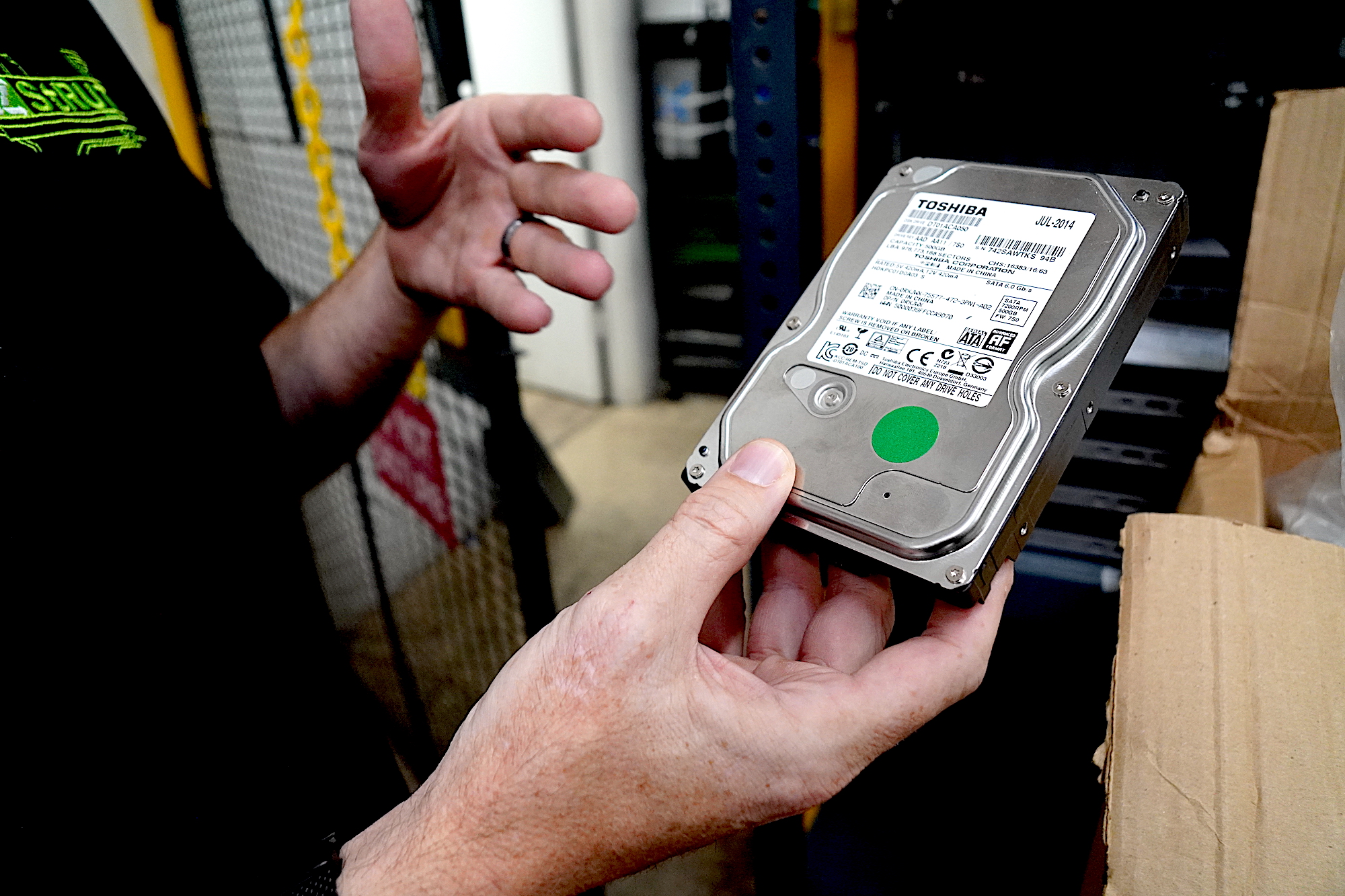 Jared Bodine, executive director of Arizona StTRUT, shows an old computer hard drive that has been wiped clean for reuse in another device on May 20, 2026. (Allan Stein/The Epoch Times)
Nothing Goes to Waste
From an ancient Windows 95 laptop to an aging Chromebook, Bodine said no electronic waste is turned away. Everything finds a use—whether parts, recyclable scrap, or a second life as a working computer.
Even the metal in old computers has value, he said.
“There’s gold, there’s silver, there’s quite a bit,” Bodine said. “That’s one of the ways we actually generate revenue from our organization is from our recycling efforts.”
He said it’s an indisputable fact that society has become increasingly disposable-oriented. Technology comes and goes. Hardware quickly becomes outdated, and software loses support within years. Parts are often hard to find.
Still, Bodine said, much of that technology isn’t finished—it’s simply discarded before its useful life ends.
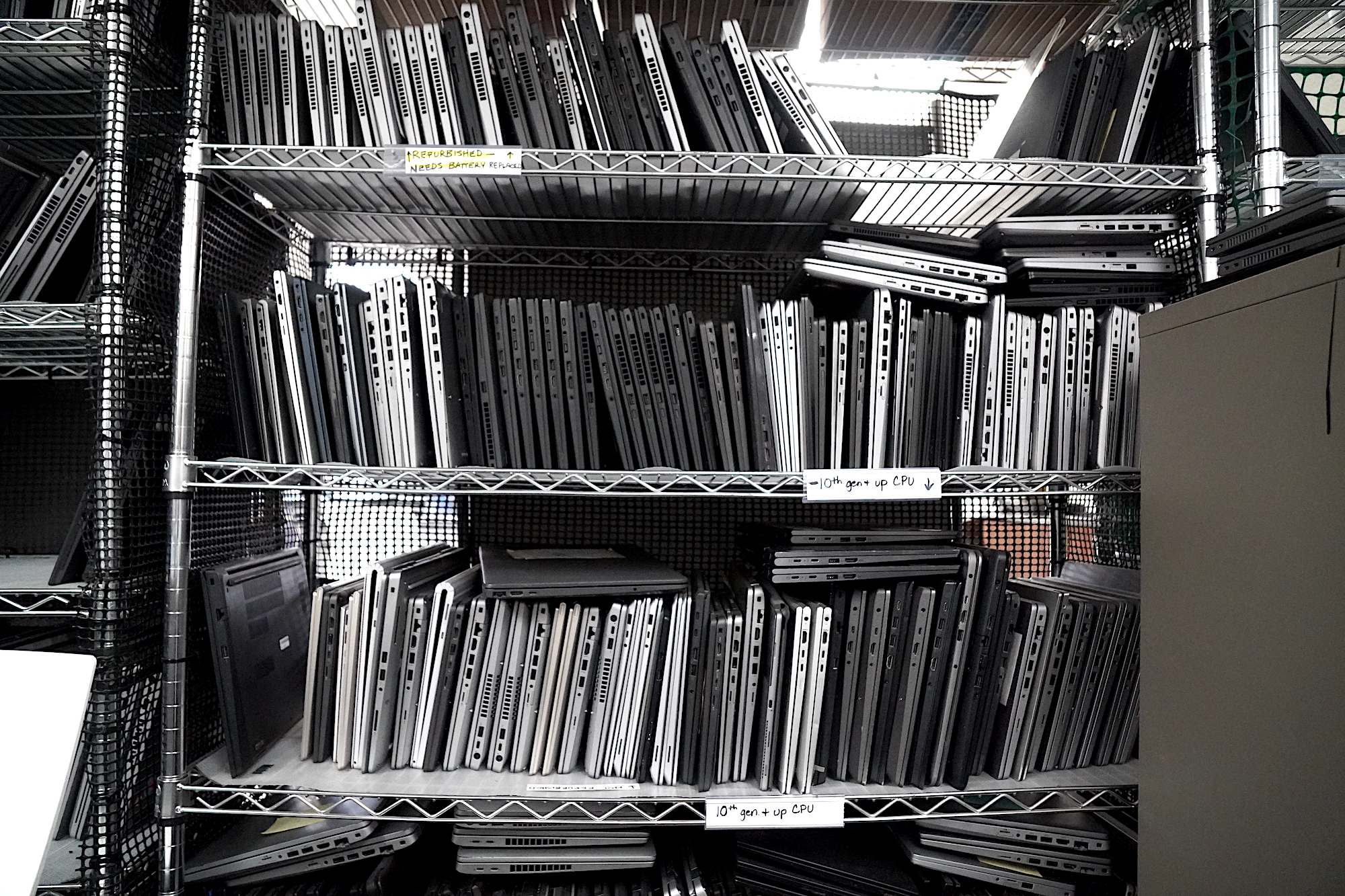 Old laptops and Chromebooks waiting to get a second life at Arizona StRUT in Tempe, Ariz., on May 20, 2026. (Allan Stein/The Epoch Times)
“I think a big part of it is that there is more awareness of how e-waste is a problem,” he said. “People either wanted to get rid of their old stuff and get new stuff, or people needed to get online.
“Our organization fits the bill in so many ways. We tell people whether technology is working or not, we accept all that e-waste because we will find a use for it.”
The numbers speak for themselves, Bodine said.
Since 2025, Arizona StRUT has refurbished and distributed 6,596 computers worth more than $430,000 while diverting 1.14 million pounds of electronic waste from landfills.
The year before, it gave new life to 9,041 computers valued at $642,758 and kept 1.1 million pounds of e-waste out of the waste stream.
Electronic waste contains a range of hazardous pollutants, including dioxins and heavy metals such as cadmium, lead, and mercury.
For donors, what was once an asset has become a liability—and Arizona StRUT’s core work, Bodine said.
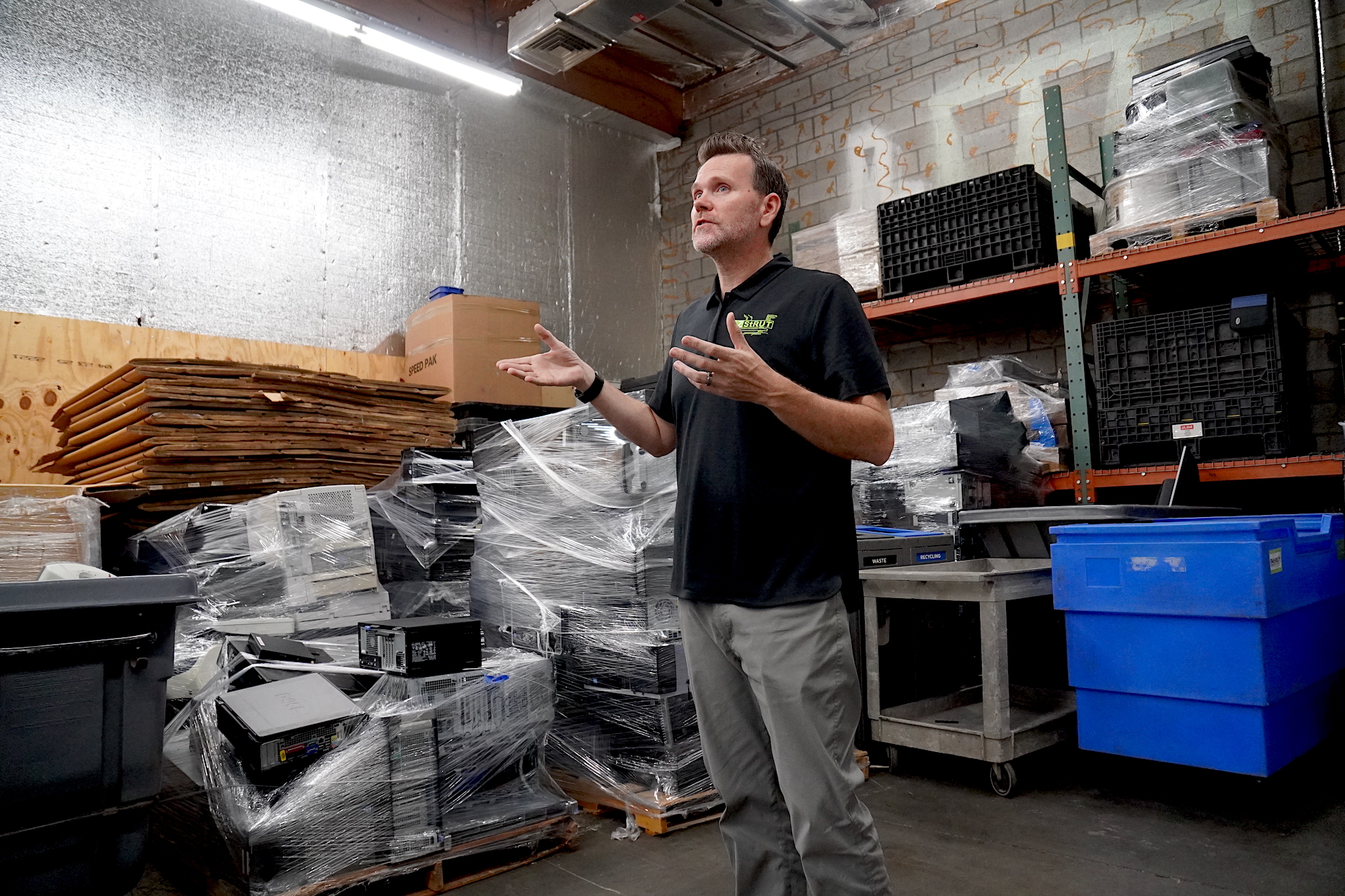 Jared Bodine shows a portion of the warehouse at Arizona StRUT in Tempe, Ariz., on May 20, 2026. (Allan Stein/The Epoch Times)
“Because we’re a nonprofit charity, they get the glow of actually donating to a charity where a lot of what they give us can now be used in the community,” he said.
The nonprofit partners with more than 50 schools and organizations statewide. It also offers day visits and a Techie Lab program where students build and take home real computers.
“We’re just experiencing it today for the first time,” said Wendy, who was trying out an older MacBook with a family member and asked that her last name not be used.
“We’re just looking for information right now. It’s very impressive.”
Arizona StRUT’s latest initiative is the Internet Lending Program, designed to be self-sustaining.
“We provide the device, unlimited internet, no data caps,” Bodine said. “It’s not geo-fenced. If you’re in a transient situation, you can take the device with you—it works on cellular data.”
Repurposing old technology, workforce development, and expanding internet access in public schools and the broader community have made it a venture with few downsides, he said.
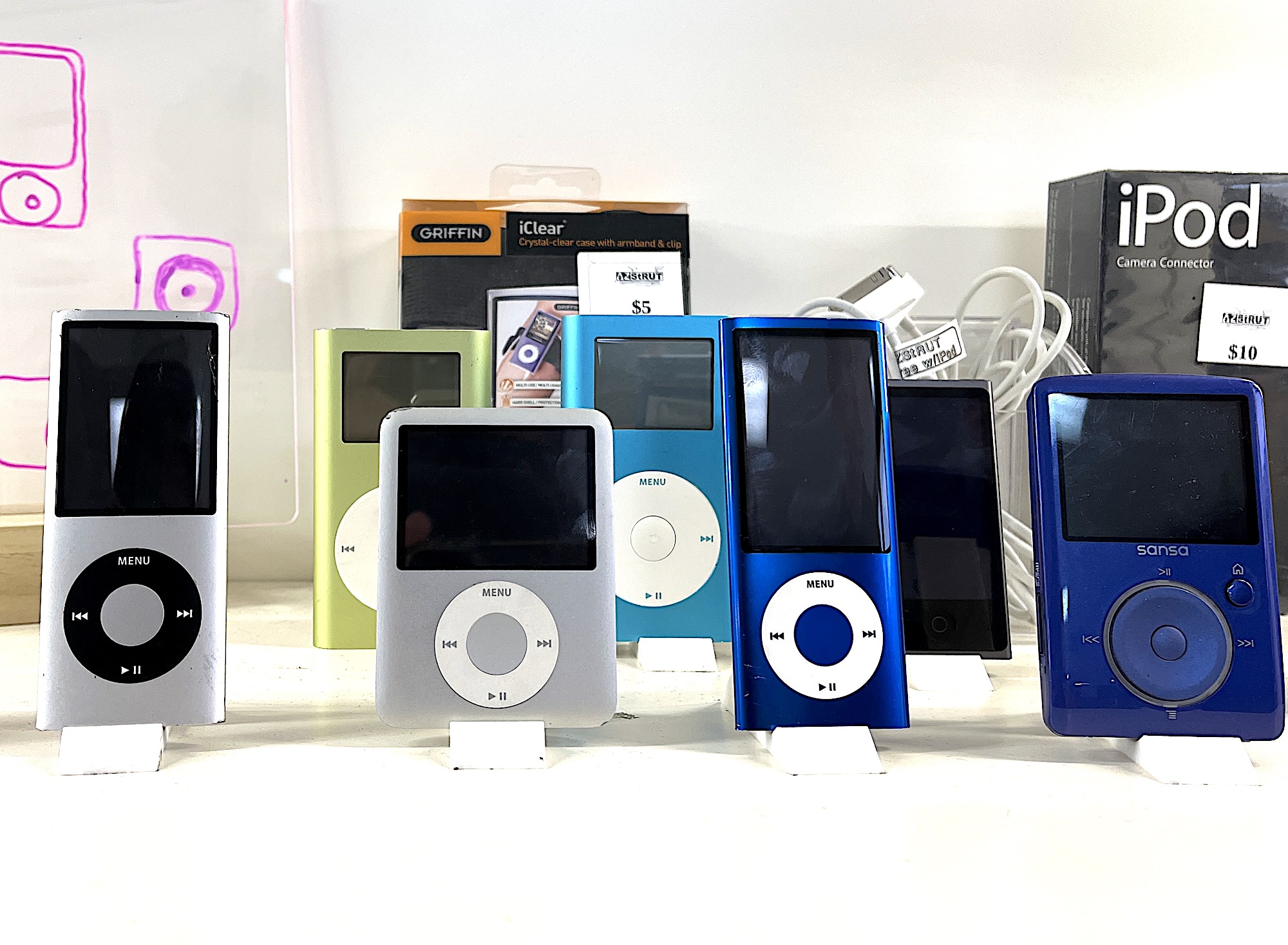 Old iPod music players, given new life, on display for sale at Arizona StRUT in Tempe, Ariz., on May 20, 2026. (Allan Stein/The Epoch Times)
“The people that work on it get the benefit of the education and the workforce development,” Bodine said. “And the people that receive it get the benefit of now having access and the tools they need to succeed.
“It’s one of those rare win-win-win situations.”
 Friends Read Free
Copy
Facebook
Tweet
Friends Read Free
Copy
Facebook
Tweet