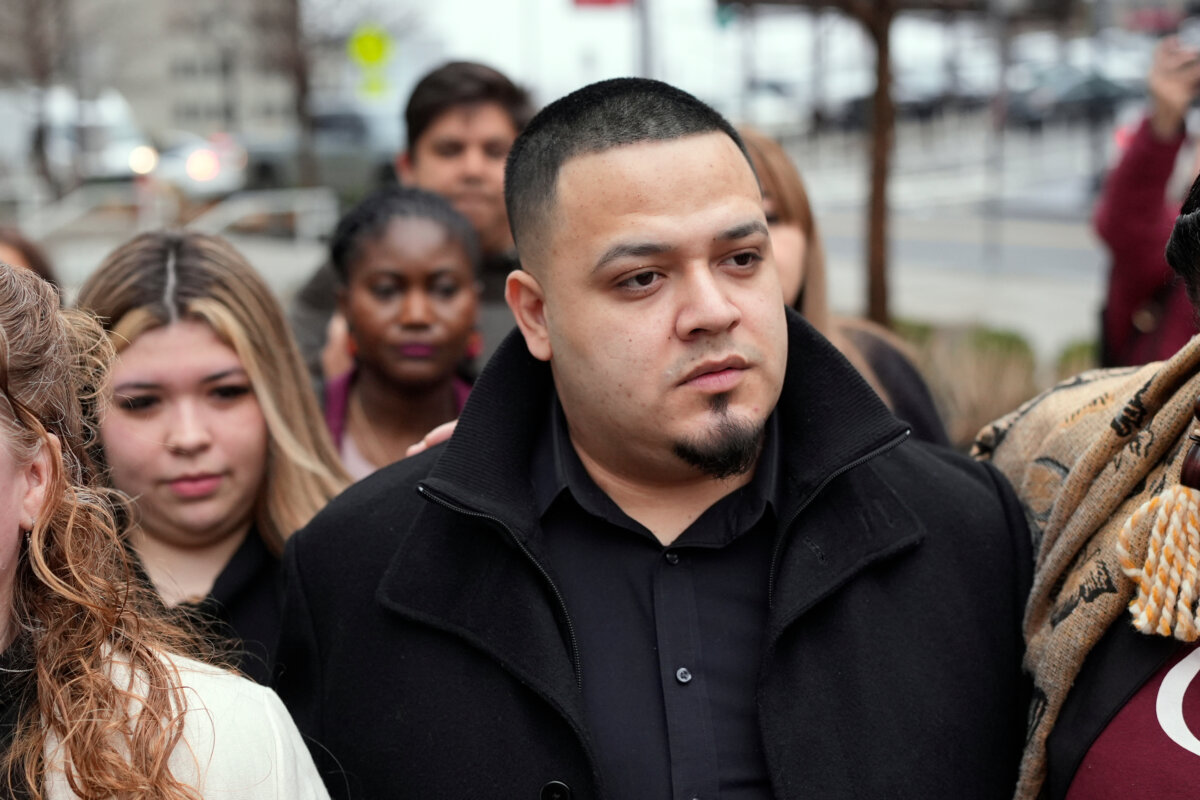

NASHVILLE—The federal attorney who criminally charged Kilmar Ábrego García, the Salvadoran national at the center of the Trump administration’s deportation battles, testified on Feb. 26 that his prosecution was not vindictive nor directed by Justice Department leadership.
“The charging decision was my decision,” said Robert McGuire, former acting U.S. Attorney for the Middle District of Tennessee.
His comments came during a hearing to consider evidence surrounding Ábrego García’s allegations that the Justice Department sat on evidence from a 2022 traffic stop in Tennessee, only bringing an indictment in 2025 as retaliation for a legal victory against President Donald Trump.
The defense asked McGuire why his office didn’t charge Ábrego García until 2.5 years after the traffic stop that prompted the charges of human smuggling. McGuire admitted the circumstances were “extraordinary” but suggested his office wasn’t aware of the traffic stop until Rana Saoud, who worked for the Special Agent in Charge of Homeland Security Investigations in Nashville, told him about it during a phone call on Apr. 27, 2025.
McGuire is currently serving as first assistant U.S. attorney for the district.
McGuire said he had enough evidence to prosecute Garcia and filed the indictment on May 21, 2025, weeks after the Supreme Court ordered the Trump administration to facilitate his return to the United States from El Salvador.
Ábrego García, who wore all black as he walked freely and calmly into a federal courthouse in Nashville, faced two felony counts relating to unlawfully transporting illegal immigrants on Nov. 30, 2022.
The Justice Department brought its indictment last year after his return to the United States and a prolonged legal battle in Maryland. In court filings, the Justice Department said it deported the illegal immigrant due to an administrative error, and acknowledged that he was subject to a “withholding order forbidding his removal to El Salvador.” The order was granted in 2019 by an immigration judge due to the risk of gang violence that Ábrego García would experience in his home country.
The Justice Department later defended the deportation and accused Ábrego García of being a member of MS-13. Ábrego García has denied affiliation with the gang.
Upon his return, Ábrego García was released from a Tennessee jail only to be re-detained by Immigration and Customs Enforcement (ICE) in Maryland. Despite the administration’s intention to deport Ábrego García to multiple countries, a federal judge eventually ordered his release and prohibited his re-detention by ICE.
As part of his attempt to dismiss the indictment, Ábrego García has sought to subpoena Deputy Attorney General Todd Blanche. U.S. District Judge Waverly Crenshaw hasn’t ruled on that request. In October 2025, he said there was enough evidence to conclude there was a realistic likelihood of vindictiveness for Ábrego García to have a hearing and discovery.
At the end of last year, the judge released multiple emails involving department leadership.
McGuire testified on Feb. 26 that Trump administration officials, such as Associate Deputy Attorney General at the U.S. Department of Justice Aakash Singh and Deputy Attorney General Todd Blanche, never ordered him to charge Ábrego García.
McGuire did confirm that Blanche called him briefly on June 6, 2025, when Ábrego García returned to the United States, to congratulate him on his work on the case.
“I don’t totally remember all of the things he said because I was so surprised for all of it,” McGuire testified on Thursday.
Separately, during cross-examination, he was presented with an email Singh sent to him before May 21, 2025, which suggested they draft up a complaint together.
A separate email sent to him before the indictment was filed told him to “hold for clearance.”
McGuire said he wasn’t being told what to do by higher-ups.
“I don’t know what he meant by clearance,” McGuire testified. He speculated that it could have meant that the DOJ wanted to alert the State Department first.
Crenshaw said there will be a post-hearing brief 30 days after the transcript from Thursday’s legal hearing is available.
The prosecution declined to comment when asked by The Epoch Times after the hearing.
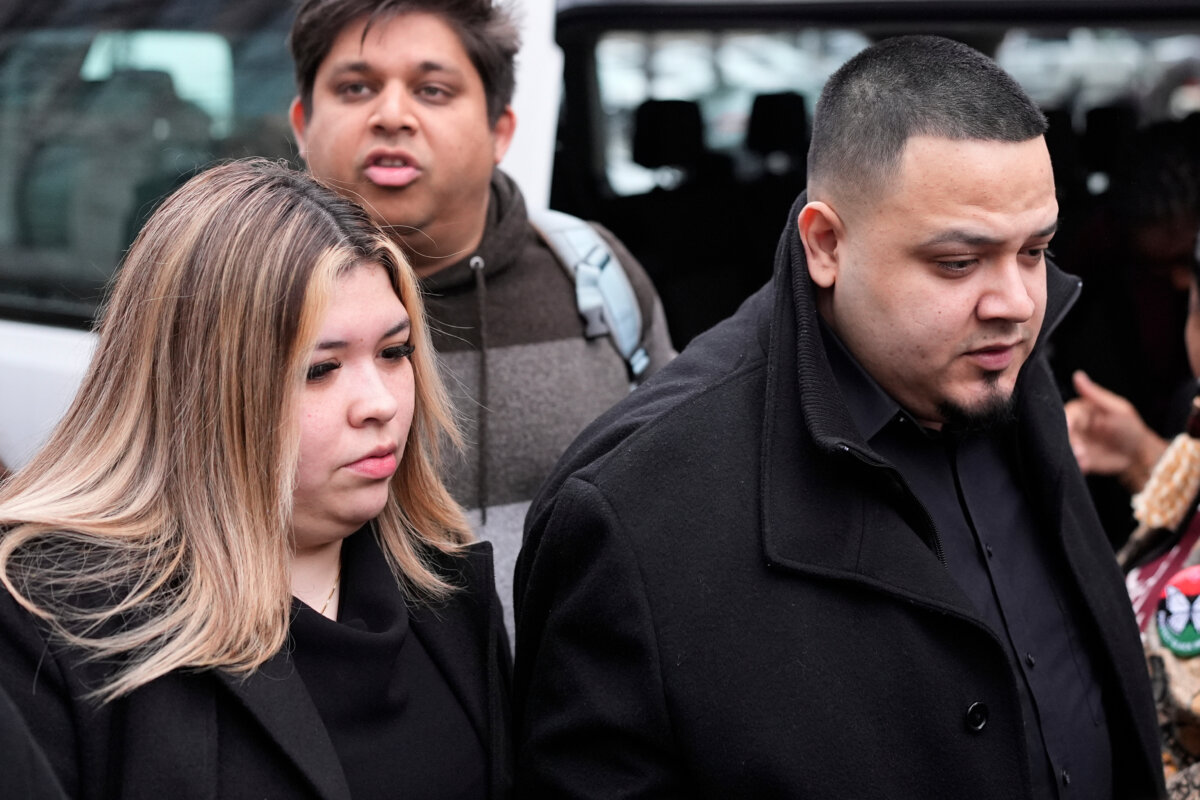
Ama Frimpong, a legal director for We Are Casa and family attorney representing Ábrego García’s family members, sat in during Thursday’s hearing and told The Epoch Times that Ábrego García has been freely staying with his family in Maryland during this court process and does not have to stay in Tennessee.
“We all saw him walk to and from [the courthouse] very free, very alive and very strong,” Frimpong said.
Ábrego García’s wife, Jennifer Vasquez Sura, his mother, and his brother attended Thursday’s hearing. Ábrego García faces one charge of conspiracy to unlawfully transport illegal aliens for financial gain and unlawful transportation of illegal aliens for financial gain.
The conspiracy charge has a maximum prison sentence of 10 years with a $250,000 fine. The second charge has a maximum prison sentence of 10 years per person transported and a $250,000 fine.
 Friends Read Free
Copy
Facebook
Tweet
Friends Read Free
Copy
Facebook
Tweet