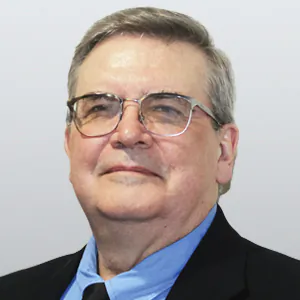
Tulsa businessman and former state Sen. Mike Mazzei will face Oklahoma Attorney General Gentner Drummond in the Aug. 25 gubernatorial primary runoff election.
Drummond received 26.3 percent of the vote to Mazzei’s 25.9 percent. The runoff was triggered because neither received at least 50 percent of the vote.
Mazzei has been touting President Donald Trump’s May 29 endorsement in his campaign ads. During a June 11 debate, Drummond pointed out that Mazzei changed his position on a proposed aluminum smelter project in northeast Oklahoma favored by the president soon after he received Trump’s endorsement.
Mazzei originally opposed the $4 billion smelter project planned for Inola, Oklahoma, east of Tulsa. The smelter is part of $200 billion in commercial deals between the United States and the United Arab Emirates, the Trump administration announced in May 2025.
Mazzei’s opposition was based on hundreds of millions of dollars in state tax incentives from Oklahoma, including power discounts promised to the project and a $500 million grant from the Department of Energy.
However, just days before he received Trump’s endorsement, Mazzei announced that the president had explained the national defense and economic benefits of the smelter project.
“I’ve always said I would stand with President Trump, and I’m doing so,” Mazzei said during a June 11 debate.
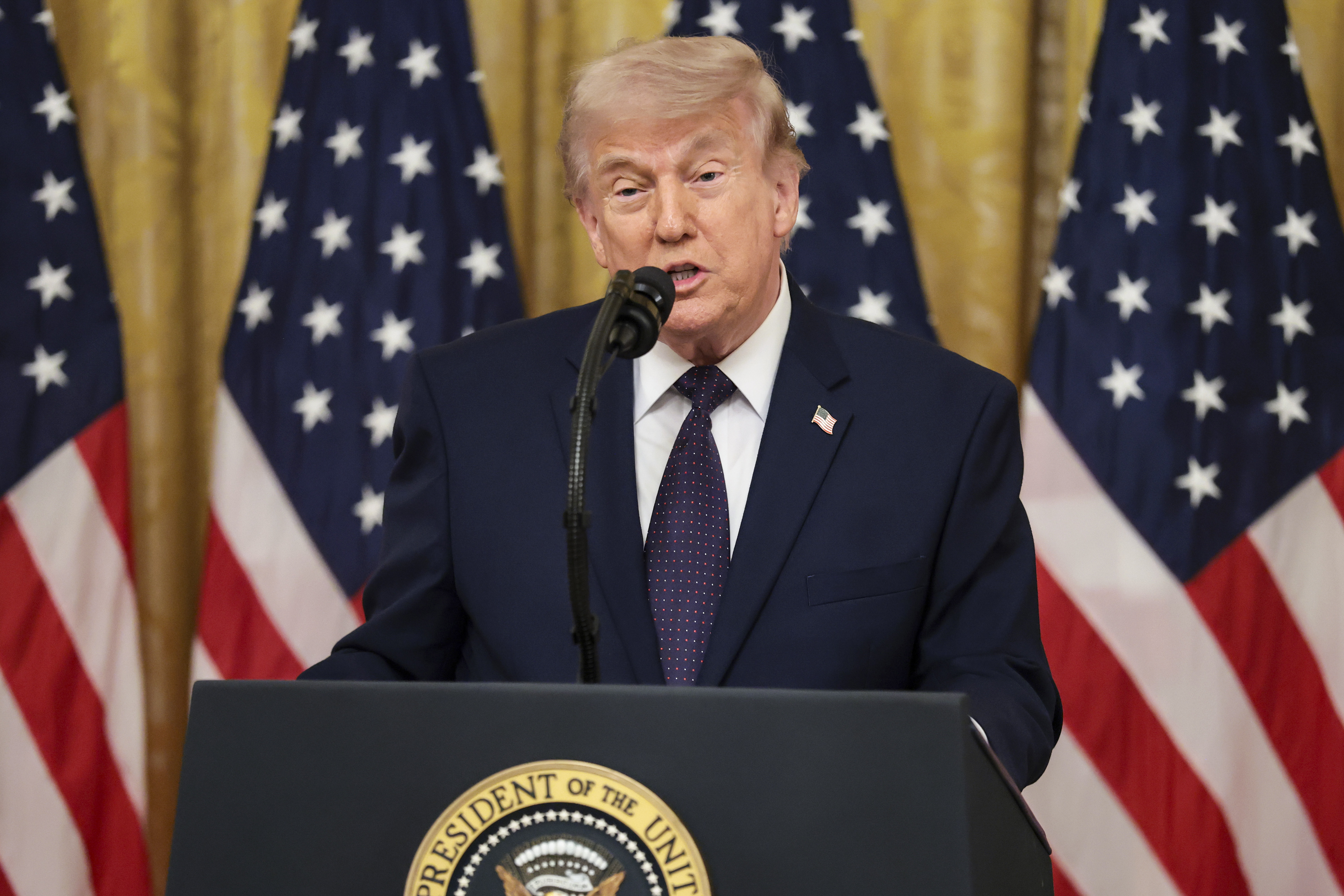 President Donald Trump speaks in Washington on May 22, 2026. (Anna Moneymaker/Getty Images)
Drummond sued to stop the project just days after Mazzei secured Trump’s endorsement. In his lawsuit, Drummond said the plan would finance a Muslim government and leave Oklahomans to deal with serious pollution problems.
The remaining Republicans on the ballot were Chip Keating, a former state trooper and son of former Gov. Frank Keating; former Oklahoma House Speaker Charles McCall; and a past Oklahoma state senator from 2020 to 2022, Jake Merrick.
Keating took around 18.5 percent, Merrick won around 14.5 percent of the vote McCall received under 12 percent.
Republicans Jennifer Domenico, Leisa Mitchell Haynes, Kenneth Sturgell, and Calup Anthony Taylor rounded out the GOP ballot.
The winner of the GOP runoff will face Democratic Oklahoma House Minority Leader Cyndi Munson, who took nearly 75 percent of the primary votes over two challengers.
Former Democratic state Sen. Connie Johnson won 22.3 percent of the Democratic vote, falling in second place.
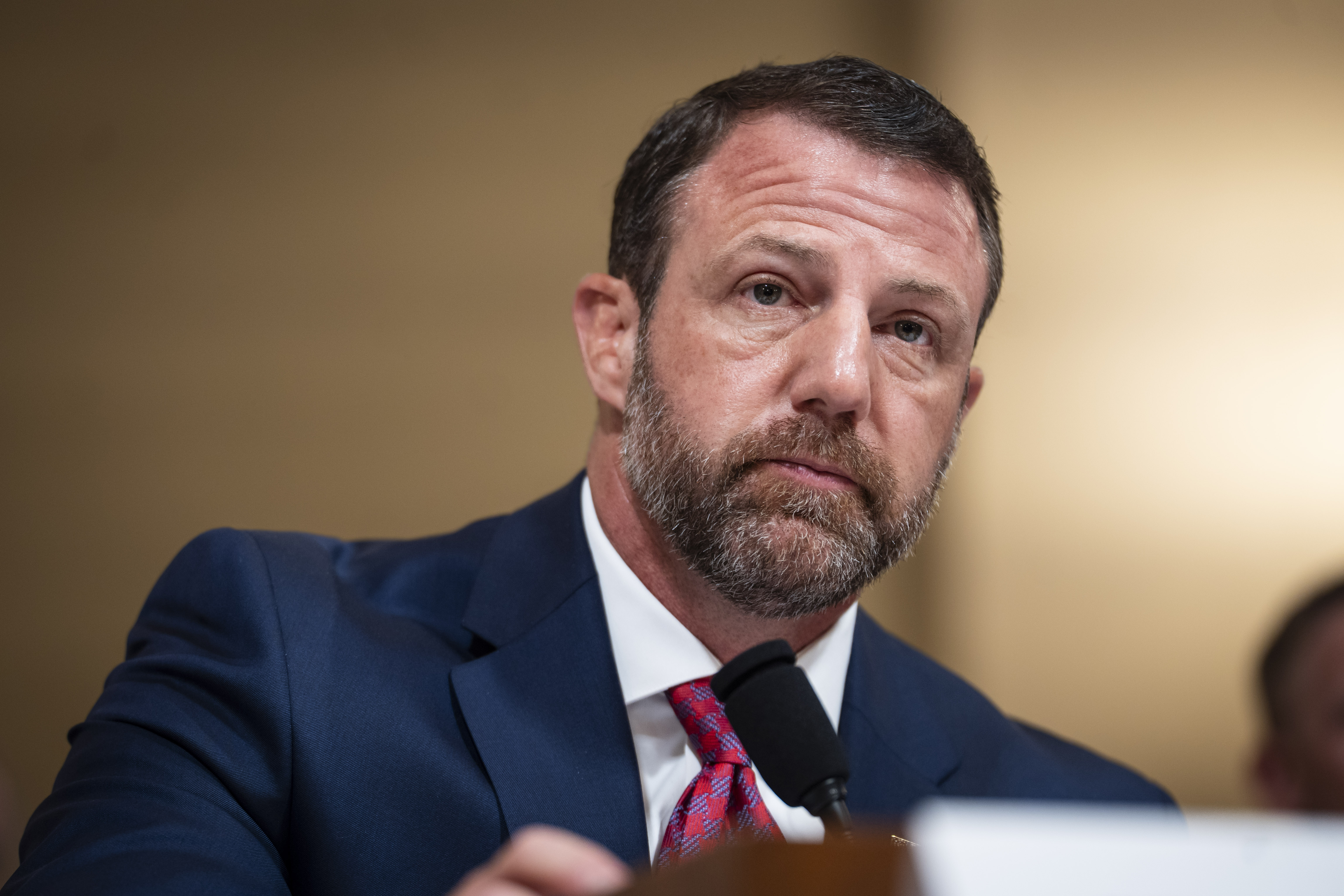 Homeland Security Secretary Markwayne Mullin testifies in Washington on June 3, 2026. (Madalina Kilroy/The Epoch Times)
Oklahoma voters from each party also selected their candidates for the U.S. Senate seat vacated by Markwayne Mullin, who left office to become secretary of Homeland Security on March 24. Mullin was elected in 2023 and served until he was appointed to the position by Trump.
Trump-endorsed First District Congressman Kevin Hern got the Republican U.S. Senate nomination with nearly 70 percent of the vote, easily defeating challengers Sean Buckner, Gary Ty England, Nick Hankins, and Brian Ragain.
Democrats seeking the nomination for the Senate seat were RW Cassity, Troy Green, Jim Priest, N’Kiyla Jasmine Thomas, and Ervin Yen.
Thomas and Priest will advance to a runoff election to determine Democrats’ pick to take on Hern.
House Seats on the Line
All five congressional districts will be on the general election ballot. The party primaries for the House of Representatives shook out as follows.
Eleven Republicans sought the nomination for Congressional District 1, including Nathan Butterworth, Jed Cochran, Kim David, Nancy Dyson, Courtney Gill, Jackson Lahmeyer, Dan Rooney, Paul Royse, Mark Tedford, Kelly Walsh, and Todd Woods.
Tedford and Lahmeyer will face off in a runoff to determine who will challenge Democratic nominee John Croisant and an independent in the general election. Croisant was the only Democrat to make the ballot.
District 1 incumbent Kevin Hern is running for the U.S. Senate.
In Congressional District 2 Josh Brecheen won the Republican nomination.
He will face the Democratic nominee, Brandon Wade, and independent Ronnie Hopkins.
In District 3 incumbent Frank Lucas will run against Democratic nominee Suzy Byrd.
The District 4 nominees to be on the general election ballot are Republican incumbent Tom Cole, Democratic nominee Mitchell Jacob, and independent Rocco Bonacci.
According to the Oklahoma Ethics Commission, the 2026 primary campaigns are on track to be the most expensive elections in state history, with more than $60.7 million in campaign spending to date.
 Friends Read Free
Copy
Facebook
Tweet
Friends Read Free
Copy
Facebook
Tweet