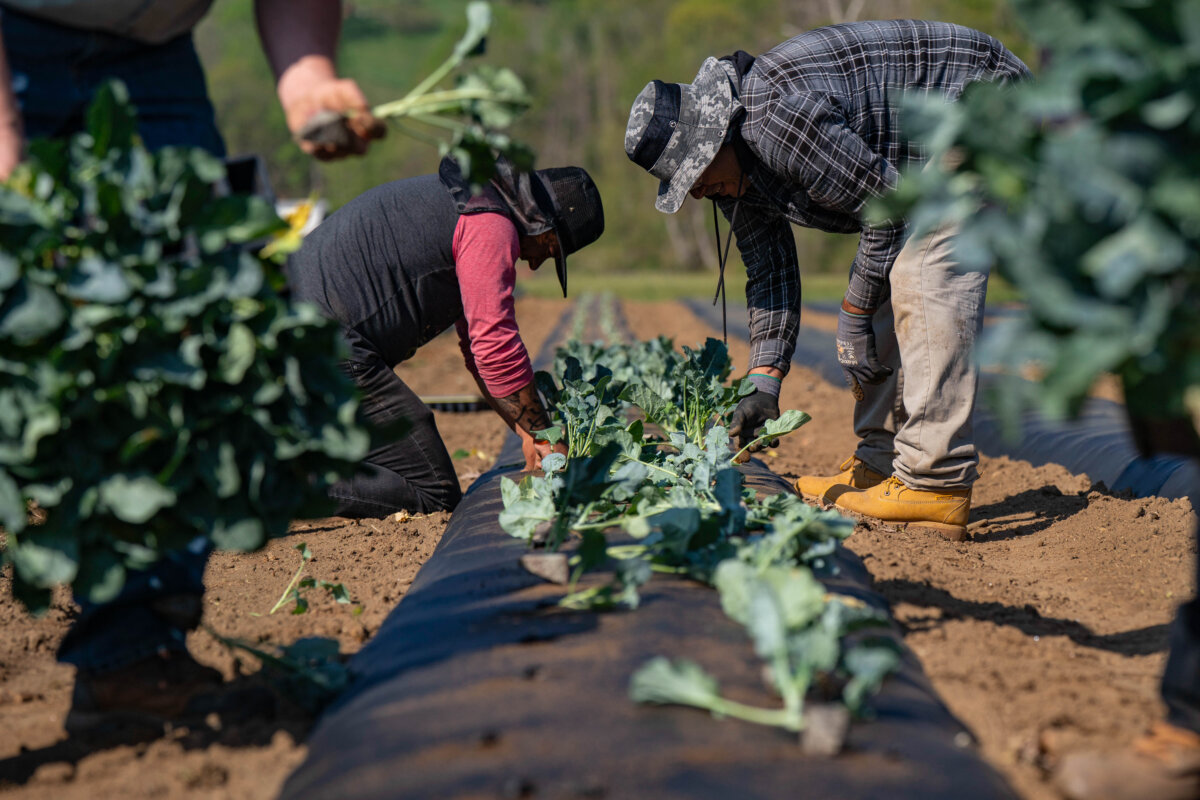

Farmers in the United States have seen fertilizer inputs and diesel costs balloon by up to 40 percent over the past five years because of China’s export restrictions, the Russia–Ukraine war, U.S. tariffs, and, most recently, India’s massive state procurements that have drained a global market already diminished by Iran’s shutdown of Strait of Hormuz shipping.
But what most concerns many is the long-term fallout from the consolidation of the fertilizer industry, as just four multinational corporations account for 77 percent of domestic nitrogen sales and for all potash and phosphate production, while operating in the United States with little transparency and pocketing annual profits of more than 140 percent.
“American farmers are price-takers on both ends, paying monopoly prices for inputs they must buy, then accepting commodity prices they cannot control, with no pricing power on either side,” Sen. Roger Marshall (R-Kan.) said during a May 12 Senate Agriculture, Nutrition, and Forestry Committee hearing. “That’s not a market. It’s a trap for the American farmers.”
South Dakota Corn Growers Association President Trent Kubik said: “Simply put, farmers need more competition in this marketplace.
“Federal antitrust laws exist for precisely this reason—to promote and sustain competition, the lifeblood of our economy.
“Increased competition for more participants in the fertilizer manufacturing space is the only thing that can deliver meaningful and durable price relief.”
Kubik was among five witnesses who called on Congress to authorize a supplemental funding measure to help farmers survive accumulating market disruptions while adopting legislation to require fertilizer manufacturers to be transparent in pricing, subsidize development of more domestic producers, and end a president’s capacity to unilaterally impose tariffs, despite the Supreme Court’s February ruling that tariffs imposed by President Donald Trump under the International Emergency Economic Powers Act were unlawful.
All received resounding—and urgent—bipartisan support.
This is “a very precarious time across America’s agriculture economy,” said Sen. John Boozman (R-Ark.), chairman of the committee.
“I would call that an understatement. I would say it’s a generational event.
“This is a national security issue.”
There is a spate of pending bills offering short-term relief for farmers to compensate for fertilizer and fuel hikes before those costs manifest on grocery shelves, but three proposals to address long-term systemic industry issues drew the most commentary.
Witnesses called for fast adoptions of the Fertilizer Transparency Act, cosponsored by Senate Majority Leader John Thune (R-S.D.) and Sen. Amy Klobuchar (D-Minn.); the Homegrown Fertilizer Act, introduced by Marshall and Klobuchar; and the Fertilizer Research Act, coauthored by Sens. Chuck Grassley (R-Iowa) and Tammy Baldwin (D-Wis.).

Seeing and Seeding
The Fertilizer Price Transparency Act would create a mandatory price reporting structure at the Department of Agriculture “to ensure farmers and co-ops have adequate market information on fertilizer components, especially at times when we see major supply chain shocks,” Klobuchar said.
“We believe getting this information out there would be very helpful.”
“It would be huge,” Kubik said.
The Iran war “was easy to point to, but leading up to that, nobody knew” why fertilizer prices were so high, he said.
Andy Green, Center Market Strategies principal and senior adviser, said that “public reporting can highlight and, in some cases, deter problematic trends, for example, where there’s a disconnect between price and underlying supply and demand.”
Such disclosure should be “preserved and enhanced” because it’s valuable for both investors and for farmers, he said.
Under the proposed bill, Sen. Tina Smith (D-Minn.) said, Florida-headquartered Mosaic Company would have to justify why its profits “went up 120 percent,” and Canada-based Nutrien would need to explain why its profits increased by 142 percent, while both saddled farmers with dramatic boosts in prices.
“We kind of feel taken advantage of,” Kubik said.
Fertilizer manufacturers “can look at their cost production and throw it out the window and just look at a price and set it” because they have little competition, he said.
The Homegrown Fertilizer Act would create a Department of Agriculture grant and loan program to seed investment into new domestic production plants so the United States can ease its dependence on imports, Klobuchar said.
Westling & Co. CEO Joshua Westling, whose company is building a fertilizer complex in Gothenburg, Nebraska, said that the biggest challenge is securing up-front capital cost such that one can execute and “give certainty to other investors and lenders.”
Fertilizer Institute President and CEO Corey Rosenbusch said that an ammonia plant “can take more than five years and cost $4 billion to $5 billion to build” and that it can take “a decade or more for development of a potash or phosphate mine.”
Federal investments could balance a skewed playing field, he said.
“We are competing as a free market in the United States with a significant amount of manufactured fertilizer [from] countries where you have state-controlled enterprises,” Rosenbusch said. “I reference China, with almost half of the world’s phosphates, and when they decide to keep that all for domestic consumption, that is what is driving market trends more so than any other factor right now.”
 Friends Read Free
Copy
Facebook
Tweet
Friends Read Free
Copy
Facebook
Tweet