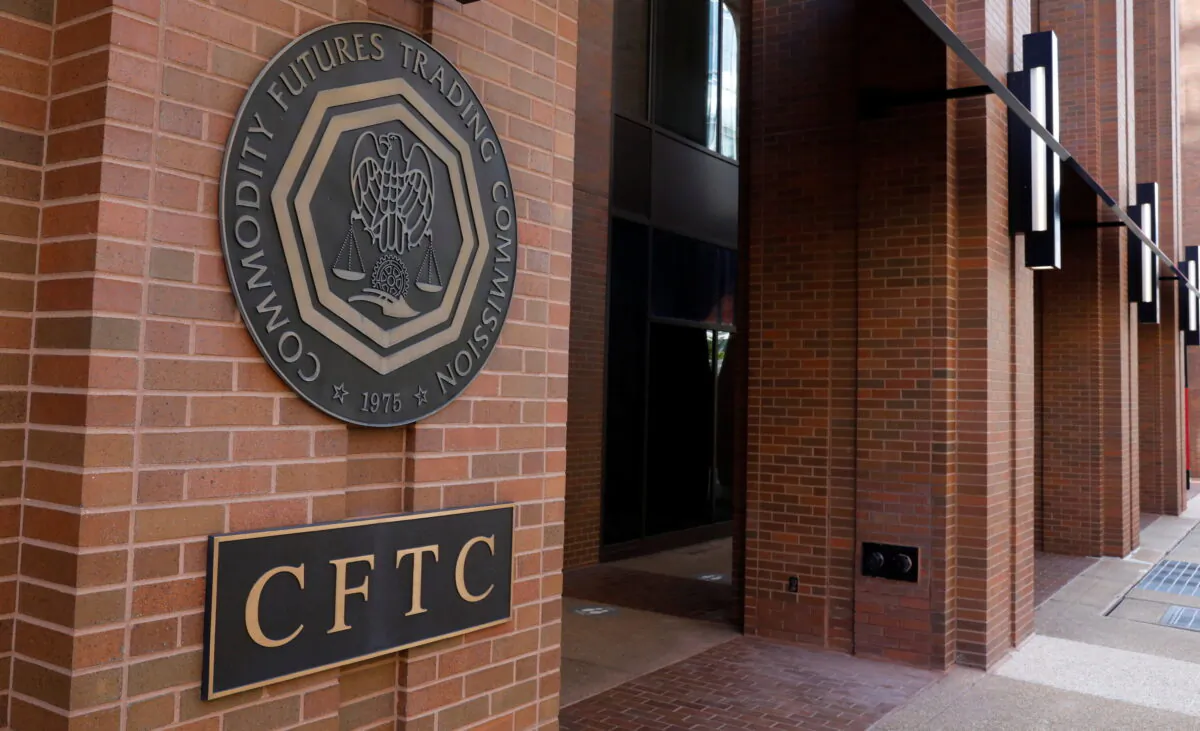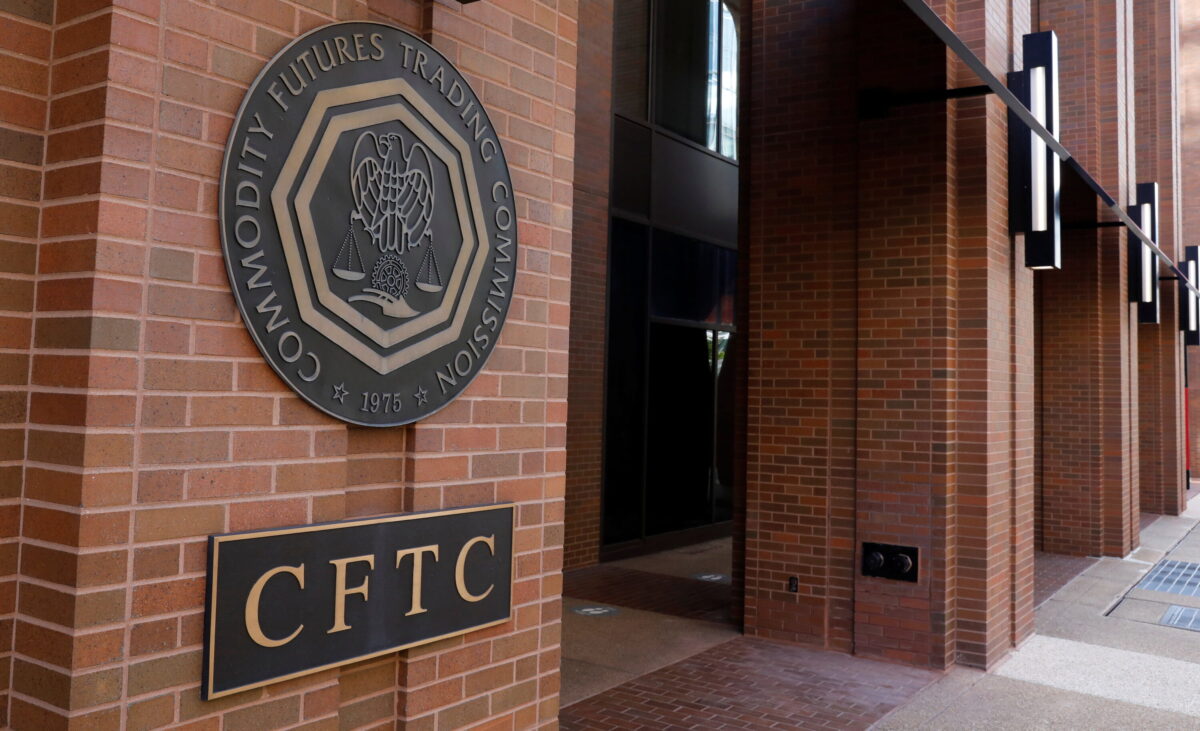

The federal government on Thursday sued Arizona, Connecticut, and Illinois to stop their regulation of prediction markets, arguing that it holds jurisdiction over event contracts traded on federally registered platforms.
The Commodity Futures Trading Commission (CFTC) said the three states have attempted to ban, regulate, or restrain the activities of designated contract markets that offer trading in lawful event contracts—a legally binding “yes or no” bet on the outcome of real-world events. The agency says that such attempts by the states undermine its authority under the Commodity Exchange Act.
The defendants include the states’ respective governors and attorneys general: Katie Hobbs and Kris Mayes in Arizona, Ned Lamont and William Tong in Connecticut, and JB Pritzker and Kwame Raoul in Illinois. All are Democrats. State gaming regulators were also named as defendants.
The lawsuits follow the states’ cease-and-desist letters to companies Kalshi, Polymarket, Crypto.com, and Robinhood for providing event contract services, alleging that the companies violated state gambling laws. Although sports betting is legal in those states, they argued that prediction markets violate state laws that prohibit people under 21 from placing bets. A prediction market is an online platform where people buy and sell shares on the outcome of future events—like elections or sports—and the price reflects the public’s estimated probability of that event happening.
“Despite the CFTC’s clear and longstanding exclusive jurisdiction to regulate event contracts under the Commodity Exchange Act, various states have attempted to outlaw, regulate, or otherwise restrain the activities of [a designated contract market] that facilitate trading in lawful event contracts,” the CFTC said in a statement.
Congress passed a national framework for commodity derivatives markets to preclude the development of a hodgepodge of state regulations, the agency argues.
“The CFTC will continue to safeguard its exclusive regulatory authority over these markets and defend market participants against overzealous state regulators,” CFTC Chairman Michael S. Selig said. “This is not the first time states have tried to impose inconsistent and contrary obligations on market participants, but Congress specifically rejected such a fragmented patchwork of state regulations because it resulted in poorer consumer protection and increased risk of fraud and manipulation.”
The CFTC began recognizing event contracts in 1992, when it approved the Iowa Electronic Markets, operated by the University of Iowa. After the 2008 financial crisis, Congress broadened the agency’s authority over such contracts, defining “commodity” to include innovation in financial markets.
The agency issued an Advanced Notice of Proposed Rulemaking in March to shed light on the application of the Commodity Exchange Act and its regulations to prediction markets. It plans to promote rules and strengthen regulations for prediction platforms.
The CFTC underscored that the Commodity Exchange Act is intended to foster novel and emerging uses of technology while promoting a federal regulatory structure. The agency maintains that state-level restrictions erode that framework and could make market participants vulnerable to unpredictable regulations.
Prediction markets, such as Kalshi and Polymarket, have caught the attention of regulators recently. California Gov. Gavin Newsom issued an executive order on March 30 prohibiting state officials from employing insider knowledge to profit or helping others profit through the use of these platforms.
Earlier, Sens. John Curtis (R-Utah) and Adam Schiff (D-Calif.) introduced the bipartisan Prediction Markets Are Gambling Act to ban such platforms from providing contracts akin to sports bets or casino-style gambling.
Reuters contributed to this report.
 Friends Read Free
Copy
Facebook
Tweet
Friends Read Free
Copy
Facebook
Tweet