
A government official on July 22 promised to improve oversight and operation of the U.S. organ transplant system, following an investigation that found that some patients marked for organ donation showed signs of life but were not immediately removed from the process, among other problems.
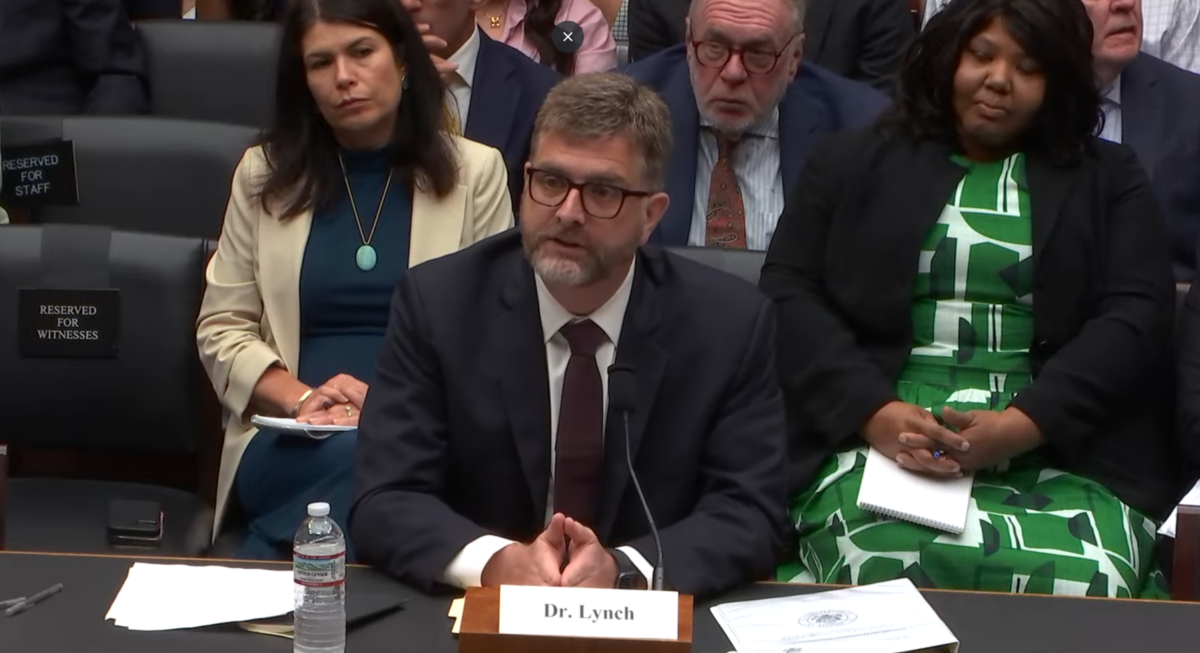
Dr. Raymond Lynch, chief of the Organ Transplant Branch of the Health Resources and Services Administration (HRSA), said the primary problem identified in HRSA’s investigation of Kentucky Organ Donor Affiliates was that the organization failed to reevaluate initial neurological exams of potential donors when they showed signs of improvement.
Other issues included not coordinating with medical teams, poor communication with families of potential donors, and misclassifying deaths, according to a memorandum made public ahead of the hearing.
“I apologize for care delivered to your constituents in Kentucky,” Lynch told Rep. Brett Guthrie (R-Ky.) during a hearing held by the House Energy and Commerce Subcommittee on Oversight and Investigations. “It’s unacceptable, and it’s something we’re not going to let stand.”
“This is fixable. This is something that can be done safely.”
A whistleblower who formerly worked for Kentucky Organ Donor Affiliates (KYDA) contacted the subcommittee and said that in 2021, a patient was pronounced brain dead and pursued as an organ donor by the organization despite that the patient showed signs of life multiple times, according to a letter made public by lawmakers in 2024.
The United Network for Organ Sharing, a nonprofit that manages the nation’s organ transplant network under a government contract, asked the organization for information about the case, including documents on brain death testing. The organization declined to provide the information, instead stating that it stood behind how the case was handled.
The Organ Procurement and Transplantation Network, a public–private partnership that administers the contract for the network and helps oversee it, determined that the allegations were unfounded and closed the case. HRSA reviewed the matter and directed the network to reopen the case. KYDA then provided documents showing that staffers saw the potential donor as showing an increasing level of neurological activity but declined to pause the organ procurement process.
The patient was sent to the operating room, where the surgeon refused to operate because she felt it would be inhumane. The patient was ultimately discharged and is still alive today.
The Department of Health and Human Services, the parent agency of HRSA, announced on July 21 that HRSA’s subsequent investigation of the organization uncovered “clear negligence,” including more than 100 cases in which patients showed neurological signs such as pain or having no cardiac time of death recorded when procurement was started.
Officials said they were implementing changes, including requiring that the Organ Procurement and Transplantation Network develop and implement a one-year monitoring plan of KYDA to address the problems uncovered in the investigation.
During the July 22 hearing, lawmakers said they were concerned by the findings and stories outlined in a recent report by The New York Times detailing other situations in which patients were advanced toward donating organs despite signs of life being visible.
“What happened in these cases fractured the physician–patient relationship and saw patients subjected to pain and suffering that never should have occurred,” said Rep. John Joyce (R-Pa.), chairman of the subcommittee.
The number of organs procured under the system has risen in recent years. More than 48,000 organ transplants were performed in 2024. Still, there are more than 103,000 people on the waiting list for transplants.
Most donors historically have been brain dead, but about half of donated organs now come from patients whose circulatory systems stop functioning, otherwise known as circulatory death, Lynch told the hearing.
Rep. Diana DeGette (D-Colo.) said the increase has led to more pressure on hospitals to certify potential donors as dead, even when there are signs of life.
Lynch said, “Increased emphasis on performance in any area of medicine is never an excuse for noncompliance.”
Barry Massa, CEO of Network for Hope, told media outlets in a statement on July 21 that the organization looks forward to working with the government “and encourages the development of policies that support the betterment of the organ transplant system as a whole.”
The Association of Organ Procurement Organizations, a trade group, said in a statement this week that the group and its members are working to learn more about concerning incidents that have been reported “to improve safeguards so patients, their families, and the public can continue to trust this system that gives life, hope, and healing to hundreds of Americans every day.”
Representatives said they wanted to work to restore trust in the donation system.
“We want to make sure that the American public knows that if they are willing to become an organ donor, they’re going to be treated humanely and legally, and that the families’ wishes will be respected, and that you’re not going to have these horrible situations that we’ve seen in Kentucky and other places,” Rep. Gary Palmer (R-Ala.) said.
 Friends Read Free
Copy
Facebook
Tweet
Friends Read Free
Copy
Facebook
Tweet