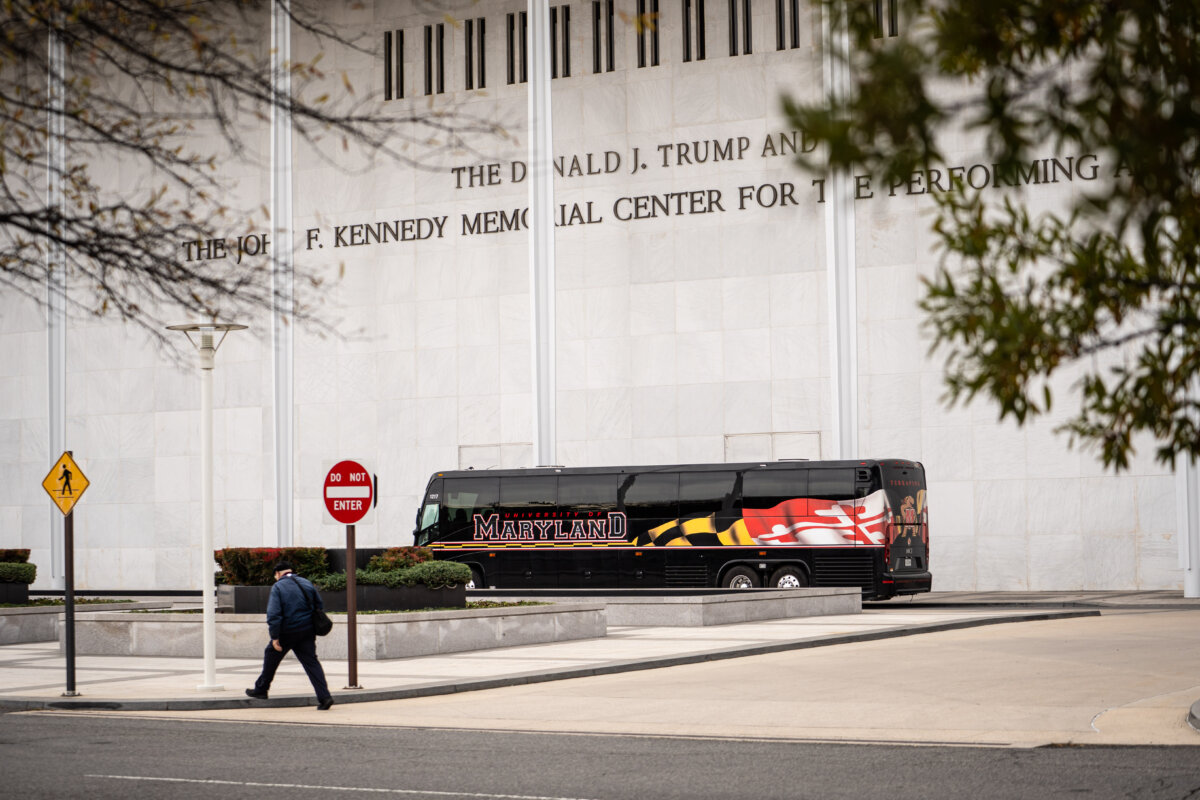

A coalition of preservation groups and architecture organizations filed a federal lawsuit on March 23 aiming to halt planned renovations at the Trump–Kennedy Center in Washington.
The groups, which include the DC Preservation League, alleged that the Trump administration did not follow procedures outlined under federal law for implementing large-scale changes to historic properties.
The lawsuit also alleges that officials moved forward with exterior changes—such as repainting columns and adding new signage—without consulting required local and federal review bodies, including the DC Department of Buildings, the State Historic Preservation Officer, the National Capital Planning Commission, and the Commission of Fine Arts.
Although the Trump–Kennedy Center has previously secured permits for various projects, the plaintiffs argue that these recent alterations bypassed mandated oversight processes.
Central to the complaint is the claim that no Section 106 review was conducted, a process required under federal law to assess how projects might affect historic properties.
The plaintiffs argue that this omission reflects a broader pattern of advancing changes without proper review. They say that any large-scale renovation or redesign could cause lasting damage to the site’s historic character, architectural integrity, and symbolic purpose as a national memorial.
The plaintiffs brought the case in the U.S. District Court for the District of Columbia against multiple defendants, including the Trump–Kennedy Center’s board of trustees and President Donald Trump in his role as board chairman.
In response, White House spokesperson Liz Huston defended the plans.
“President Trump is committed to making the Trump-Kennedy Center the finest performing arts facility in the world,” she told The Epoch Times in an emailed statement. “We look forward to ultimate victory on the issue.”
The Trump–Kennedy Center did not respond to a request for comment by publication time.
Congress had allocated nearly $256.7 million through fiscal year 2029 for repairs, restoration, security improvements, and addressing maintenance backlogs at the cultural center.
The plaintiffs also include the National Trust for Historic Preservation, the American Institute of Architects, the American Society of Landscape Architects, Docomomo US, the Society of Architectural Historians, the Committee of 100 on the Federal City, and the Cultural Landscape Foundation.
Other defendants are the Smithsonian Institution, the National Park Service, the Department of the Interior and its secretary Doug Burgum, the U.S. Army Corps of Engineers, and the National Capital Planning Commission.
This is not the only lawsuit filed looking to stop changes to the center.
Rep. Joyce Beatty (D-Ohio) filed a lawsuit in December in response to the renaming of the venue from the Kennedy Center to the Trump–Kennedy Center.
The controversy comes amid broader changes during Trump’s second term.
Shortly after returning to office, he replaced the center’s leadership with a new board that appointed him chairman.
Richard Grenell briefly served as president before being succeeded by Matt Floca.
Programming at the venue has also shifted, featuring events such as the premiere of a documentary about First Lady Melania Trump.
The board announced the renaming of the facility to include Trump’s name in December and installed new exterior signage, a move critics argue requires congressional approval.
Trump also announced a two-year renovation on Feb. 1.
These developments have sparked backlash across the arts community.
Several prominent artists and performers withdrew from scheduled appearances, while others resigned from advisory roles.
Leadership changes have also followed, including the recent departure of National Symphony Orchestra executive director Jean Davidson to take a position in Los Angeles.
The Associated Press contributed to this report.
Correction: A previous version of this article misstated that the defendants in the case were plaintiffs. The Epoch Times regrets the error.
 Friends Read Free
Copy
Facebook
Tweet
Friends Read Free
Copy
Facebook
Tweet