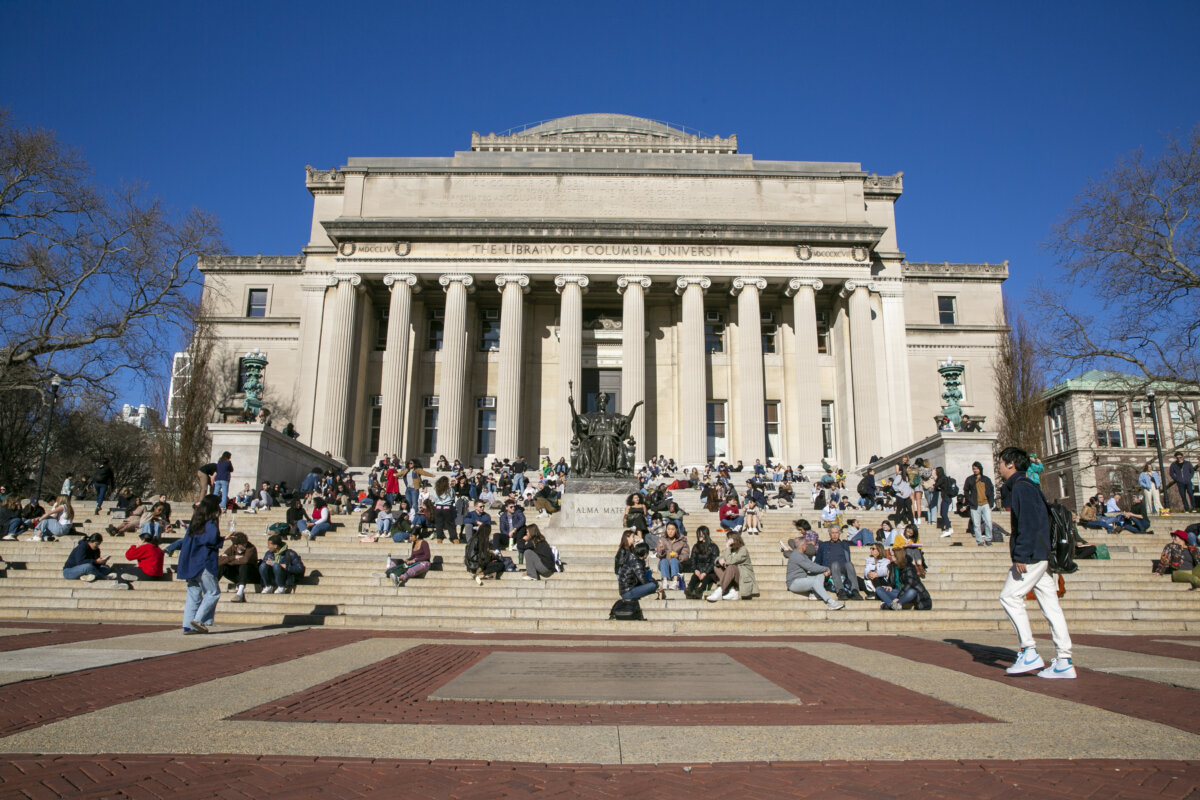

A hacker broke into Columbia University’s IT systems last week and stole student data in a cyberattack that officials believe was politically motivated.
The breach, which occurred on June 24, caused a systemwide outage that temporarily locked students and faculty out of online platforms, including their university email accounts.
On Thursday, a Columbia official told The Epoch Times that early findings indicate that the intruder was a “hacktivist”—a hacker motivated by political activism rather than financial gain, as is typical with ransomware attacks.
“The university’s investigation has indicated the hackers are highly sophisticated and were very targeted in their theft of documents,” the official said in an emailed statement. “They broke in and stole student data with the apparent goal of furthering their political agenda.”
Columbia quickly restored most of its systems and is working with a top-tier cyberforensics firm to assess the scope of the breach, the official said, adding that it may take weeks or even months to fully assess the scope of the data breach.
In a public statement issued on July 1, Columbia confirmed that the FBI is involved in the investigation. The university has pledged to share the findings with the campus community as well as with anyone whose personal information may have been compromised.
Meanwhile, Columbia has maintained that its admissions process fully complies with the U.S. Supreme Court’s landmark 2023 ruling declaring so-called “race-conscious” admissions policies unconstitutional. In the wake of the ruling, the university saw notable demographic shifts between the classes of 2027 and 2028: the percentage of incoming first-year students identifying as black or African American declined sharply, while the proportion of Asian American students increased.
According to a university profile of the class of 2028—based on self-reported data that allows students to be counted in multiple categories—the share of black students dropped by eight percentage points, falling from 20 percent to 12 percent. This marked the most significant decrease among all racial and ethnic groups in the profile.
Meanwhile, the percentage of students of Asian descent rose by nine percentage points, from 30 percent to 39 percent. The proportions of students identifying as white, Hispanic, or Native American each declined slightly.
 Friends Read Free
Copy
Facebook
Tweet
Friends Read Free
Copy
Facebook
Tweet