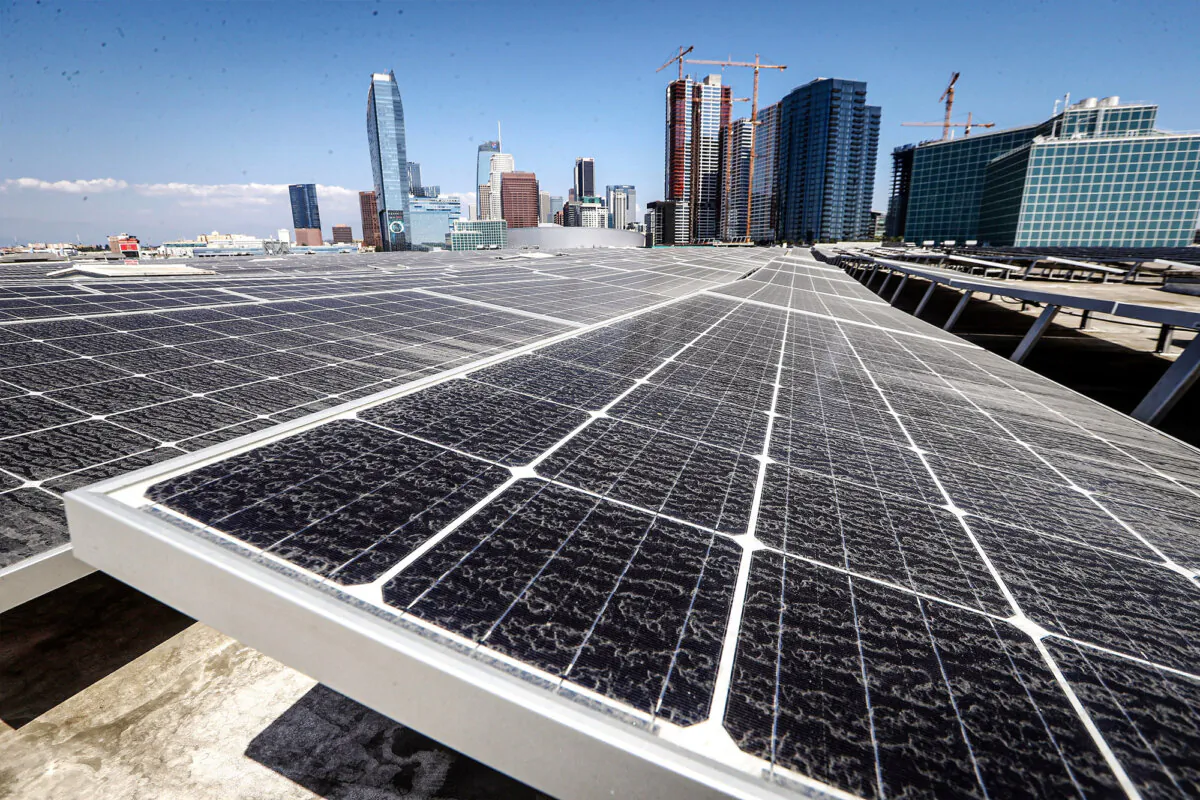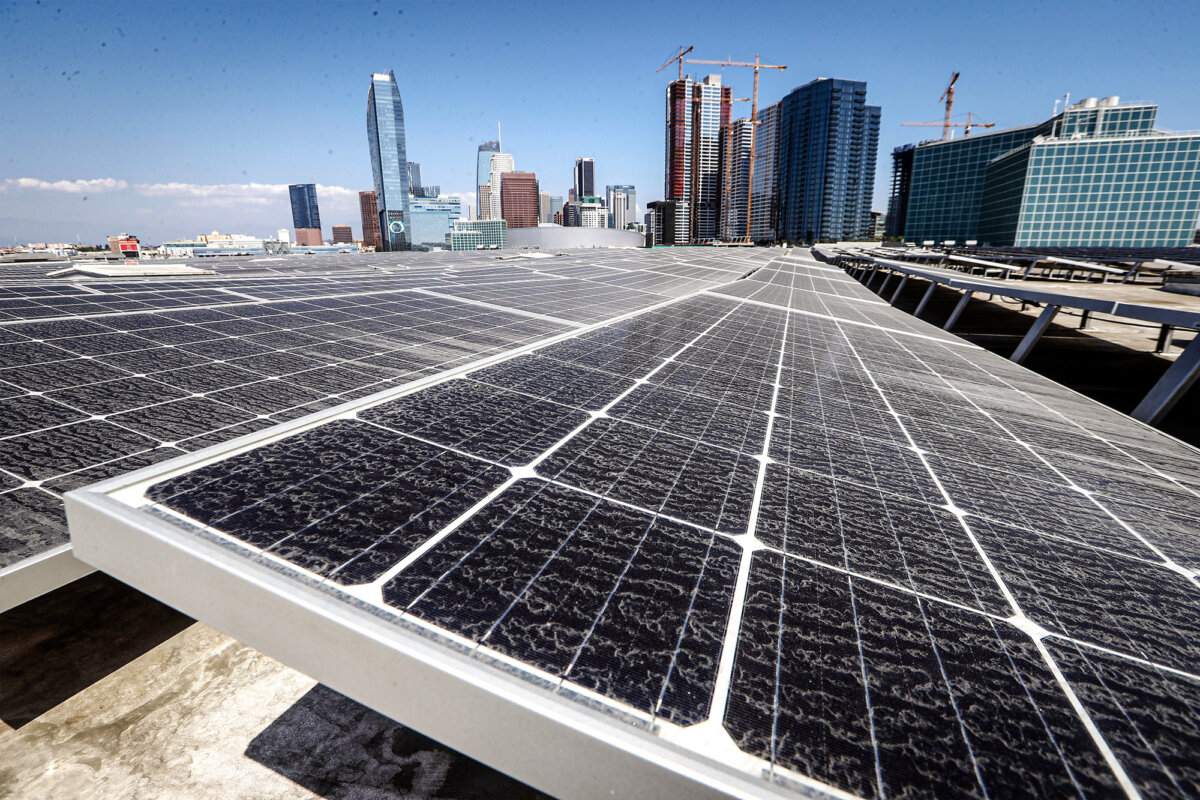

Around 33 gigawatts (GW) of new solar electric generation capacity are expected to be added in the United States in 2025, which would make solar account for over half of all new electricity generation capacity scheduled for this year, the Energy Information Administration (EIA) said in an Aug. 20 statement.
In the first half of the year, 12 GW of solar capacity was added, the agency said. Another 21 GW are set to be added in the second half.
According to the energy agency, 64 GW of total electric generation is expected to be brought online this year. As such, 33 GW in solar capacity will represent 51.5 percent of all the new additions.
This year’s 64 GW of new energy generation capacity will set a new record. “The previous record for U.S. generating capacity additions was set in 2002, when developers added 58 GW to the grid, 57 GW of which was fueled by natural gas,” said the EIA.
“Although developers have added natural gas-fired capacity each year since then, other technologies such as wind, solar, and battery storage have become more prevalent options for new capacity.”
If the planned addition of solar capacity materializes, it will be adding more capacity than in any other year, the agency said, attributing this growth largely to the build-up in Texas.
So far, 3.2 GW of solar capacity addition in the United States has been in Texas, which represents 27 percent of the 12 GW nationwide additions in the first six months, according to the EIA.
Texas is scheduled to see 9.7 GW of solar capacity additions in the second half of 2025, it said.
It is unclear how much of the planned solar capacity additions this year and in subsequent years will come to fruition since the Trump administration is actively moving away from such energy sources.
In an Aug. 20 Truth Social post mostly in all caps, President Donald Trump said that “any State that has built and relied on windmills and solar for power is seeing record breaking increases in electricity and energy costs, the scam of the century!”
“We will not approve wind or farmer destroying Solar. The days of stupidity are over in the USA!!! MAGA,” he wrote.
Environmental group Sierra Club criticized Trump’s remarks in an Aug. 20 statement, blaming the president for trying to “deflect blame” for high energy prices.
Holly Bender, chief program officer at the organization, said energy prices are going up because of the Trump administration’s “pro-fossil fuel policies.”
“Instead of investing in clean energy and lowering monthly costs for families, Donald Trump is bolstering costly and deadly coal plants,” Bender said.
“Donald Trump can deflect all he wants, but when Americans see higher energy bills while fossil fuel companies rake in more profits, the truth will be clear.”
Between January and July, the average city price of electricity has risen from $0.18 to $0.19 per kilowatt hour, an increase of 5.5 percent, according to Federal Reserve Bank of St. Louis data.
Ending Renewable Energy Policies
On July 7, Trump signed an executive order to end federal subsidies for wind and solar energy projects, highlighting the unreliability of these sources and the dependence risk on foreign-controlled supply chains.
According to a U.S. government report, around 95 percent of solar panels worldwide are made up of polysilicon, and half of its global production comes from China’s Xinjiang region, where Uyghurs and other minorities face conditions of forced labor.
“China’s system of forced labor threatens solar supply chains around the world,” said the report.
Multiple agencies have since taken action, aligning with Trump’s executive order.
In late July, the Department of the Interior (DOI) said the agency was implementing policies to end what it termed as special treatment for “unreliable energy sources” such as wind.
On Aug. 1, Interior Secretary Doug Burgum signed an order seeking to rein in “environmentally damaging” solar and wind power projects and ensure that federal lands are used optimally when it comes to energy projects.
“One advanced nuclear plant … produces 33.17 megawatts (MW) per acre, while one offshore wind farm produces approximately 0.006 MW/acre, which is approximately 5,500 times less efficient than one nuclear plant,” the DOI said.
On Aug. 7, the Environmental Protection Agency announced it was ending a $7 billion program that offered solar energy grants to more than 900,000 low-income households.
This week, Agriculture Secretary Brooke Rollins said the Department of Agriculture has stopped all its programs from funding solar or wind projects on productive farmland.
According to EIA data, fossil fuels accounted for around 60 percent of electricity generation in 2023, followed by renewables at 21 percent, and nuclear energy at 19 percent.
The high share of fossil fuels in electricity generation makes retirements of these sources a risky proposition for electric supply stability.
In July, the Department of Energy warned that the planned retirement of 104 GW of firm power generation by the end of this decade could raise the risk of blackouts in the country by 100 times. Firm power refers to power that can be generated at all times, such as coal and natural gas.
 Friends Read Free
Copy
Facebook
Tweet
Friends Read Free
Copy
Facebook
Tweet