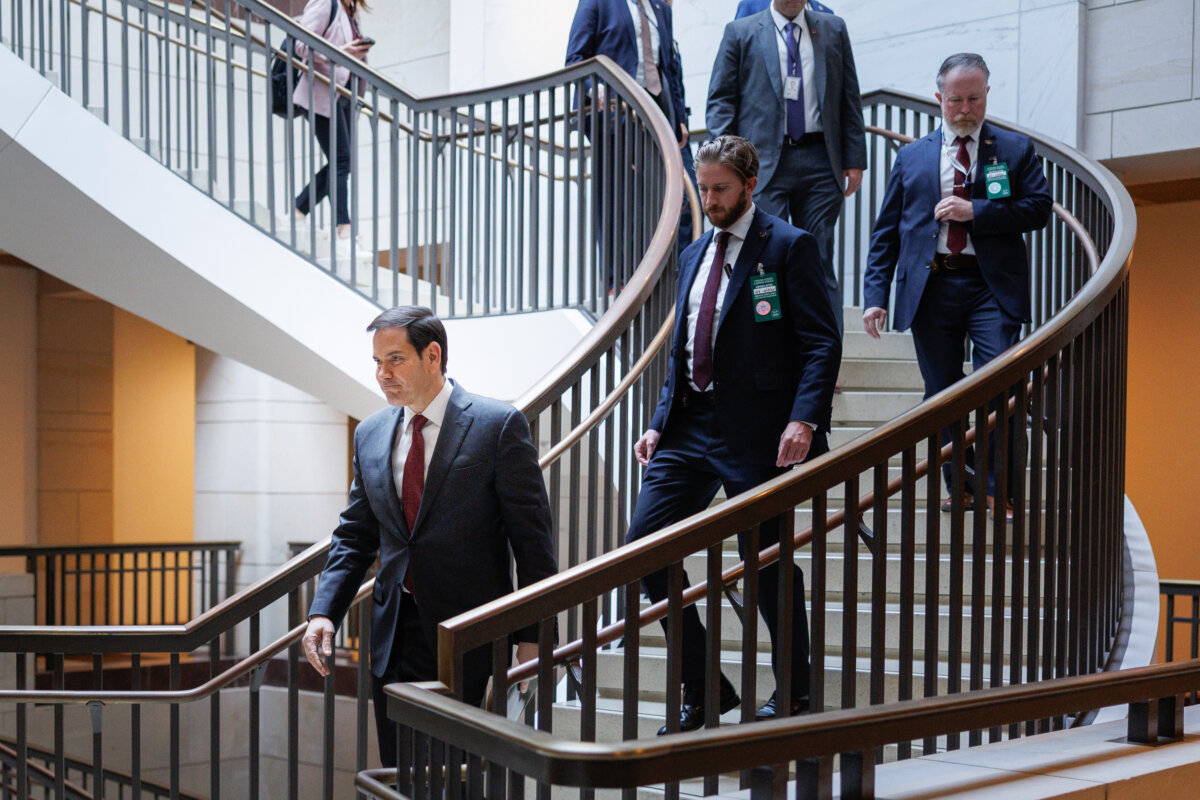

Congressional committee leaders received classified briefings from War Secretary Pete Hegseth and Secretary of State Marco Rubio on Nov. 5, amid calls for more information from the Trump administration on its military strikes in international waters related to alleged drug trafficking into the United States.
The roughly hour-long briefing in a secure facility in the Capitol received mixed responses. The meeting was open to congressional leaders of both parties, as well as the Republican chair and ranking Democrat for the committees that oversee the military, U.S. intelligence, and foreign relations.
Senate Minority Leader Chuck Schumer (D-N.Y.) said he wanted more information as he emerged from the briefing.
“What we heard isn’t enough. We need a lot more answers. And I am now asking for an all-senators briefing on this issue,” he told reporters.
Sen. Jim Risch (R-Idaho), chair of the Senate Foreign Relations Committee, left expressing confidence in President Donald Trump and his administration’s decisions.
“The administration has kept me, other members fully advised. [I’m] fully satisfied with what they’re doing. They’ve got good legal justification for what they’re doing,” he said.
“The president really ought to be congratulated for saving the lives of young American people. He should be thanked by the many parents who won’t even know that they won’t have to bury kids prematurely. They’re doing good work. They’re doing it lawfully.”
Sen. Mark Warner (D-Va.), the top Democrat on the Senate Intelligence Committee, said, “The notion on the kinetic strikes without actually interdicting and demonstrating to the American public that these are carrying drugs and they’re full of bad guys, I think is a huge mistake, and I think it undermines the confidence in the administration’s actions.”
He expressed some sympathy for the idea that the United States should be more aggressive toward the contested Venezuelan president, Nicolás Maduro.
Rep. Jim Himes (D-Conn.), the top Democrat on the House Intelligence Committee, said U.S. intelligence assets were being used to confirm that the vessels are carrying cocaine, but he said that “lots of mistakes could get made.”
He expressed outstanding concerns that U.S. forces were not using the same “architecture” as they did with counterterrorism strikes to ensure that innocent people aren’t inadvertently killed.
Himes added that the officials gave no indication that the strikes would stop but also indicated that they were targeting cocaine traffickers and not overtly intending to overthrow Maduro.
Rep. Gregory Meeks (D-N.Y.), the top Democrat on the House Foreign Affairs Committee, said nothing in the briefing convinced him that the strikes are legal.
“They made statements and explanations. I still believe, after all of their statements, that the acts are illegal,” he said.
In recent weeks, the U.S. military has been building up its naval force off South America, raising talks of a possible invasion of Venezuela and the prospect that Trump is trying to depose Maduro, who faces U.S. charges of narcoterrorism.
Trump told CBS’s “60 Minutes” recently that he doubts that the United States will go to war against Venezuela.
He said to a question about land strikes in the country, “I’m not going to tell you what I’m going to do with Venezuela, if I was going to do it or if I wasn’t going to do it.”
Concerns About Classified Operation
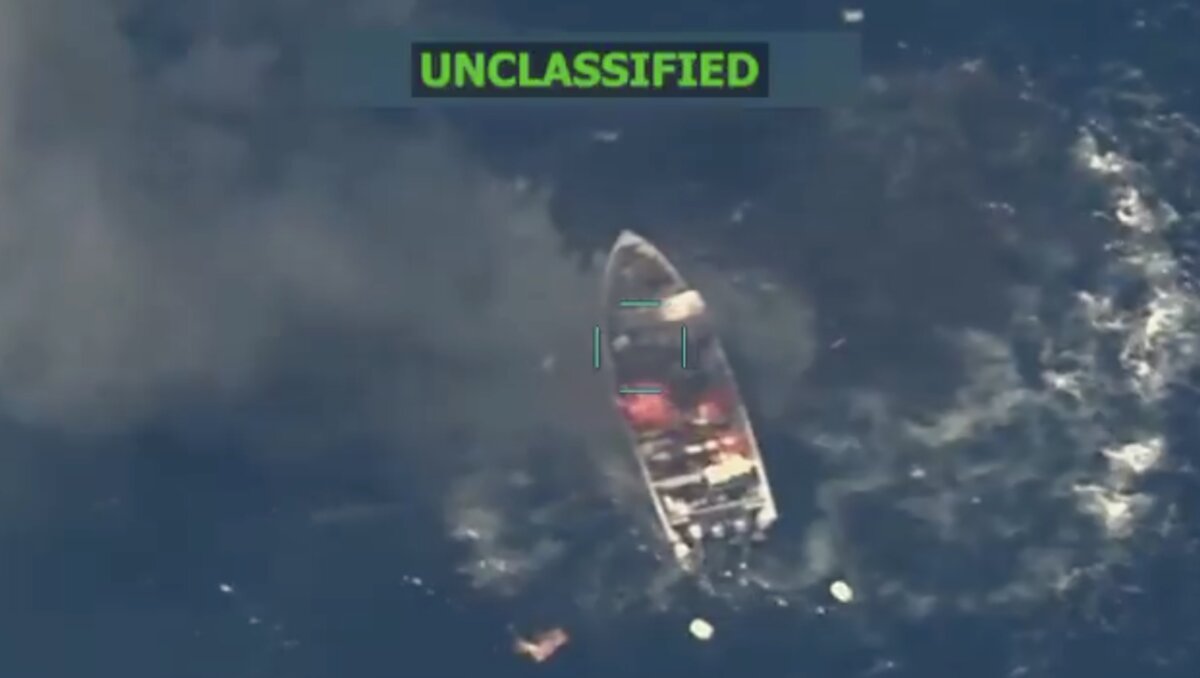
The lethal and military strikes on drug-smuggling vessels in the Eastern Pacific and Caribbean, in international waters, since September, have left some members of Congress feeling uncomfortable about whether the Trump administration possessed enough evidence for legal justification of its decisions to execute the deadly attacks.
The Trump administration has provided some information to Congress through a few classified briefings and updates from Hegseth following the military strikes.
Democrats have expressed concerns about the lack of due process in a court of law for those on board to defend themselves against the charges of criminal drug smuggling. They also sought more information regarding how the classified operations are conducted.
The administration has said it has had sufficient intelligence to know exactly who and what is on board, in response to the criticisms.
The 16 known strikes, so far, have killed at least 66 people, whom the administration has called narco-terrorists.
Venezuela and Colombia have strongly condemned the U.S. strikes, accusing Washington of fabricating a pretext for what they called “illegal” attacks while denying the U.S. claims that those on board were drug traffickers.
Colombian President Gustavo Petro told CBS News last month that the strikes had killed innocent workers for the cartel leaders.
“Killing the business’s workers is easy,” he said. “But if you want to be effective, you have to capture the bosses of the business.”
Legal Rationale
This week, the Trump administration presented to senators a document in which it argues its legal rationale for the anti-drug campaign.
Meeks said that the 40-page document, in which the Justice Department’s Office of Legal Counsel outlines the legal rationale for the Trump administration’s strikes, also did not convince him that the strikes are legal.
Sen. Tim Kaine (D-Va.) said that the document gave a thorough explanation for the administration’s legal rationale for the strikes but that he still saw “logical fallacies” in the argument.
“There is nothing in there about the rationale for Venezuela strikes, so it’s a very elaborate legal rationale for why you can strike a boat in international waters,” he said.
The briefing comes a day before senators are scheduled to vote on a Democrat-led resolution to require congressional approval of direct U.S. strikes on Venezuela.
Kaine said it’s important for Congress to take back its authority over war powers and have a full debate before deploying U.S. troops to use deadly force.
Aldgra Fredly and The Associated Press contributed to this report.
 Friends Read Free
Copy
Facebook
Tweet
Friends Read Free
Copy
Facebook
Tweet