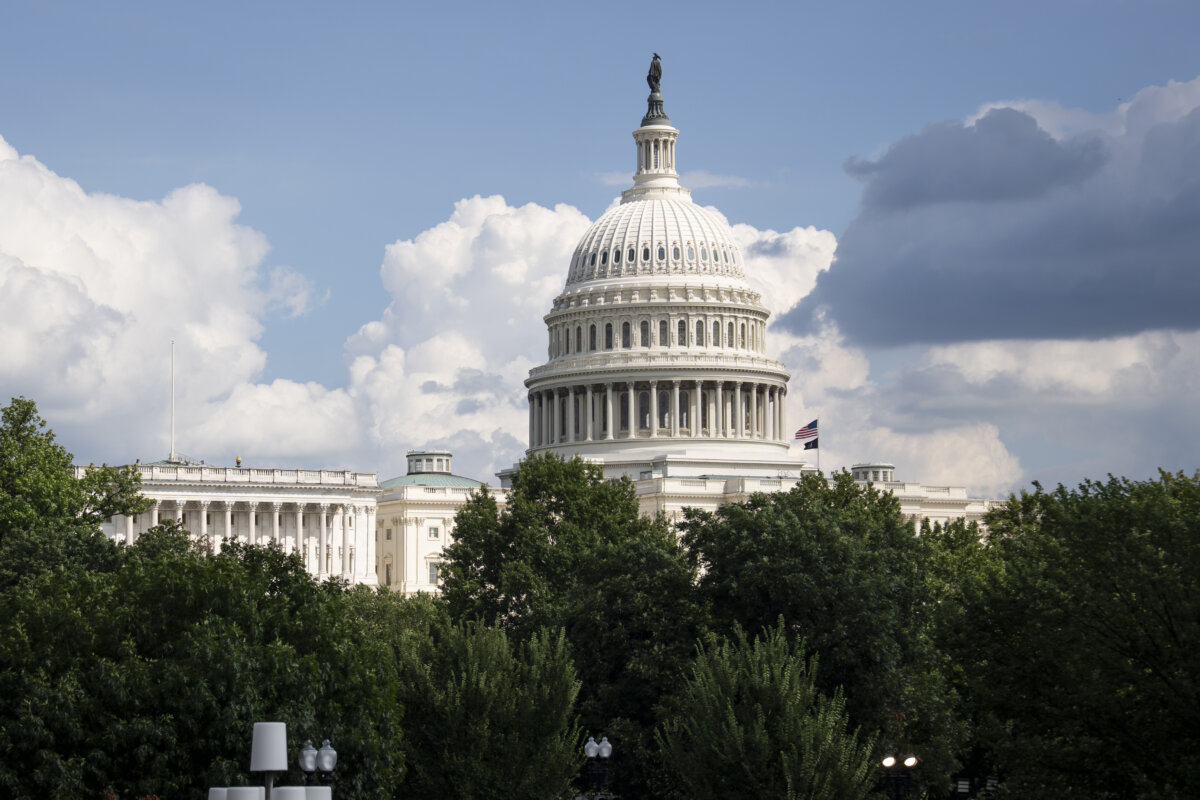

The U.S. House of Representatives passed a bill on Sept. 16 aimed at imposing new sanctions on Russia and extending sanctions on Iran, sending the measure to the president’s desk.
The Lindsey O. Graham Sanctioning Russia and Iran Act of 2026 aims to prevent Russia from using oil and gas sales to continue funding its war against Ukraine. It would also extend economic sanctions on Iran as the United States continues to pressure Tehran to make a deal over six months after the start of the Iran conflict.
The Senate previously passed the bill with an overwhelming 86–11 vote on Aug. 7. However, the bill faced opposition in the House over concerns that it would give President Donald Trump expanded authority to impose tariffs.
The House voted 262–159 to advance the bill on Wednesday.
Rep. Michael McCaul (R-Texas), who introduced the bill in the House, said Monday that it was time to “put maximum pressure” on Russian President Vladimir Putin by passing the bill and forcing Russia to negotiate an end to the war. McCaul also indicated this week that Trump has promised to sign the bill.
On Tuesday, the House voted 214–211 to approve a rule allowing consideration of Senate amendments to the legislation. In a rare move, Reps. Jared Golden (D-Maine) and Marie Gluesenkamp Perez (D-Wash.) joined almost all Republican representatives to advance the measure.
If signed into law, the bill would impose sanctions on Russian government and military officials, oligarchs, banks, and individuals associated with Russia’s arms and energy industries.
It would also allow Trump to impose tariffs of up to 500 percent on all Russian goods imported in the United States and up to 100 percent on goods from the top five countries that import Russian oil and gas products.
The legislation was first introduced in the Senate by the late Sen. Lindsey Graham (R-S.C.) in April 2025 but never advanced out of committee.
After Graham died on July 11, Sen. Darline Graham (R-S.C.), who was appointed to replace her brother, and Sen. Richard Blumenthal (D-Conn.) introduced a revised version of the bill.
The original legislation was changed after some U.S. lawmakers warned that the sanctions were too broad. The Trump administration had also pushed for flexibility to waive sanctions if it was in the interest of national security.
On Wednesday, Ukrainian President Volodymyr Zelenskyy suggested that the sanctions bill could “send the right signals and help take the right steps toward genuine peace” after more than four years of war between Russia and Ukraine.
In addition to imposing sanctions on Russia, the bill would extend the Iran Sanctions Act of 1996, restricting funding for Tehran’s weapons and energy sectors through 2031.
Despite passing overwhelmingly in the Senate, the sanctions bill faced opposition in the House, which was in recess for its summer district work period last month.
Democratic Reps. Gregory Meeks (N.Y.), Don Beyer (Va.), and Richard Neal (Mass.) suggested last week that the legislation would expand Trump’s tariff authorities and would not mandate sanctions on Russia.
“I am entirely in favor of aid for Ukraine. I am not in favor of broadly giving the president new tariff authority,” Neal told reporters on Monday. “I think that [if] they want to limit this bill to aid for Ukraine, we’re all in. … The whole issue for me is tariffs.”
Blumenthal told reporters on Monday that there was a “lot of misunderstanding about the bill,” noting that the tariffs would be targeted to a “very limited number of countries.”
The senator also appeared to dismiss potential amendments from lawmakers in the House.
“This bill was the result of months, in fact, years of painstaking, sometimes painful negotiation,” Blumenthal said. “I’d want to know why there need to be amendments now, and urge them not to make the perfect the enemy of the good.”
Blumenthal added that Ukraine faces a difficult winter and suggested that “stopping Putin’s war machine by throttling the revenue that he receives from sales of Russian oil and gas is a powerful boost at a tough time.”
Nathan Worcester contributed to this report.
 Friends Read Free
Copy
Facebook
Tweet
Friends Read Free
Copy
Facebook
Tweet