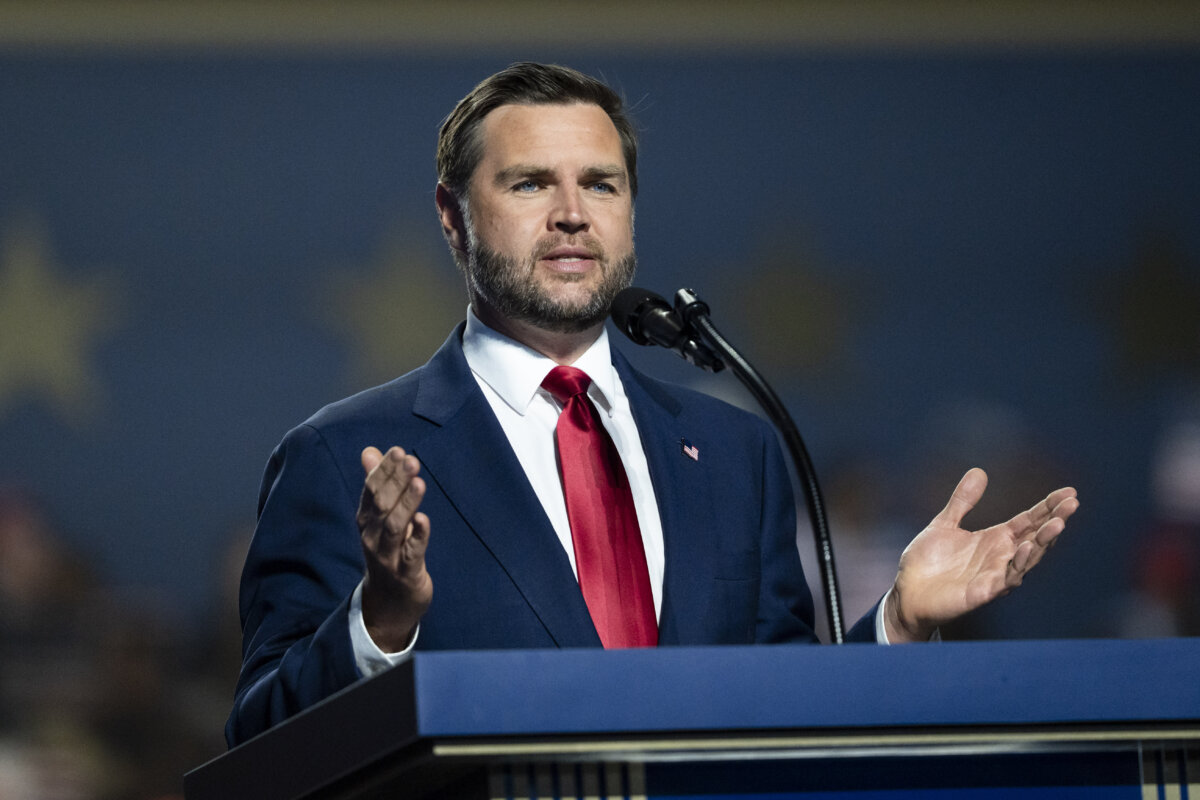

Vice President JD Vance said in an interview on Tuesday that the United States’ war with Iran would enter what he described as a new phase in the coming months, following on-and-off-again strikes against the country.
While the U.S. military has not launched new strikes in more than a week, it has kept up a naval blockade on Iranian ports since earlier in the summer, according to Central Command (CENTCOM).
At least 103 ships have been redirected to enforce compliance with the blockade, it said on Tuesday.
An economic operation, launched by the Trump administration in August, has been ongoing, said the U.S. Treasury Department in a statement this week.
A major Russian financial institution, VTB Bank Public Joint Stock Company, was sanctioned on Monday for providing support to Iranian banks penalized by the United States.
“We can’t predict the future, but I think the president is right to say that this thing will enter a much different phase in a couple of months,” Vance told the New York Post in an interview, published on Tuesday.
Vance added that Trump, as commander in chief, is the “person who determines” when conflicts begin and when they end.
“I certainly understand there’s some impatience from the American people, but fundamentally what’s happening right now is that the United States is not engaged in aggressive operations. We’re just not,” he added.
Iran’s regime is “occasionally shooting at commercial shipping,” Vance said, noting that the attack is “usually not successful.”
Since the conflict erupted in late February, Iran has attacked oil transportation vessels attempting to pass through the Strait of Hormuz, a key waterway that connects the oil-rich Gulf countries with worldwide markets.
“There are really two phases to this thing, and the first phase is done,” Vance continued. “The first phase was to destroy the nuclear program, destroy their conventional military, destroy their ability to project power in a way that they were able to even a couple of years ago.”
Vance added that the “second phase of this is ensure that they’re not able to rebuild and try to maintain as much global stability in the wake of that.”
Oil and gas prices have remained elevated in recent days, with the international benchmark Brent crude trading at around $105 per barrel on Wednesday, declining about 3 percentage points from the previous day.
Data from the American Automobile Association show that regular gas prices rose by 4 cents from Tuesday to Wednesday, with the average cost of a gallon reaching $4.36 on Wednesday.
Aside from the Iran conflict, Yemen-based Houthi terrorists have launched strikes against Saudi Arabia, including oil infrastructure, this month.
Over the past weekend, Saudi officials said they shut down the East-West Pipeline following attacks.
U.S. Energy Secretary Chris Wright told CNBC on Tuesday that the closure will last days, describing the shutdown as a brief interruption.
Vance’s remarks come as the Pentagon’s inspector general released a report finding that hundreds of buildings and structures used by U.S. forces in Middle Eastern countries were destroyed or damaged in the Iran conflict.
The watchdog suggested that U.S. munitions are also being depleted at a rapid pace due to Iran’s defensive capabilities.
 Friends Read Free
Copy
Facebook
Tweet
Friends Read Free
Copy
Facebook
Tweet