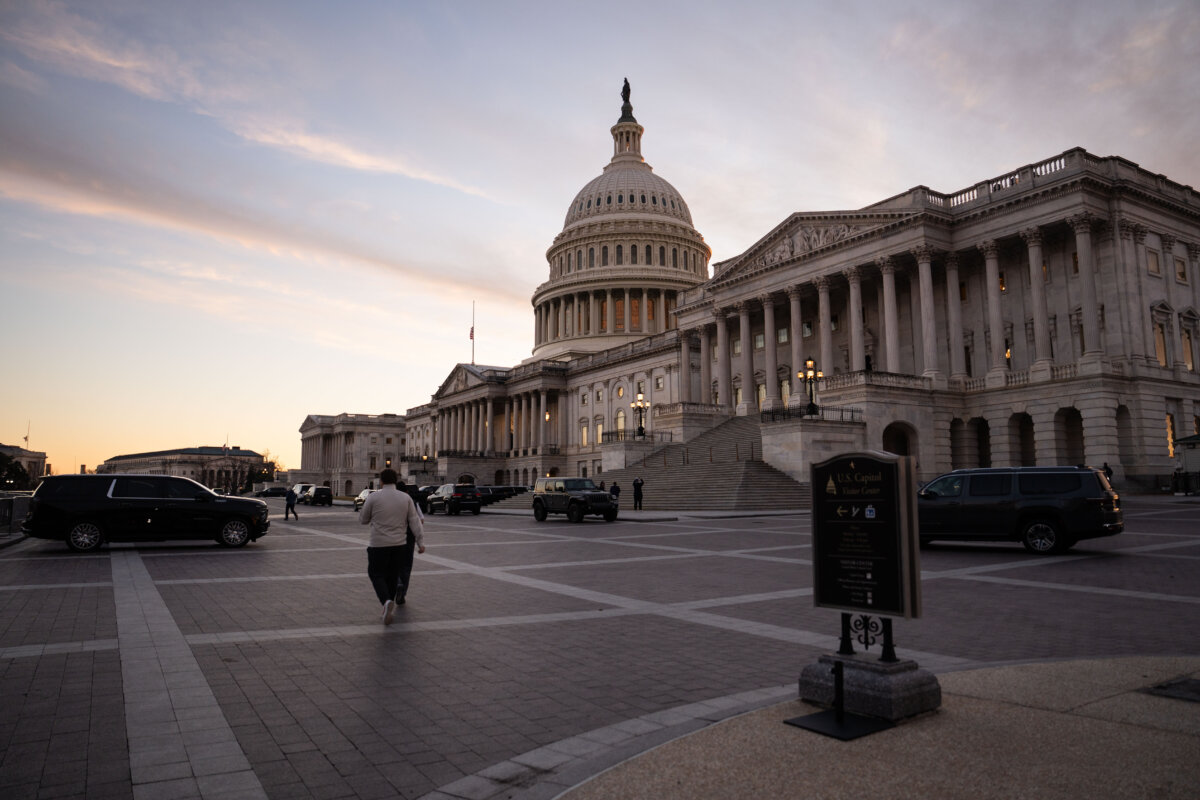


The House passed a package of spending bills on Jan. 22 to fund the federal government.
Lawmakers approved a measure funding the Departments of Defense, Labor, Health and Human Services, Education, Transportation, and Housing and Urban Development by a vote of 341–88. A separate bill to fund the Department of Homeland Security (DHS) passed by a vote of 220–207.
While the package includes some targeted spending reductions, it largely maintains funding at Fiscal Year 2025 levels.
Rep. Tom Cole (R-Okla.), the top Republican on the House Appropriations Committee, praised the legislation in a statement, saying that it “reflects the core tenets of American strength: combat-ready forces, secure communities, effective education and health systems, and modern transportation.” He said that the package “applies innovation and discipline to deliver results without waste.”
The DHS funding bill proved more contentious, with most Democrats voting against it amid nationwide protests targeting Immigration and Customs Enforcement (ICE).
Opposition was particularly pronounced following an ICE-involved shooting in Minneapolis earlier this month that left protester Renée Nicole Good dead after she drove her vehicle toward an ICE officer. Federal officials say the officer was struck by the vehicle and acted in self-defense.
In the aftermath of the shooting, Democrats have urged President Donald Trump to scale back ICE deployments in Democratic-led jurisdictions. In Congress, lawmakers have focused more narrowly on funding reductions and policy reforms.
The DHS bill includes several changes to ICE policies and operations. It would allocate $20 million for the purchase and deployment of body cameras for ICE and other immigration agents engaged in domestic law enforcement, and it would require standardized uniforms for those agents. The legislation also increases funding for civil liberties oversight of ICE activities.
The bill also mandates expanded training for immigration agents operating within the U.S. interior, with an emphasis on de-escalation. It directs DHS Secretary Kristi Noem to ensure that agents are trained on the First Amendment right to record federal officers during public operations.
The measure would also reduce immigration detention capacity. While the administration requested funding for 50,000 detention beds, the bill would lower the total to 41,500. Funding for enforcement and removal operations would also be reduced by $115 million.
Despite these changes, many Democrats argued that the bill does not go far enough.
Rep. Lauren Underwood (D-Ill.), a member of the House Appropriations Committee, said she would vote against the bill.
“The 2026 Homeland Security funding bill that the House is voting on this week is an easy no for me,” Underwood wrote on X. “It’s a blank check with no accountability for DHS’s outrageous abuses.”
Several other Democrats on the Appropriations subcommittee echoed her opposition. Others, however, said they would support the legislation. Rep. Rosa DeLauro (D-Conn.), the top Democratic appropriator, said she would back the bill, citing the reforms it contains.
 Friends Read Free
Copy
Facebook
Tweet
Friends Read Free
Copy
Facebook
Tweet