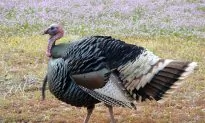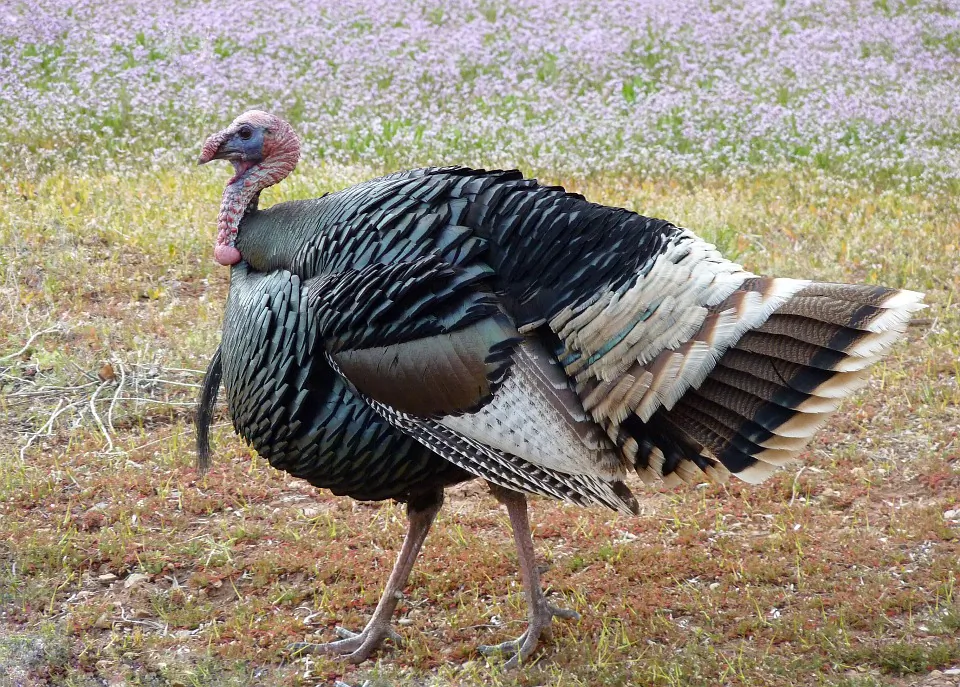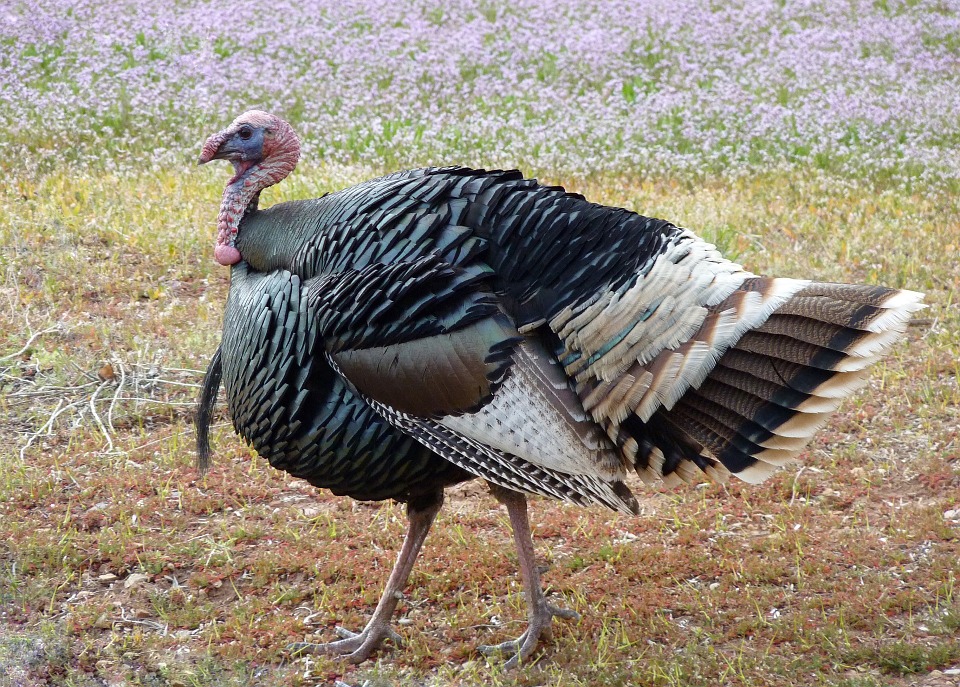

It can trot up to 25 mph, take wing at more than 55 mph, hear an acorn drop in a windstorm, see predators 100 yards away, alert the forest to approaching danger with distinctive calls, and disappear in plain sight.
There were countless millions of Meleagris gallopavo, or wild turkeys, across what is now the United States in 1621 when the Wampanoag Tribe taught Plymouth Colony newcomers how to trap the native fowl in Massachusetts.
Yet when President Abraham Lincoln declared Thanksgiving a national holiday in 1863, turkey had disappeared from New England, and by the 1930s, there were fewer than 30,000 subsisting in isolated swamps in the Southeast and in the Allegheny Mountain Range of the Appalachians in Pennsylvania and New York, according to the Theodore Roosevelt Conservation Partnership.
The clever, resilient survivor unique to North America, its habitat consumed by decades of deforestation and its numbers decimated by commercial hunting, was facing extinction. The wild turkey was almost certain to vanish from the nation’s fields and forests, just like the eastern elk, passenger pigeon, Carolina parakeet, and California grizzly bear had.
But a near-century later, there are an estimated 6.5 million wild turkeys in sustainable populations in 49 of the nation’s 50 states, according to federal and nonprofit data.
Their rebound is a remarkable model of 20th-century cooperative conservation by hunters, farmers, biologists, outdoors enthusiasts, and lawmakers working together to save a species.
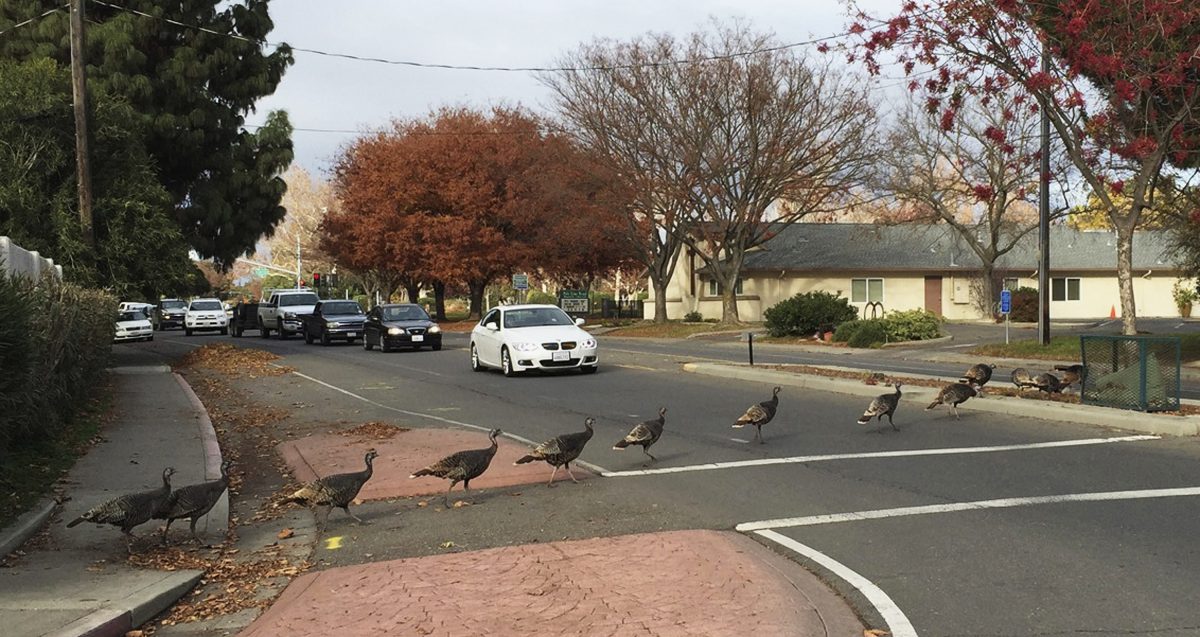
And in saving the wild turkey, they may be saving what remains of the wild in America, not just in remote preserves, but also in roadside greenbelts, grassy hillsides, and backyards in towns and cities across the country—even in the New York City borough of Manhattan.
“Great turkey habitat is healthy habitat, resilient forests, well-managed landscapes,” said Doug Little, the National Wild Turkey Federation’s director of conservation operations in the East.
“We do a lot of work with partners that don’t just benefit wild turkey, but a whole host of other species, including species that are, quite frankly, in peril.”
Pete Muller, the federation’s director of communications, said, “Who doesn’t love seeing a wild turkey?”
He said virtually every American should care about the survival of this “American icon.”
All wild turkeys are Eastern turkeys or subspecies. The only state without sustainable turkey populations is Alaska.
“If you’re looking east of the Mississippi, it’s all Eastern,” Muller said. “And then you have Osceola in the southern half of Florida. As you move into the Great Plains, that’s where you have Rio Grandes running from Kansas down to Texas.
“[The Rocky Mountains are] primarily where you have your Merriams. In the Southwestern states, Arizona, New Mexico, that’s where you have your Gould subspecies. Washington, I think, has three or four subspecies. California has two. Hawaii has Rios.”
Most are likely related to transplants brought from “remnant” Allegheny populations using a waterfowl trapping technique developed in South Carolina’s Lowcountry.
Efforts to release “game farm birds” into the wild “didn’t work for years,” Little said.
“Those birds, not having the survival skills, didn’t have the wariness that it took to survive out there on the landscape,” he said.
But he said restoration “began to take off” once “cannon nets” used to snag ducks and geese were deployed to trap wild turkey, often by the flock, for transfer to suitable habitats across the country where, as the process and practice advanced, the birds thrived.
For the Birds
Among the keys to restoring the wild turkey was the 1937 adoption of the Pittman–Robertson Act, which levies a tax on hunting gear to pay for habitat restoration and thus changes land-use patterns, as detailed by E. Donnall Thomas Jr. in “How Sportsmen Saved the World.” Another key was the 1973 founding of the National Wild Turkey Federation in Aiken, South Carolina.
The federation has more than 250,000 members in at least 1,000 chapters across the United States, Canada, Mexico, and 14 other countries. It is committed “to conserving wild turkeys and preserving hunting heritage.”
Turkey hunters spend millions of dollars annually as a key constituency within the “conservation economy,” which, according to a September 2025 Teddy Roosevelt Conservation Partnership report, generates $115.8 billion in annual economic activity and supports more than 575,000 jobs nationwide.
Since 2022, Muller said, the federation “has put more than $2 million towards projects that, when leveraged with partner dollars, equal more than $22 million for wild turkey research” and habitat restoration of more than 940,000 acres.
More than 82,000 people are expected to attend the federation’s annual convention next year from Feb. 12 to Feb. 14 in Nashville. The convention is notable for its vocalization competition that tests hunters’ skills in imitating the clucks and cries of toms (males) and hens, all of which have purpose, from “a fly-down cackle” to an “assembly call,” according to the federation’s website.
“It is a big to-do,” Muller said. “We have live streamed it now for five or six years.”
According to him, some people look at it as entertainment, but for many, it is an opportunity to learn from experts what the birds are saying about them as they blunder about looking for their gossipy prey.
The federation has launched initiatives in restoring native grasses, shrubs, and trees, such as Roots to Roost in the Midwest, “an area of the country that has some of the highest levels of private ownership of land,” Muller said.
As with many of the federation’s efforts, the initiative “is about engaging with landowners and providing the resources they need on the ground to bring about conservation changes,” Muller said.
In Plains states, the Waterways for Wildlife program focuses on water corridors.
“Making sure we have stream ecosystem health and in those areas that adjoin streams, that’s an important aspect,” Muller said.
Other “landscape-level initiatives” in different regions, he said, include Habitat for the Hatch, which aims to improve “close-proximity nesting and brood habitat” on 1 million acres across the Southeast by 2033.
The federation’s Forest and Flocks program addresses year-round needs of the birds and aging forests and, as its website states, opposes “recurring proposed legislation in opposition to [the federation’s] mission.”
Little said “part of the puzzle” is keeping an eye on the Farm Bill, the five-year legislative package that funds agriculture, rural development, and conservation programs.
With Congress addled in dysfunction, the 2018 Farm Bill has been extended through September 2026.
“We’re hoping conservation programs within the Farm Bill get fully funded and are able to operate, so we can continue to do the type of work we do with private landowners across the board,” he said.
The federation shares a mission with dozens of conservation groups representing millions of Americans.
“We want to make sure our public lands continue to be our public lands,” Little said.
Talking Turkey
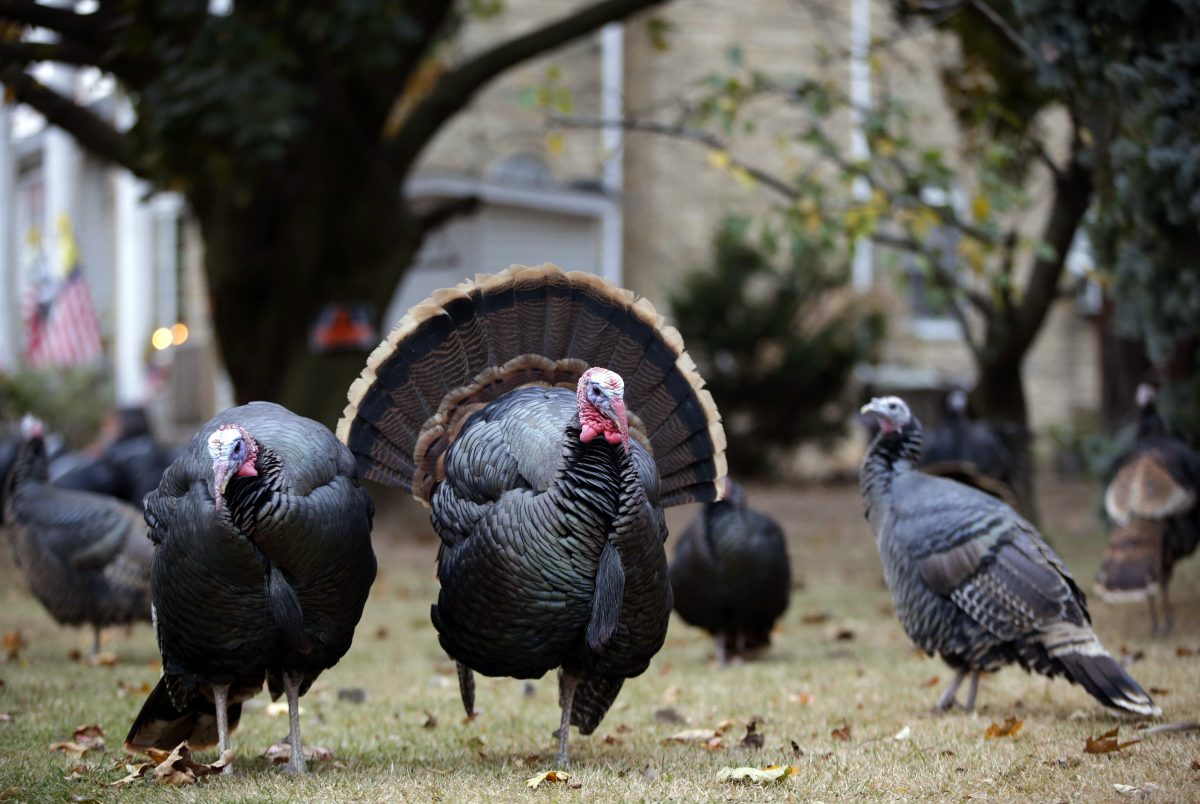
Although the wild turkey has dodged extinction, its survival remains tenuous. Populations topped 7 million in the 1990s, but have been in stasis or decline in some areas, especially the Northeast and Southeast.
“New York’s population went down at one point by 40 percent,” said Little, who lives in the Catskills.
“But since then, New York’s population has rebounded a fair amount, certainly not to the high point in the late ’90s, early 2000s, but they’re up now.”
The Southeast is an “area of greater concern” because rapid development is leading to habitat loss and because weather—successive wet, cold springs—has degraded nesting seasons, he said.
“These turkeys, it’s a rough life,” Little said. “We need a couple of good hatches in a row, and it just seems like lately, the cards have been stacked against them in a number of areas where you just can’t string together successive good hatches.”
Nesting season begins in mid-to-late March in Florida and, as spring advances north—often in tandem with the largemouth bass spawn—unfolds in May and June.
“[The hen and her eggs spend] 28 days and nights on the ground,” Little said. “Twenty-eight days is the magic number.”
According to him, a good hatch is two to three poults, or baby turkeys, whereas fewer than that indicates a stressed population.
Another peril wild turkeys face is misinformation, according to Muller.
“A lot of people don’t realize they can fly,” he said. “They don’t realize these birds truly can move when they’re running: 25 miles per hour.
“Most people don’t realize they sleep in trees every night except during nesting season, when the hen is on the ground.”
Little said: “They may have an air about them that gives an impression they’re not intelligent.
“But the reality is these birds, when they’re out in the woods, their sole reason for existence is survival, and if you have to evade the predators that they have—including us—you’ve got to be pretty wary, pretty smart.
“And their hearing, their eyesight, is second to none. Fortunately for hunters, they don’t have the ability to smell. You don’t have to work the wind to hunt them.”
Moreover, they taste good, even though they have slender legs and little fat and are not “as tender as a Butterball that’s sitting in a farmyard near a feeder and not moving much,” according to Little.
“You can definitely tell it’s poultry based on the taste, but it has a different texture,” he said. “Your leg meat is probably more akin to beef.”
Wild turkeys are not just an iconic symbol, Little said, but are also “responsible for funding a lot of conservation work on the ground that benefits other species in peril.”
Muller said: “The wild turkey is unique and special to North America, to this continent.
“That makes the bird special. It’s unique to us, and so we’re doing what we can to conserve this North American icon. That’s important to this organization, and we hope it’s important to all Americans.”
 Friends Read Free
Copy
Facebook
Tweet
Friends Read Free
Copy
Facebook
Tweet