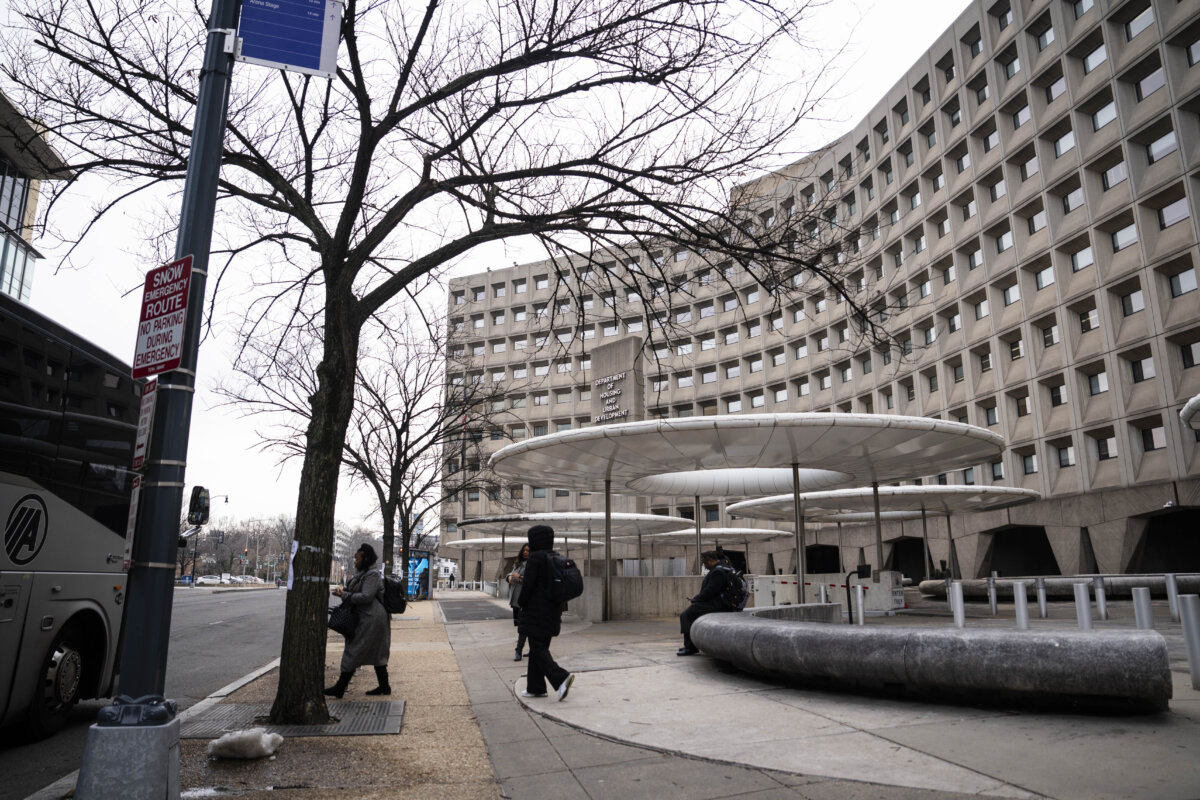

The Department of Housing and Urban Development (HUD) has issued a memorandum repealing a 2013 guidance in order to make housing more affordable to Americans.
The “burdensome” guidance raised the costs of constructing, purchasing, and renting multifamily dwellings, HUD said in a Sept. 1 statement. The 2013 guidance relates to the Fair Housing Act (FHA), which bans discrimination on the basis of disability, race, sex, and other factors by housing providers, including landlords.
The guidance interpreted the FHA to allow certain people living in multifamily properties to file administrative complaints over design or construction violations at any time until the violations are corrected. The latest memorandum limits such complaints to within one year of the property receiving a certificate of occupancy.
The memo “replaces a flawed Obama-era legal interpretation and properly enforces the Fair Housing Act’s statute of limitations, preventing unnecessary red tape that burdens builders and passes costs to homebuyers and renters,” the HUD said.
Under the FHA, discriminating against people on the basis of disability includes failing to design and construct multifamily dwellings with certain accessible features, such as ensuring that doors are wide enough to allow passage of handicapped people in wheelchairs.
The 2013 guidance said that a person has one year from the date of being adversely affected by design or construction failures in a property to file an administrative complaint with authorities. This adverse impact can occur “before, during or after a sale, rental or occupancy of a dwelling,” the 2013 guidance read.
As a result, a person could file an administrative complaint whenever a building was found to violate design and construction rules. The guidance justified this by saying that such failure does not end “until the building is brought into compliance” with the FHA and the violations cease to exist.
In its latest memo, HUD clarified that this interpretation has now been terminated. Instead, an administrative complaint must be filed within a year from when a certificate of occupancy is issued for the building.
HUD said that over the past five years, the 2013 guidance resulted in more than $110 million in “onerous repair costs” being imposed on multifamily building owners.
“Today’s action rescinds unnecessary and expensive liability created by legal theories that have no basis in law,” HUD Secretary Scott Turner said in the statement.
“The Trump Administration is following the law as written by Congress and interpreted by the courts. We will continue to repeal and replace guidance that does not honor these lawful commitments while ensuring Americans can access affordable housing,” Turner said.
Multifamily Property Interest
HUD’s policy update comes as multifamily properties are becoming more popular with renters.
According to a Jan. 29 report from real estate brokerage Redfin, large multifamily buildings have become the most common rental housing in the United States. Around 33.1 percent of renter-occupied housing units were in large multifamily buildings, which, according to the company, is the highest share on record since 2011.
While single-family and multifamily construction have been rising following the economic recession of 2007–2009, the latter has risen at a faster pace. Low interest rates and the pandemic-driven moving frenzy led to an increase in rental demand that, in turn, prompted developers to build more multifamily properties.
“Big apartment buildings make up a growing piece of the rental-market pie because America has been building a lot of them, which has made them more affordable for renters,” Redfin Senior Economist Asad Khan said in the report. “Increased supply gives renters more options and more room to negotiate prices.”
In May, HUD announced the implementation of another policy for the multifamily building sector, updating certain environmental review requirements to lower costs and complexities for developers of such properties.
The updates related to requirements regarding pressurized pipelines, railroad vibration, outdoor noise, high-voltage power lines, and fall hazards. Turner highlighted in a May 4 post on X that government regulations accounted for almost 40 percent of the construction cost of a new multifamily dwelling.
 Friends Read Free
Copy
Facebook
Tweet
Friends Read Free
Copy
Facebook
Tweet