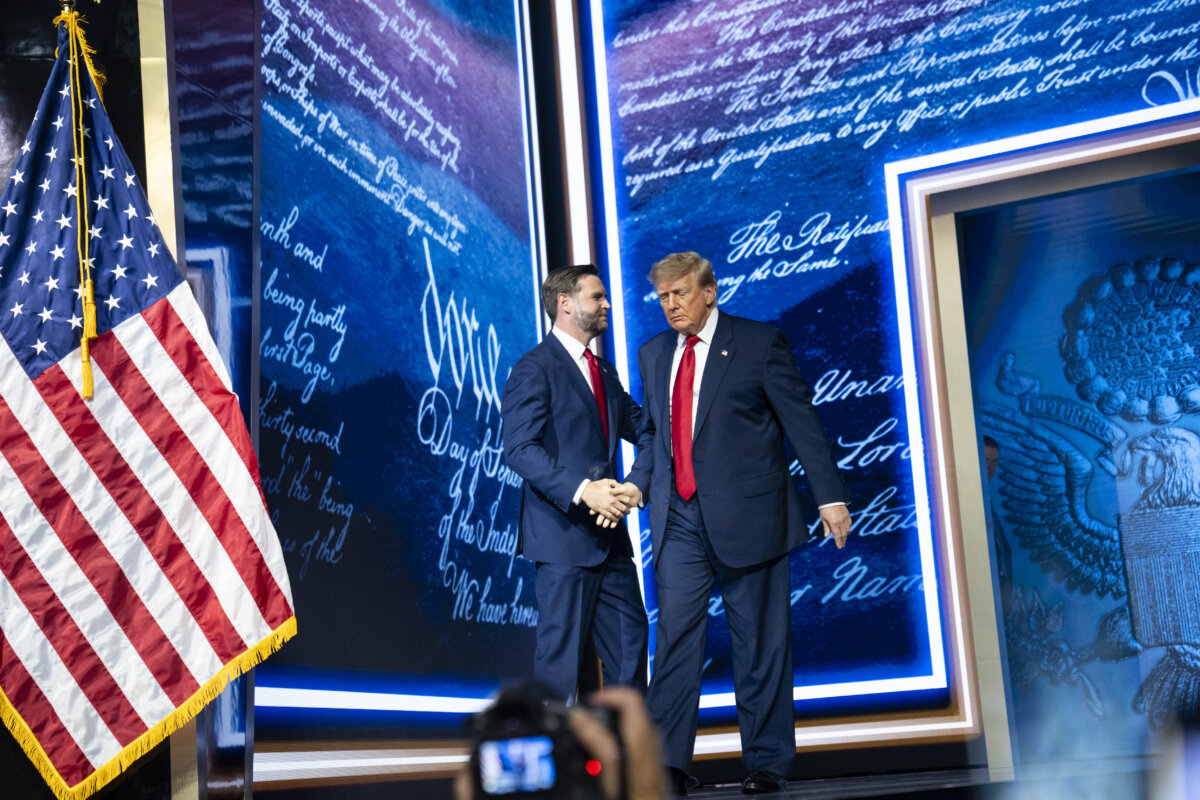

DALLAS—For the Republicans who gathered in Texas, the stakes are high: If Democrats win the House, or even the Senate, the second half of President Donald Trump’s second administration will be far more constrained.
To raise the stakes for their voters, they have tried to sell their record, project a united front, and warn of what could occur if the GOP loses. Still, it was possible to make out cracks in the coalition that sent Trump to the White House in 2024.
In interviews with The Epoch Times, politicians, activists, and others in the orbit of the Republicans’ unprecedented midterm convention, held Sept. 9 and 10, acknowledged the disagreements and uncertainties in 2026 and the years to come—everything from the Iran war and artificial intelligence (AI) to data centers and Trump’s faltering support among young male voters.
In the judgment of Rebecca Machi, a Texas Republican who was walking into the convention, Republicans are not united.
“They need to be,” she said.
At least one visitor to Dallas exuded far greater pessimism about what the Republican Party can accomplish.
“The right is playing checkers while the left is playing chess,” political theorist Curtis Yarvin told The Epoch Times at event organization FORUM’s “Beyond the Midterms: The American Future,” a series of intra-right debates in nearby Irving.
Yarvin’s doomsaying was, for the most part, drowned out by expressions of optimism. Many also stressed the rise of Democratic candidates linked to the Democratic Socialists of America (DSA)—a group that wants to scrap the U.S. Constitution and end immigration enforcement, and an inducement for their voters to unify in opposition to what could unfold if the GOP loses bigly.
“If you thought the Biden administration was bad, just you wait,” Rep. Diana Harshbarger (R-Tenn.) told The Epoch Times.
November will be a reality check for optimists and pessimists alike.
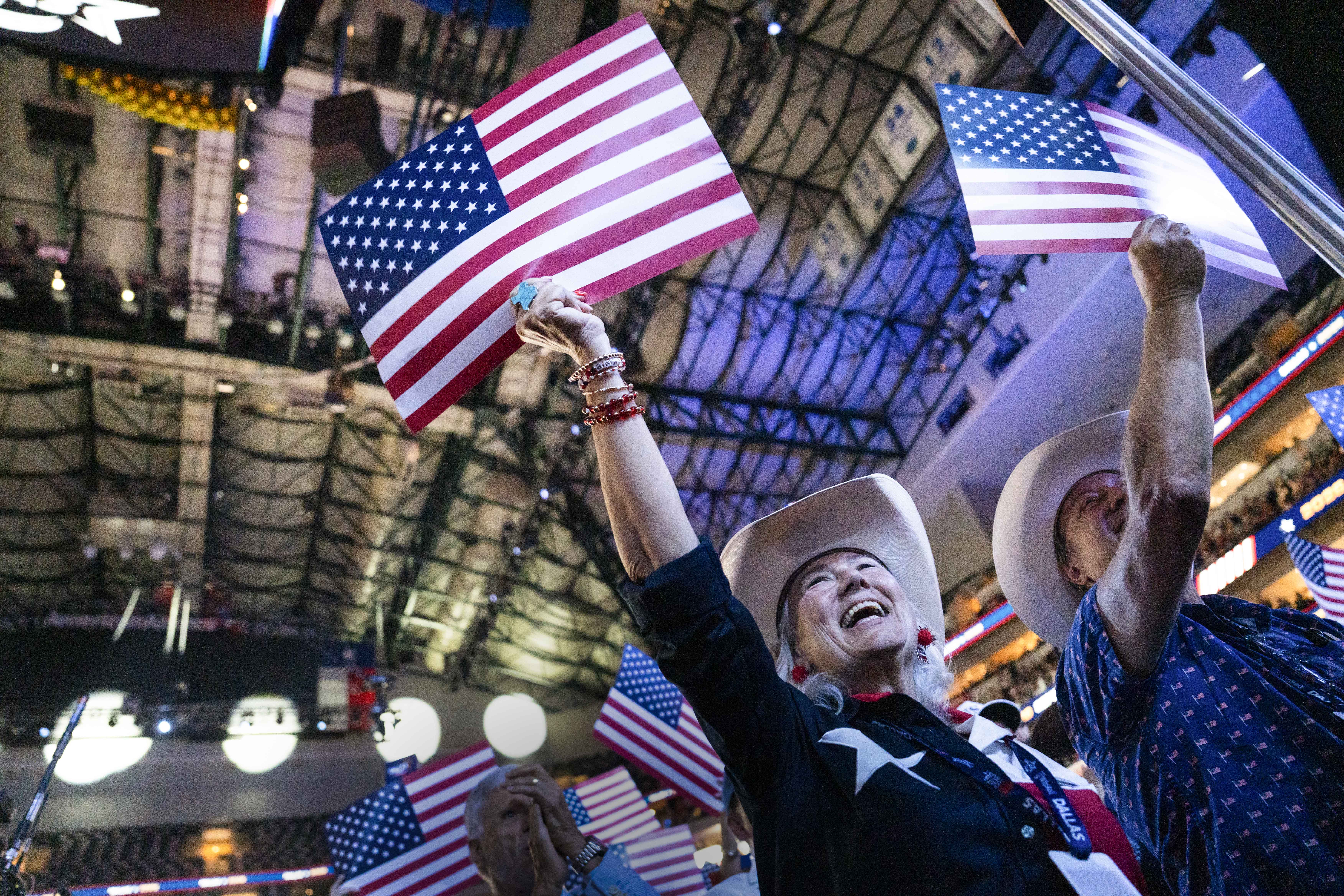 People hold the American flag as the 2026 Republican National Committee Midterm Convention ends in Dallas on Sept. 10, 2026. (Madalina Kilroy/The Epoch Times)
Iran and the Trump Coalition
The program at the American Airlines Center in Dallas highlighted the GOP’s domestic record along with candidates in competitive races.
The Iran war—an unpopular conflict among Americans, according to polling, and an impetus for longtime Trump allies such as Tucker Carlson and former Congresswoman Marjorie Taylor Greene to distance themselves from the Make America Great Again (MAGA) movement—was not a major focus during the convention.
The president defended the United States’ intervention during his Sept. 9 keynote address.
He said people frequently tell him they wish he hadn’t launched the war, citing the rise in gasoline prices.
“I say … ‘Can Iran have a nuclear weapon?’ ‘Absolutely not.’ Well, then I’m right, I win,” Trump said.
Trump reiterated that point during his closing remarks on Sept. 10. Vice President JD Vance, meanwhile, left Iran out of his keynote address that same day.
Rep. Derrick Van Orden (R-Wis.), a former Navy SEAL who is fighting for reelection in a swing district, told The Epoch Times that the battle over Iranian nuclear enrichment is overdue.
“This is an intergenerational thing, and President Trump thinks long term,” he said. “Part of the problem with the American government is people do things that are short-term politically convenient without looking long-term.”
Van Orden, who serves on the House Armed Services Committee, acknowledged the conflict might not sit well with some.
“Americans don’t like war. I don’t like war,” he said. “We’re not a war-like people.”
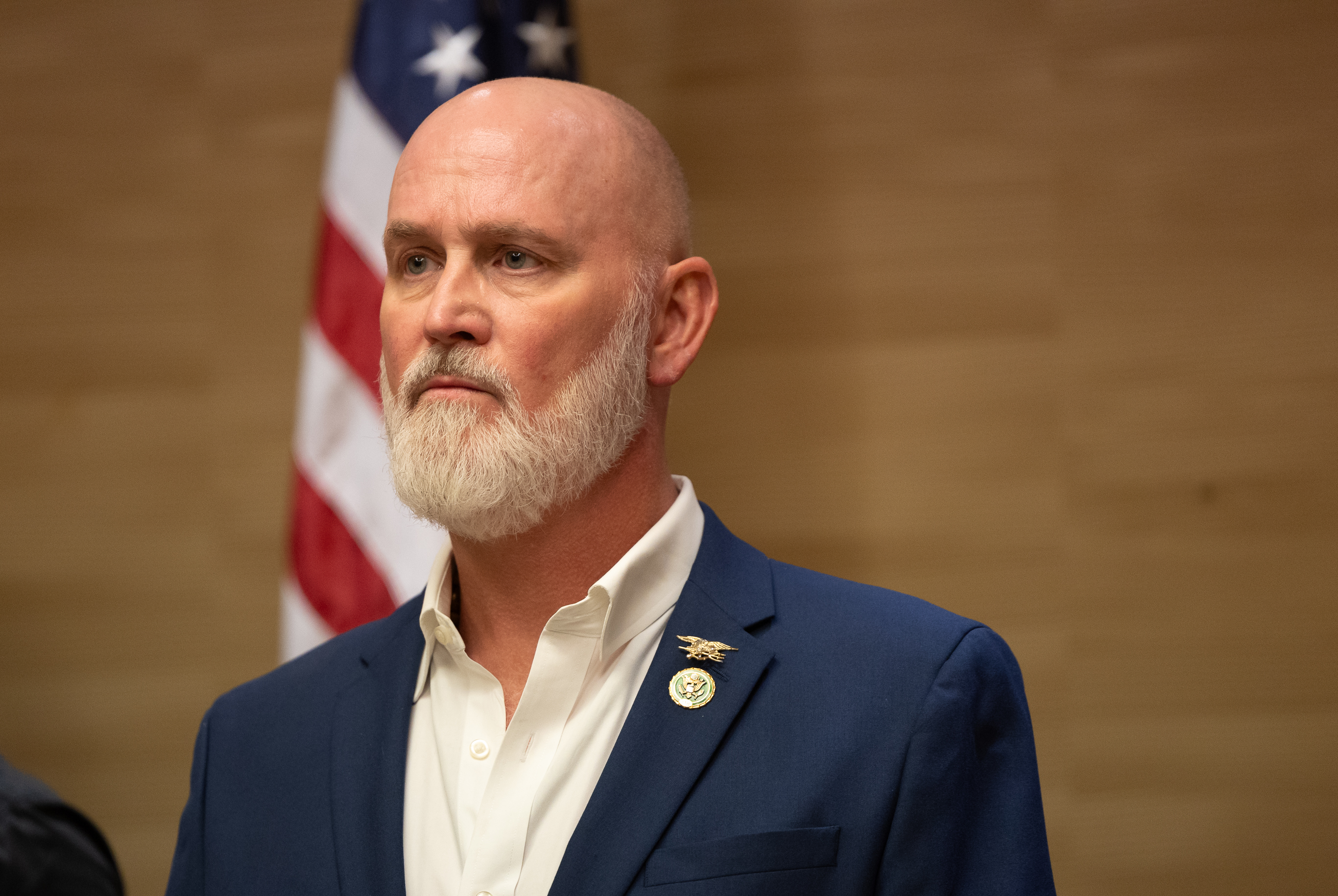 Rep. Derrick Van Orden (R-Wis.) speaks to the reporters in Dallas on Sept. 9, 2026. (John Fredricks/The Epoch Times)
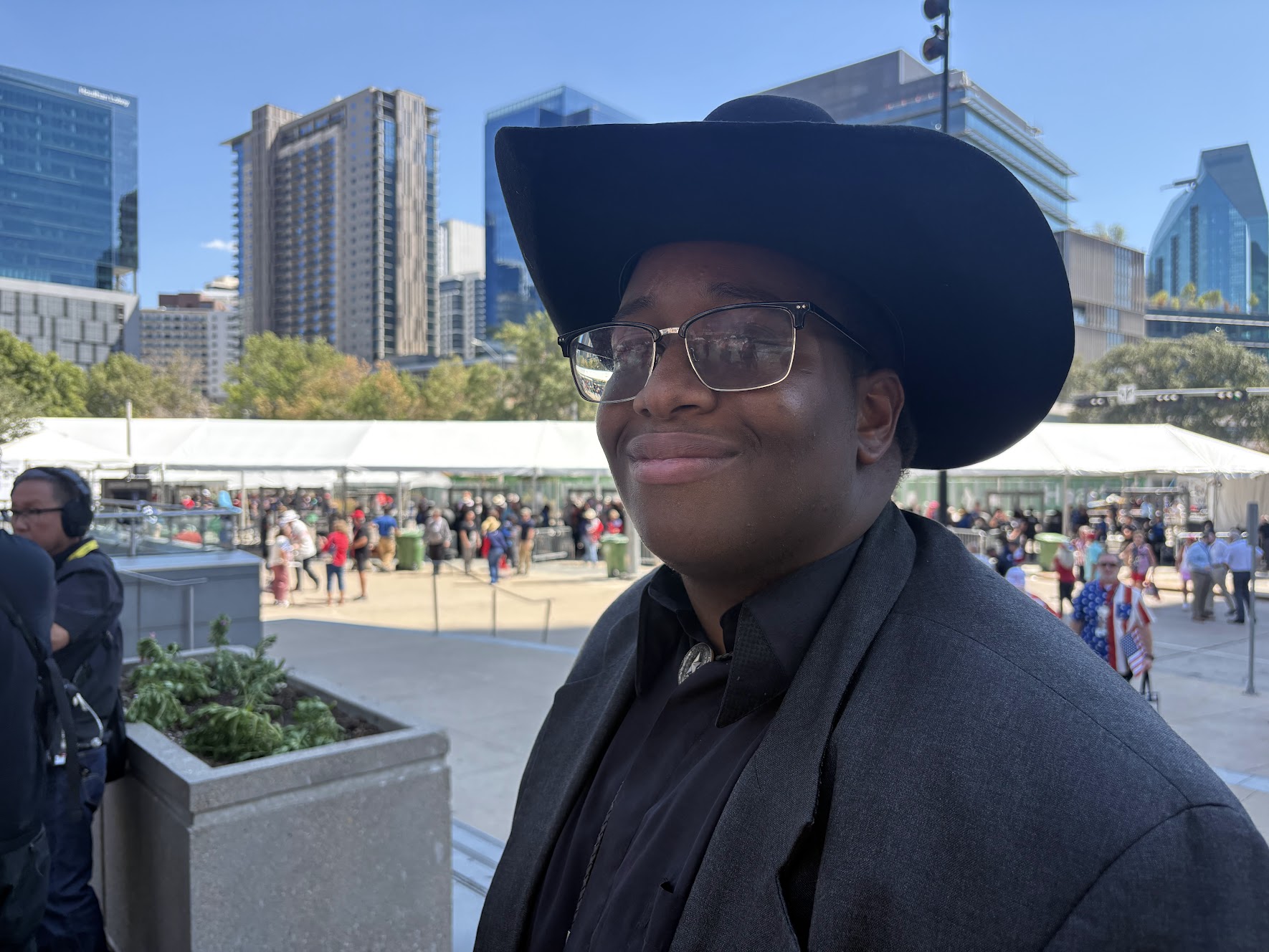 Al Williams, a Texas Republican, at the Republican National Committee Midterm Convention in Dallas on Sept. 10, 2026. (Nathan Worcester/The Epoch Times)
In his view, it is “downright hypocritical if we argue that America should maintain its national security and protect itself” without addressing the potential nuclear threat from Iran.
“What President Trump wants, and what most Republicans want, is a safe America,” he said.
Others expressed misgivings about the war.
At FORUM, Matthew Williams, a YouTuber who goes by the handle The Prudentialist, described the conflict as “this giant elephant in the room.”
“We need to talk about how we’re going to get out of there and focus on the issues back at home,” he told The Epoch Times.
Matthew Williams warned of another possible vulnerability for the Republicans in 2026, one related in part to that conflict: declining support from young voters, particularly young men.
That perception aligns with recent polling from Reuters/Ipsos and others.
He had some advice for the GOP and its allies, now amping up fundraising, spending, and campaigning in the last two months before the midterms.
“Do not be afraid of young men. They are alone. They are isolated. A lot of people under the age of 30 are moving towards the left in droves because they feel like they’re not being heard. You need to meet them where they are,” he said.
 People attend the second day of the 2026 Republican National Committee Midterm Convention in Dallas on Sept. 10, 2026. (John Fredricks/The Epoch Times)
Tech Wars
Another fracture in the MAGA coalition has opened up around several interconnected technologies—AI, video surveillance and data centers.
Those themes dominated the main event at FORUM. Joe Allen, a populist foe of AI and a veteran of Stephen K. Bannon’s “War Room” podcast, tangled with venture capitalist Joe Lonsdale, the co-founder of Palantir and a significant influence on Trump’s tech-friendly second administration.
Lonsdale said that Silicon Valley should be hemmed in by some new laws, zeroing in on license plate readers. Yet he cautioned against responses to Flock Safety cameras that he considered “just plain stupid.”
He said the growing opposition to those cameras is downstream of the DSA, which has organized campaigns against their use in the apprehension of illegal aliens.
Allen was unsparing in his criticism. He described data centers as an “incubator for algorithmic immigrants,” radically disruptive to the texture of American life, from local cultures to jobs. The activist pointed out that even some AI engineers claim their innovations could pose an existential threat to life on Earth.
Lonsdale warned of influence campaigns from China and other adversaries aimed at derailing the United States’ effort to reindustrialize by embracing new technology.
“Turning that new wave of prosperity off would be crazy,” he said.
Allen said opposition to data centers is “rooted not in China or the left coming up with B.S. narratives,” saying that a lack of transparency was fueling public mistrust.
Communities, he said, should be permitted to opt out of the data center revolution Trump has said could leave those who do not participate “backwards and poor.”
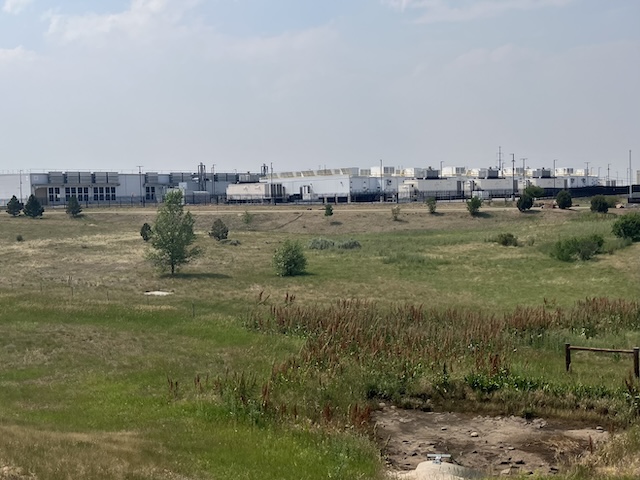 Microsoft’s massive Azure data center in Bison Business Park is one of four campuses it operates in Cheyenne, Wyoming, where the hyperscaler plans to dramatically expand after the Cheyenne City Council approved a controversial 3,460-acre annexation in June. (John Haughey/The Epoch Times)
“These are impositions. Almost no one was asking for them, at least not in our camp,” he said of both AI and campaigns to mandate COVID-19 vaccines.
He said the massive valuation of American AI companies means “a good chunk of our economy is hinging on that imposition and the necessity for the continued imposition.”
“It will be seen in retrospect as very unwise, and the hubris will look ridiculous,” Allen added.
At the convention itself, the technologies and underlying infrastructure shaking up the United States and the world have their fans.
Adam Lowisz, an Illinoisan known online for his appreciation of entrepreneur Elon Musk, sees the promise of AI.
Lowisz, who described himself as a moderate Republican and a member of Tech Right, told The Epoch Times that he uses Musk’s Grok to automate tasks on his social media that previously required more time and drudgery.
“Now, I’m more productive in my own personal ventures and personal business,” he said.
He conceded that the Tech Right “could use a little bit of better PR.”
“They live in a world of numbers, and most people don’t function in that world,” he added.
Chad Hall welcomed the wave of technological change.
“I work in manufacturing, but I do a lot of business with data centers, and we like to see the growth,” said Hall, a Texan who was attending the midterm event with his wife, Michelle, and his daughter, high school sophomore Georgia.
Bryan Gravely, a Virginia Republican at the convention, told The Epoch Times he thinks the divisions over data centers and other issues are “extremely overstated.”
“When it comes to these data centers, we’re competing with China,” he said, adding that data center advocates should seek to allay Americans’ concerns by pushing for caps on electric rates.
That idea is in line with the White House’s Ratepayer Protection Pledge and, from Congress, the proposed Ratepayer Protection Act.
 Friends Read Free
Copy
Facebook
Tweet
Friends Read Free
Copy
Facebook
Tweet