A federal district judge on Monday blocked enforcement of the Trump administration’s new rule—hours before it was set to take effect—that would have limited how long foreign students and journalists can stay in the United States without applying for a visa extension.
A coalition of unions and advocacy groups sued over the rule last month in the U.S. District Court for the District of Massachusetts, claiming the federal government violated the Administrative Procedure Act, which dictates how agencies propose, adopt, and enforce regulations.
District Judge Dennis Saylor IV wrote in his ruling that the federal government is now enjoined “from taking any further action to implement the Final Rule pending further order of this court.”
The Department of Homeland Security (DHS) proposed the rule last month, saying it was closing a loophole that permitted foreign media, students, and exchange visitors to remain in the country “indefinitely without routine government oversight.”
“For decades, foreign students have been admitted into the U.S. indefinitely, allowing thousands to abuse our immigration system by perpetually enrolling in courses to avoid having to leave the U.S.,” DHS Secretary Markwayne Mullin previously said in a statement.
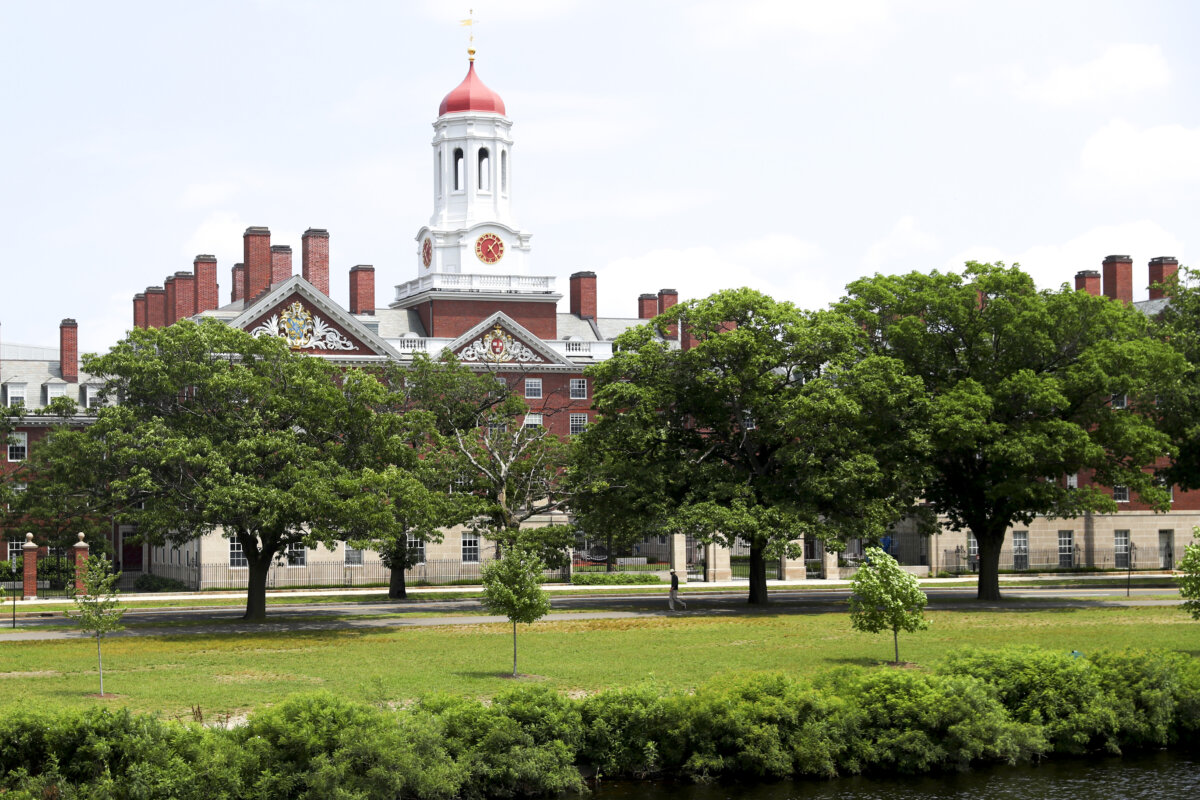
Under the new regulations, which would have taken effect at midnight Sept. 15, there would be fixed time periods on F visas for international students, J visas allowing visitors on cultural exchange programs to work in the United States, and I visas for media members.
The now-blocked rules would have limited student and exchange visas to no longer than four years.
For foreign journalists, whose visas currently can last for years, they would be reduced to 240 days. For Chinese media personnel, specifically, the time period would be even shorter, at 90 days.
Neither DHS nor the White House responded to a request for comment about Saylor’s decision, but a Homeland Security spokesperson previously called the lawsuit against the agency’s rule “performative.”
“If the media really cared about legitimate international students, they would be thanking President Trump for cracking down on the rampant fraud to ensure only those truly intending to study in the United States are given the privilege,” the spokesperson said.
Unions and advocacy groups in their lawsuit against the rule said it would be “catastrophic” if it was allowed to be implemented.
“International students contribute more than $42 billion annually to the U.S. economy, support nearly 360,000 American jobs, and provide critical support for the Nation’s leadership in science, technology, and innovation,” the lawsuit said.
The Presidents’ Alliance on Higher Education and Immigration is one of several plaintiffs suing over the DHS rule.
The group’s CEO and president, Miriam Feldblum, previously said the new regulations would upend a longstanding framework that lets international students study in the United States.
“By placing time limits that do not align with actual program lengths or students’ educational needs and shifting crucial academic decisions from institutions to immigration officials, the rule will disrupt educational pathways, impose significant new burdens on colleges and universities, and make the United States less competitive as the premier destination for global talent,” Feldblum said.
 Friends Read Free
Copy
Facebook
Tweet
Friends Read Free
Copy
Facebook
Tweet