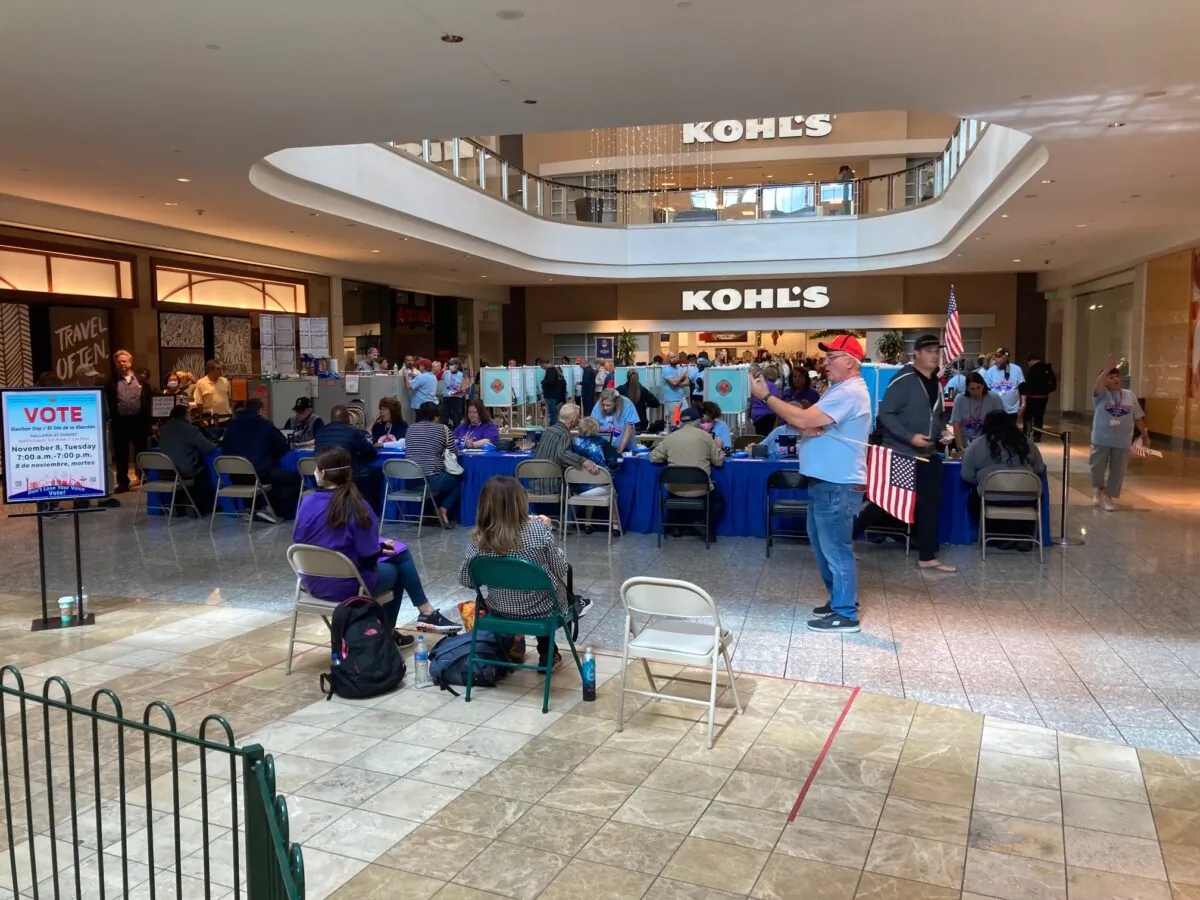
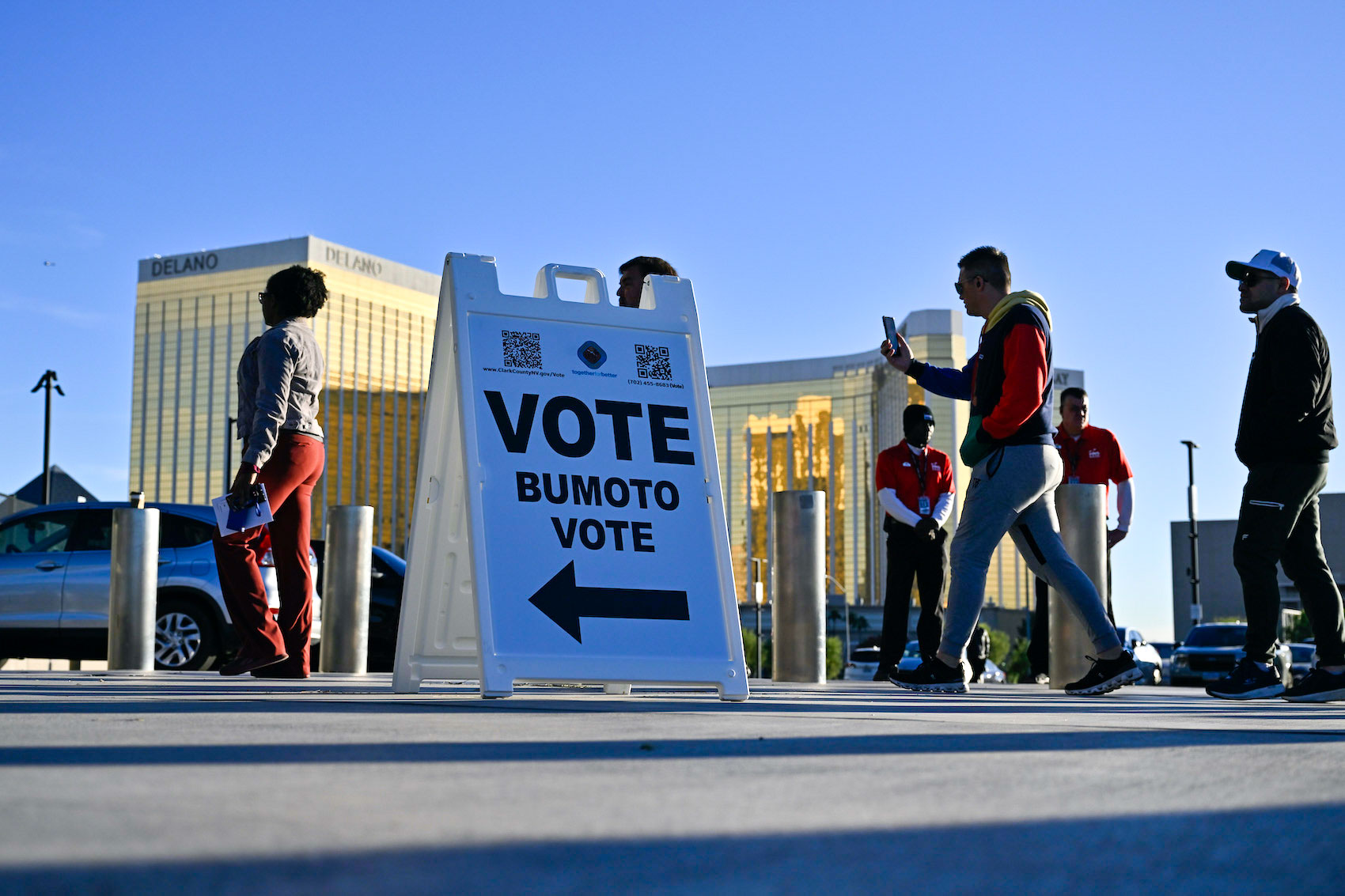
Early in-person voting for Nevada’s June 9 primary begins on May 23, with 1.3 million of the battleground state’s 2.45 million registered voters eligible to cast ballots in selecting Democratic and Republican candidates for the Nov. 3 general election.
But the bottom line is that the 965,000 Nevadans registered on May 1 as independents—who cannot vote in the state’s closed party primaries—will ultimately decide the winning candidates in the fall.
Nevada’s elections dynamic has changed significantly since 2020, with the reliably blue state now competitively purple and dominated by nonpartisan voters, the state’s majority electorate since mid-2023, in line with a national trend in swelling independent, nonpartisan, and third-party enrollments.
Since 2020, the number of Nevada’s registered Democrats has declined by more than 70,000 while Republicans have gained 16,000 enrolled voters. Democrats had less than a 9,000-voter advantage in 2024 and entered 2026 actually trailing the GOP on Jan. 1 by more than 3,000 registered voters, 596,164 to 593,029.
With a surge of 350,000 registered voters since, as of May 1, Democrats had regained the advantage by nearly 10,000 voters, 666,031 to 656,502, according to the state’s Secretary of State Office. However, nearly 190,000 of those new voters signed on as nonpartisan, with nearly 1.1 million of its 2.45 million registered voters registered as independents or with third parties, most notably the Independent American Party and Libertarian Party.
These shifts make Nevada a battleground state and have fostered increasingly competitive races for local, state, and federal offices over the past three election cycles.
Both of Nevada’s U.S. Senate seats and three of its four U.S. House seats are occupied by Democrats, who also hold state legislature majorities. But voters elected Republican Joe Lombardo governor in 2022, and President Donald Trump in 2024 became the first GOP presidential candidate to win Nevada since 2004, beating then-Vice President Kamala Harris by about 46,000 votes.
Lombardo, a former Clark County sheriff, is seeking reelection after unseating Democratic incumbent Gov. Steve Sisolak in 2022. He is near-certain to square off against two-term Nevada Attorney General Aaron Ford in November. Neither faces a significant primary challenge.
Once again, Republicans will seek to defeat incumbent Democrats in three Las Vegas-area U.S. House seats with dozens of hopefuls seeking party nominations in competitive primaries, while in the state’s vast Second Congressional District—long a GOP stronghold—an open seat makes the June 9 winner the overwhelming November favorite.
Open Red District
In February, Rep. Mark Amodei (R-Nev.) announced that he would not seek a ninth term in Nevada’s Second Congressional District, which spans more than 65,000 square miles, encompassing 11 counties and parts of another. Washoe County, the state’s second-most populated county, which includes Reno, is in the Second District.
Amodei is among 57 of 435 incumbents, including 36 Republicans, not seeking 2026 reelection in a House where the GOP holds a narrow 217–212 majority.
With his retirement, 13 GOP hopefuls are vying to succeed him in a district that Cook Political Report, Inside Elections, and Sabato’s Crystal Ball all rate as solidly or safely Republican.
Among favorites to win the Republican berth are financial adviser and Iraq War Air Force combat commander Dave Flippo, who was defeated in the 2024 Fourth Congressional District GOP primary, and Nevada Department of Conservation and Natural Resources Director James Settelmeyer.
Flippo is running as a self-described “Trump Republican,” touts his military leadership background, and emphasizes his support for affordable domestic energy generation. According to his March 31 Federal Election Commission (FEC) filing, his campaign had raised $1.7 million, had spent $1.1 million, and had $644,015 in the bank.
A fourth-generation Nevadan, rancher, and former Nevada State Senate Republican leader, Settelmeyer maintains that he is best-suited to represent “the values and interests of northern Nevada” in Congress. According to his March 31 FEC filing, his campaign had raised $108,270, had spent $5,256, and had $103,014 in cash on hand.
A Democrat has never won the Second District since Nevada gained a second House district in the 1980 census and its first representative was seated in 1983, but 11 are seeking the party nod on June 9 to challenge the heavily-favored GOP winner in November.
The Republican Second District primary may present the most intriguing of Nevada’s June 9 primary contests, but the crowded GOP races in the three House districts in the Clark County area—where three-fourths of the state’s population resides—are always competitive, often entertaining, and increasingly chipping away at Democrats’ winning margins.
Among 26 Democrat-held House seats the National Republican Congressional Committee identifies as “prime pick-up opportunities” for Republicans are Nevada’s First Congressional District seat, held by nine-term incumbent Rep. Dina Titus (D-Nev.); the Third Congressional District seat, occupied by Rep. Susie Lee (D-Nev.), who is seeking a fifth term; and the Fourth Congressional District seat, held by six-term incumbent Rep. Steve Horsford (D-Nev.).
Hot GOP Primaries
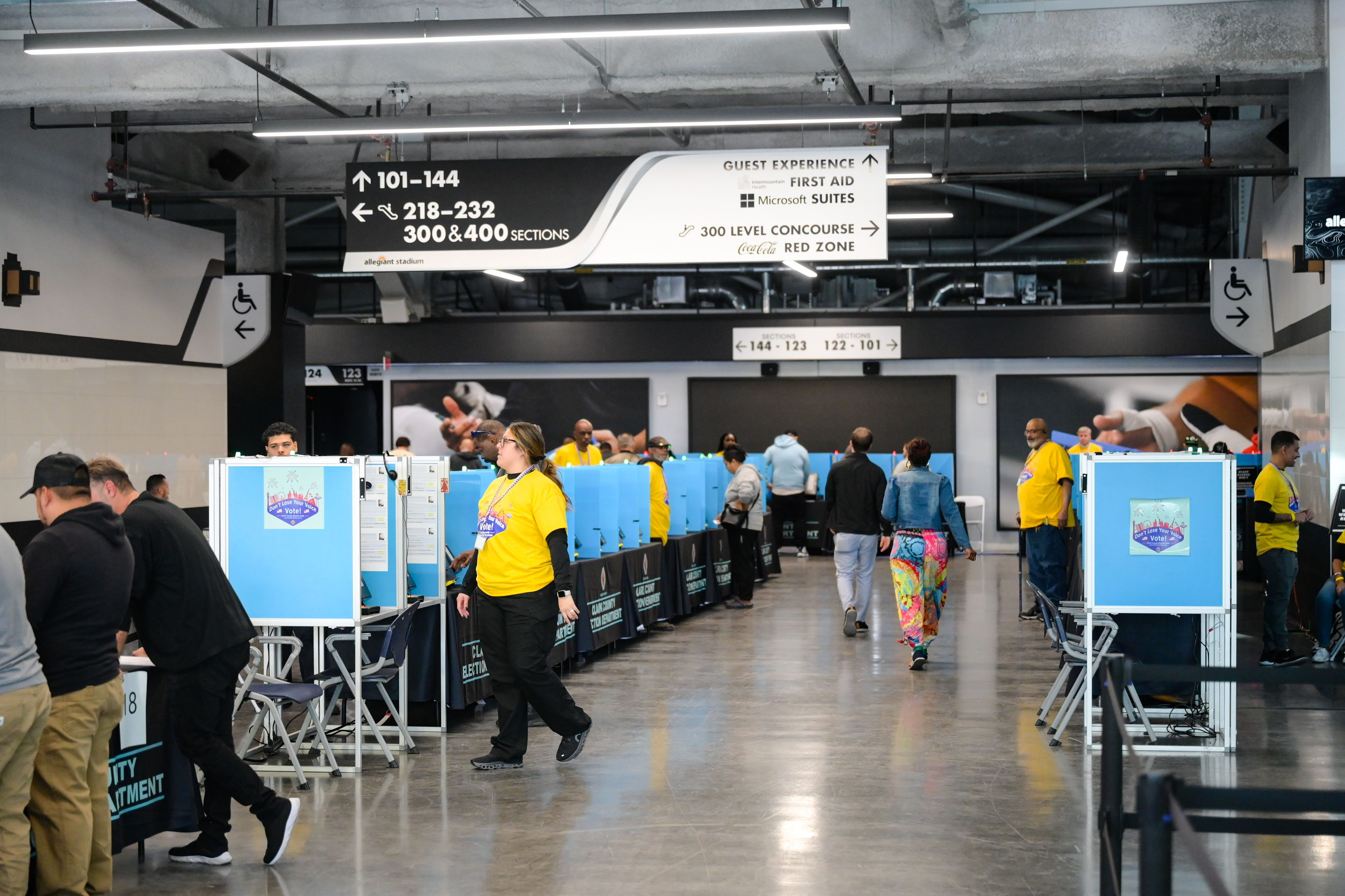
The Clark County Elections Office reported on May 18 that 443,162 Democrats, 362,378 Republicans, and 608,425 nonpartisans are among the county’s 1.5 million registered voters. In addition to the three House preliminaries—in districts all rated as “likely” or “leaning” Democrat—voters will see primaries for 16 state Senate slots, 31 state Assembly seats, and municipal, school board, and water and power district contests on their June 9 ballots.
Housing costs are a top concern. According to March’s National Low Income Housing Coalition’s 2026 The Gap Report, only 16 affordable rental homes are available for every 100 low-income households, and there is a shortage of more than 100,000 units for those who make 50 percent or less of Nevada’s median income.
Other key campaign issues include gasoline prices and unemployment. As of May 22, the American Automobile Association reported that the average price of gasoline was $5.27 per gallon, a four-year high and 71 cents higher than the national average. The state’s 5.3 percent unemployment rate is the second-highest in the nation.
Among six hopefuls vying for the First District GOP nod are Trump-endorsed state Sen. Carrie Buck, a Republican, and 2024 candidates Save Education-Save America founder and CEO Jim Blockey and appliance repair company owner and radio and stand-up comedian Michael Boris.
Buck’s March 31 FEC filing documents that her campaign had raised $934,220, had spent $565,180, and had $369,040 in cash on hand, far more than her Republican rivals but much less than the $1 million war chest that Titus, with marginal primary challengers, had in the bank.
Four candidates are campaigning for the Republican berth in the Third District, one of 14 U.S. House districts that voted for Trump in 2024 but elected a congressional Democrat. They are Trump-endorsed Halo composer Marty O’Donnell, former U.S. Ambassador Jeff Gunter—both 2024 also-rans—neurosurgeon Dr. Aury Nagy, and developer Tera Anderson.
According to March 31 FEC filings, O’Donnell’s campaign had raised $3.2 million, had spent $504,000, and had $2.7 million in the bank, while Nagy’s campaign had raised $1 million, had spent $330,477, and had $746,000 in cash on hand. Lee, facing little primary pressure, had raised $3.5 million and had more than $3 million in her campaign coffers.
Horsford is unchallenged in the Fourth District Democratic primary. He will square off with the winner of the GOP primary between attorney Ronda Kennedy, a 2024 Republican primary candidate; pharmacy technician Anthony Snowden; and rancher Cody Whipple. As of May 22, Trump had not issued an endorsement in this primary.
According to their March 31 FEC filings, Whipple’s campaign had raised $622,721, had spent $249,264, and had $373,458 in cash on hand, while Kennedy had raised 350,000, had spent $5,690, and had $344,310 in the bank. Horsford, meanwhile, had more than $1.1 million in his campaign coffers.
 Friends Read Free
Copy
Facebook
Tweet
Friends Read Free
Copy
Facebook
Tweet