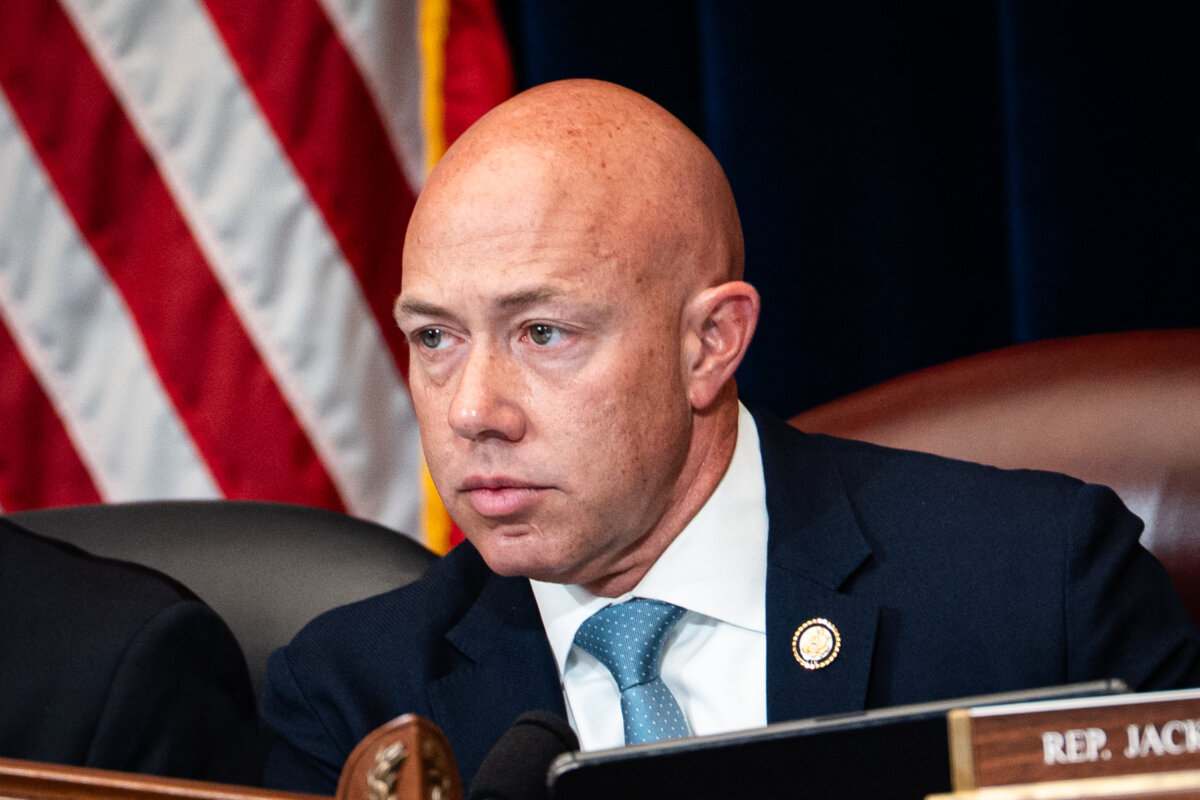

The House Foreign Affairs Committee, with broad bipartisan support, on Jan. 21 advanced for a full floor vote a bill that would give Congress oversight of foreign advanced artificial intelligence (AI) chip sales.
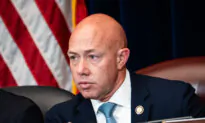
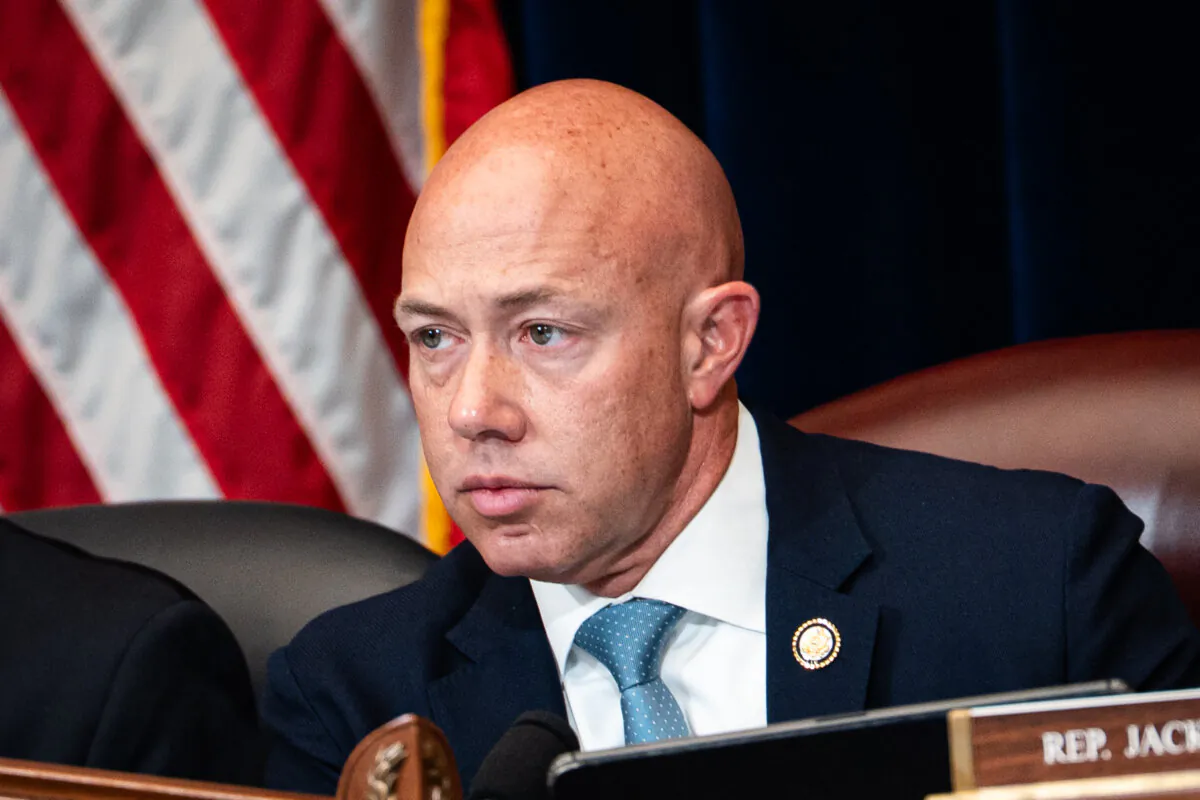
Rep. Brian Mast (R-Fla.), chair of the committee, doubled down on his AI Overwatch Act after controversy erupted last week following a committee hearing about the AI race between the United States and China.
Mast’s bill gives Congress oversight of foreign advanced AI chip sales similar to the oversight lawmakers have of foreign arms sales, with a 30-day window to review and reject export licenses by joint resolution.
“When the United States considers selling a C-130 or fighter jet or an engine that goes on one of those airframes … or anything that has military use, it goes through a process known as the foreign military sales process,” Mast said during the Jan. 21 hearing.
Mast introduced the bill in December 2025 after President Donald Trump announced plans to approve Nvidia H200 chip sales to China. Nvidia had previously come out with separate “degraded” Hopper chips made less powerful in order to satisfy export controls to China, and the new rule would do away with the need to manufacture separate chips.
The Trump administration has since finalized the updated export control rule, requiring case-by-case approval of H200 and equally powerful AI chips for sale to customers in China. The rule also requires companies to certify that they have satisfied domestic demand for the chips before foreign sales are made and that the chips will not go to Chinese military companies—although critics have pointed out that the government has no way of verifying these claims.
The H200 would be by far the most powerful chip the United States has allowed for sale to China, and it is far more powerful than what Chinese companies can currently manufacture.
Bill Response
On Jan. 14, Mast chaired a hearing where lawmakers and experts questioned the prudence of the rule, given that Trump has set ambitious goals for the United States to beat China in the AI race and that analysts have estimated that legal pathways for Chinese tech giants to use H200 chips en masse could wipe out the United States’ lead. Hearing participants did not criticize Trump directly, but they singled out tech companies and the president’s advisers several times in denouncing the new rule.
After the hearing, Mast received a wave of criticism on social media, including from several conservative influencers. A Model Republic investigation found that some critics appeared to have copied talking points, including copying and pasting a typo that spelled “AI” with a lowercase L, and raised the possibility that the posts were sponsored and part of a lobbying campaign.
Mast defended the bill in response and held the committee vote, pushing it forward.
“If American technology enables a foreign military, Congress has a duty to act,” he said in a Jan. 18 video statement. “We cannot get this wrong.”
Mast said in the statement and at the Jan. 21 committee meeting that his bill was in line with the Trump administration’s goals, including the new rule that specifies that the chips should not go to Chinese military companies and not cause a domestic shortage in advanced AI chips.
Experts have pointed out that the Chinese communist regime mandates a civil-military fusion approach, wherein commercial enterprises with no overt military ties also serve the regime’s strategic goals. This would make it impossible for the United States to control or enforce how the chips are used after sale. Mast said the chips would be sold to the same companies that try to “spy on the United States.”
The H200 is not Nvidia’s most advanced AI chip. The Blackwell line, which has not been up for discussion for sale to China, is currently the most advanced chip. Nvidia also announced on Jan. 7 that production of the next-generation Rubin AI chips is fully underway. However, U.S. companies are broadly using the Hopper line, as the newest chips are in short supply.
Nvidia CEO Jensen Huang said at the annual World Economic Forum meeting on Jan. 21 that the chips are effectively sold out and that even renting cloud access to older generation AI chips is becoming more expensive for customers because of the high demand.
The bill passed in the committee with broad bipartisan support.
Cosponsor Rep. Gregory Meeks (D-N.Y.) said during the Jan. 21 meeting that he would have preferred that the bill ban H200 sales to China outright and include provisions to block Nvidia Blackwell AI chips for sale to foreign adversaries.
The sole abstention was committee Vice Chair Rep. Darrell Issa (R-Calif.). He said that although he supports the bill and its intention, he’s concerned that it puts Congress in a regulator role and creates an impractical process.
For example, the bill could allow Congress to “take back a product that has been weeks or months in preparation,” Issa said, and it would effectively start the sales process after Congress’s review, adding new layers of uncertainty to contracts.
The Trump administration weighed in on the bill only to make technical corrections and expand the list of countries of concern so far. Issa said he hoped lawmakers would work with the administration over the next few weeks to amend the bill so that Congress has oversight, but the Commerce Department’s Bureau of Industry and Security remains the lead on the export controls process.
“We absolutely do not want to sell the modern equivalent of the rope that hangs us to the adversary,” he said.
On Jan. 21, the committee also passed the China AI Power Report Act, a bill that would require the Commerce Department and State Department to submit a report every year on China’s AI progress to inform legislative action on export controls.
Delegate James Moylan (R-Guam), the bill’s sponsor, said AI export controls need to cover not just chips, but also “the whole ecosystem from the software to the manufacturing equipment to the cloud systems.”
“Our controls have to be dynamic and informed across a rapidly changing environment.”
Reuters contributed to this report.
 Friends Read Free
Copy
Facebook
Tweet
Friends Read Free
Copy
Facebook
Tweet