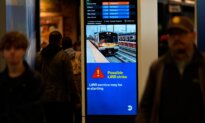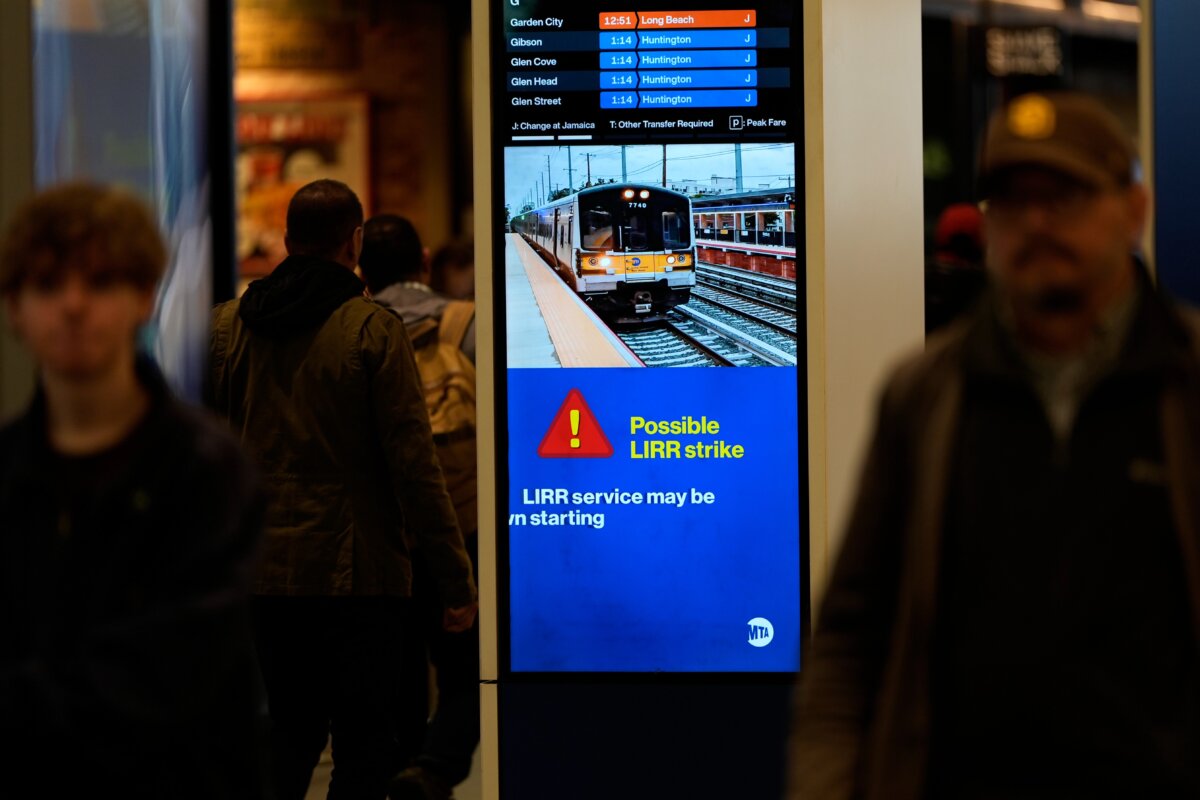

Long Island Rail Road (LIRR) service stopped entirely early on May 16 because of a strike.
About 3,500 employees—including engineers, signal workers, machinists, electricians, and communications workers—from a coalition of five unions initiated a labor stoppage at 12:01 a.m. after contract negotiations with the Metropolitan Transportation Authority (MTA) on wage raises fell through.
The LIRR carries nearly 300,000 passengers on an average weekday and ranks as the busiest commuter railroad in the United States.
“This strike would not have happened if the MTA and LIRR offered our members the reasonable terms the government recommended multiple times,” Brotherhood of Locomotive Engineers and Trainmen President Mark Wallace said in a statement. “We hope LIRR gets serious soon to avoid further unnecessary disruptions for hundreds of thousands of New Yorkers. They know where to find us when they’re ready: on the streets.”
The strike is the first work stoppage on the system in 32 years, the union statement reads.
Commuters encountered empty platforms and widespread delays across Long Island and into New York City. The MTA urged people to avoid nonessential travel and said those who can work from home should do so to ease expected roadway congestion and strain on alternative transit options.
Shuttle buses will run on weekdays during peak periods for essential workers and those unable to telecommute. Routes connect stations such as Bay Shore, Huntington, and Ronkonkoma to Queens subway points, including the Howard Beach–JFK Airport station and the Jamaica–179th Street station. Additional limited service operates from Hempstead Lake State Park, Hicksville, and Mineola. Nassau County riders can also use Nassau Inter-County Express bus connections. Monthly ticket holders may receive prorated refunds for suspended service days, subject to board approval.
The MTA has said it will continue to negotiate with the unions throughout the shutdown, the MTA said in its statement.
Contract talks between the unions and the MTA had dragged on for three years without any pay increases for the workers. The unions are seeking a retroactive 9.5 percent wage increase covering the past three years, matching the deal the MTA has offered several other transit and civil service unions in recent months. On top of that, the unions want a 5 percent raise for the current year, a demand that exceeds the MTA’s offer to other unions.
The MTA has countered with a 3 percent raise for 2026, in addition to cash compensation. MTA officials said that they worried that agreeing to the unions’ request would set a pattern for future negotiations with other unions and that by that measure, every 1 percent increase would add $100 million to the MTA’s budget.
To cover that expense, MTA Chief Financial Officer Jai Patel said at an MTA board meeting on April 29 that the agency might need to raise fares by 8 percent instead of the scheduled 4 percent, seek additional taxes from the state, cut services, or shed its workforce.
The current labor action follows years of federal intervention attempts to prevent a shutdown.
In September 2025, President Donald Trump named an emergency board to mediate the dispute after the union asked him for help. When those negotiations fell through, Trump signed an executive order in January 2026 appointing a second board for further talks, in an effort to avoid a full shutdown.
Bill Pan contributed to this report.
 Friends Read Free
Copy
Facebook
Tweet
Friends Read Free
Copy
Facebook
Tweet