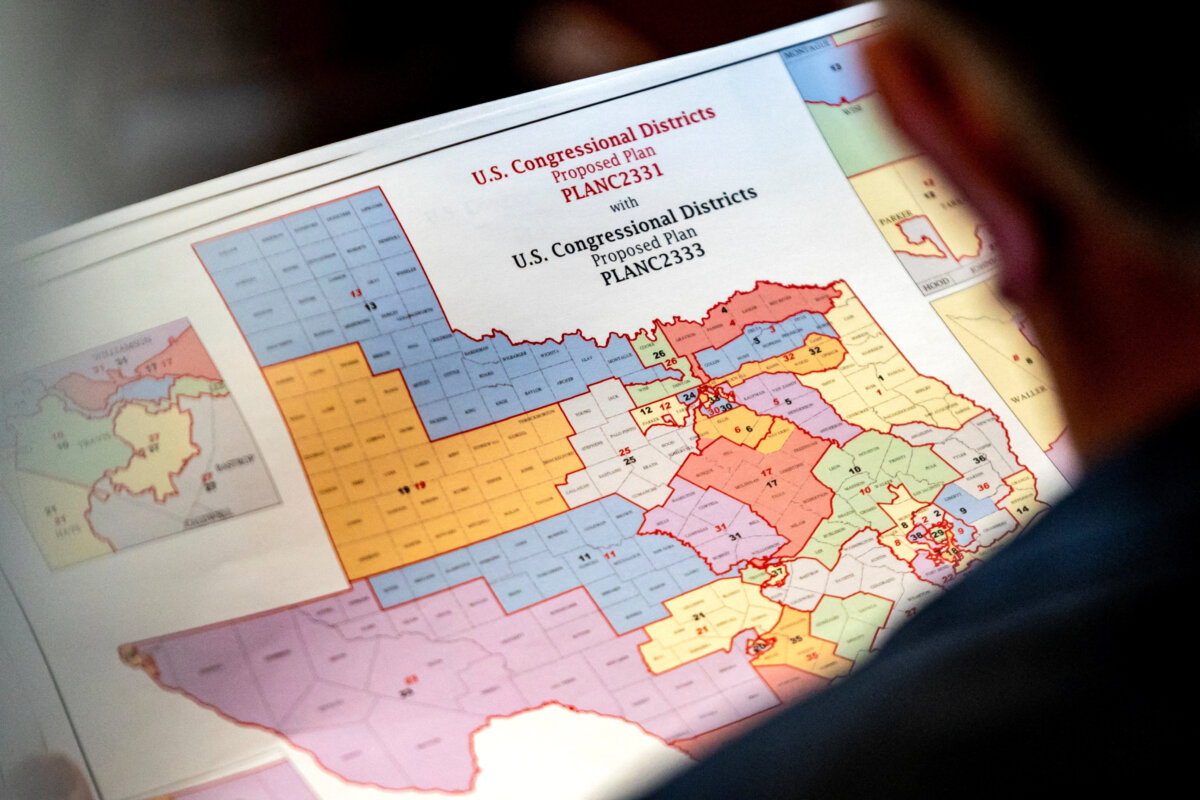

Mid-decade redistricting—once an exception to the once-per-decade routine after each census—is now reshaping the U.S. House map in the mid-2020s. Legislatures, voters, and courts in both parties’ strongholds are reopening congressional lines ahead of the 2026 midterms.
With three House seats vacant, the current majority mark is 217 votes. Republicans hold 218, giving Speaker Mike Johnson (R-La.) only a one-seat lead on tough party-line votes.
To pad that cushion, Republicans set off the latest round of district adjustments by pushing a new map in Texas that aimed to add five GOP seats. Democrats then answered with moves in California and other blue states, arguing that they could not leave those gains unanswered.
At the same time, leaders in some states controlled by one party, such as Indiana Republicans and Maryland Senate Democrats, have raised alarms about drawing fresh lines mid-decade and complicated mostly partisan moves in the states that moved ahead.
The result is an uneven national picture: Some states already have new maps locked in for 2026, others are in the midst of legislative or ballot fights, and a separate group is awaiting rulings that could force changes even without new laws.
The National Conference of State Legislatures (NCSL), which is tracking these efforts, said states are undertaking mid-decade redistricting at levels not seen since the 1800s.
Lindsey Cormack, associate professor of political science at Stevens Institute of Technology, told The Epoch Times that the wave reflects close margins in Washington, partisan one-upmanship, and uncertainty about how hard courts will push back.
“All of these things encourage legislatures to try to make moves now rather than waiting for 2031,” Cormack said in a text message.
New Maps Already in Place
According to NCSL, six states have already implemented new congressional maps for the 2026 cycle: California, Missouri, North Carolina, Ohio, Texas, and Utah. These plans came from different paths—legislative action, ballot measures, and court orders—but all are now scheduled to govern House races this year, even as legal and political fights continue around them.
California and Texas—the two largest states in the United States by population, one with a Democratic governor and legislature and the other with a Republican governor and legislature—show how both parties have used mid-decade redistricting to seek extra seats.
In Texas, lawmakers enacted a new congressional map on Aug. 29, 2025. A court later found the plan unconstitutional, but a December 2025 stay by the Supreme Court is keeping the new lines in place for 2026. The map aimed to increase Republican representation in the state’s House delegation by five seats.
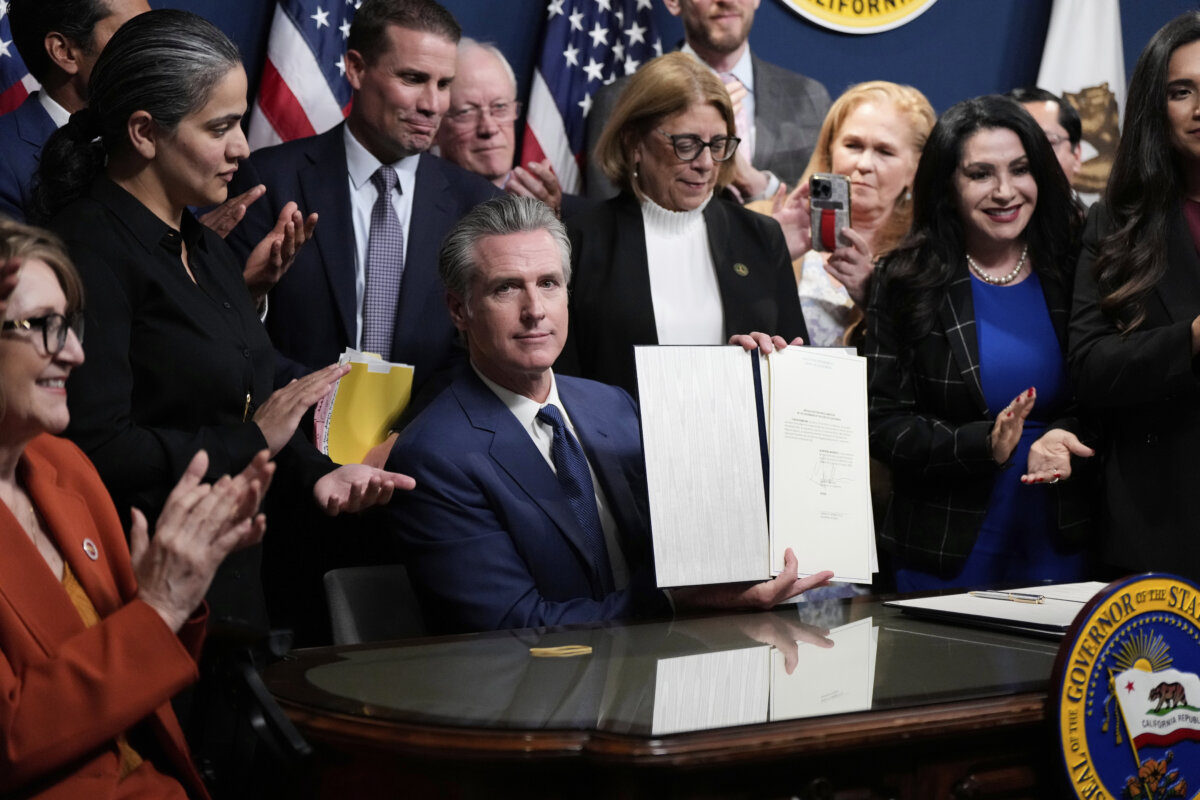
In California, Democratic leaders pushed Proposition 50, a 2025 ballot measure that replaced a commission-drawn map with a legislature-approved plan drawn in response to Texas.
In November 2025, voters approved the measure, which swiftly faced legal challenges. On Feb. 4, the Supreme Court declined to block California’s new congressional map in an unsigned order in Tangipa v. Newsom, allowing the map to be used in 2026 while litigation continues.
California Gov. Gavin Newsom—one of the most prominent Democratic figures in the country and a possible contender for the 2028 presidential race—cast the case as a direct answer to Texas and Republican President Donald Trump.
“Donald Trump said he was ‘entitled’ to five more Congressional seats in Texas,” Newsom said in a statement on Feb. 4. “He started this redistricting war. He lost, and he’ll lose again in November.”
Missouri enacted its new congressional map on Sept. 28, 2025. Opponents submitted signatures to place a referendum on the ballot to repeal the plan. Litigation is underway over whether the new lines remain in effect while those signatures are reviewed. If the referendum qualifies, voters will decide whether to keep or overturn the map.
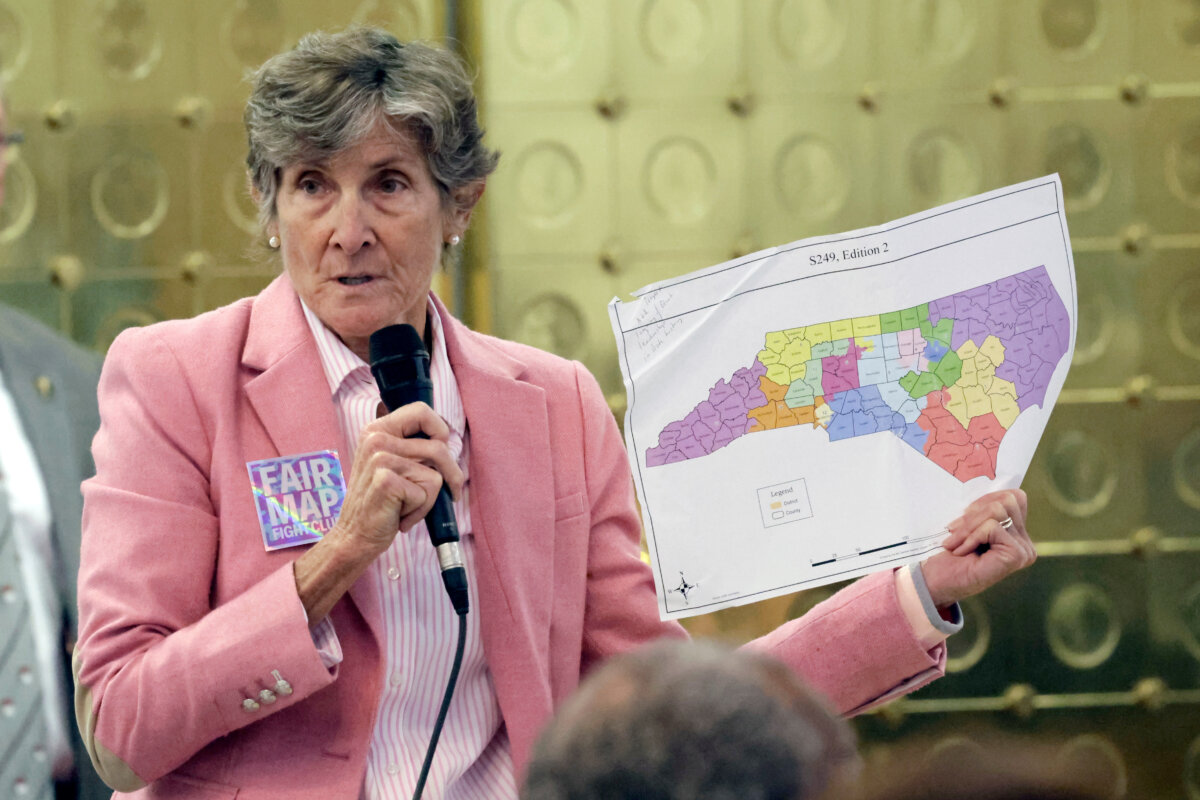
North Carolina and Ohio also adopted mid-decade maps in late 2025 after earlier rounds of litigation and redraws. In Ohio, a backup redistricting commission reached a new agreement that will govern the 2026 election cycle. North Carolina’s legislature passed a fresh map on Oct. 22, 2025.
Utah’s map was adopted through a court order on Nov. 10, 2025. Judges there reinstated an earlier voter-approved redistricting framework and ordered a new plan, even as opponents move to qualify a ballot initiative that would change or repeal the state’s commission process.
Cormack said these states form a core group of states where “some or whole revisions” are already underway.
“Litigation could hold some of these, but these are the places to watch so far,” she said.
Taken together, new maps in Texas and North Carolina are expected to favor Republicans, while maps in California and Utah are projected to favor Democrats.
Moving Toward New Maps
A second group of states has not finalized new maps but has taken formal steps toward mid-decade redistricting. NCSL lists Maryland, South Carolina, Virginia, and Washington as states where legislation proposing or authorizing new maps has been introduced or is moving forward. Florida is in a separate category; lawmakers and the governor there have started a more structured process.
In Maryland, House Joint Resolution 488 passed the state House on Feb. 2. The measure would adopt new congressional lines for 2026 and send a constitutional amendment to the November 2026 ballot allowing the same map to be used in 2028 and 2030, with new lines taking effect after the 2030 census. The bill’s fate in the state Senate is unclear, as Maryland Senate leaders have expressed concern about mid-decade redistricting even as House leaders moved forward.
Florida is still at the staging point. Florida Gov. Ron DeSantis has called a special session to begin on April 20, focused on congressional redistricting. Florida congressional candidate filing deadlines have been moved to June 12. A Florida House Select Committee on Congressional Redistricting began meeting in December 2025, and leaders there have signaled that maps are likely to be introduced this year. The first suit challenging the redistricting efforts in Florida was filed on Feb. 5.
Virginia and Washington state are focused on constitutional amendments that would give legislatures clearer authority to undertake mid-decade redistricting.
In Virginia, Democrats advanced a constitutional amendment that would allow the legislature to redraw the state’s congressional map in response to GOP-controlled states that have changed their maps mid-decade.
Lawmakers approved the amendment in mid-January, but a state judge later blocked it, ruling that legislators did not follow required procedures during an earlier vote. Democrats appealed. On Feb. 4, the state Court of Appeals sent the case directly to the Virginia Supreme Court, saying that it raises issues that require a prompt decision. The high court must now decide whether to hear the case. If it clears the amendment, Democrats plan to put it on the ballot in April, and the timing of the state’s June 16 primary could shift depending on how the dispute is resolved.
In Washington state, lawmakers pre-filed House Joint Resolution 4209 on Jan. 6. The proposal would let the legislature adopt new congressional maps when other states redraw mid-decade. It would need two-thirds support in each chamber before going to voters, and neither party currently has that margin alone.
In South Carolina, a bill proposing a new congressional map was pre-filed on Dec. 16, 2025. NCSL said legislative leaders there have not yet signaled interest in advancing it during the 2026 session.
Court-Driven Changes, Legal Wild Cards
Another set of states could see map changes driven more by court orders than legislative decisions.
NCSL said some states, including Alabama, Louisiana, North Dakota, and Wisconsin, “may have to make changes to their maps depending on the outcome of court orders.” Court rulings in those states could require new lines even if lawmakers do not initiate mid-decade redistricting themselves.
New York is one of the states Cormack flagged as “a place to watch” because court-ordered changes are already in motion.
On Jan. 21, a state judge ruled that New York’s 11th Congressional District, the seat based in the New York City borough of Staten Island held by Rep. Nicole Malliotakis (R-N.Y.), unconstitutionally diluted black and Latino voting power and ordered the state’s Independent Redistricting Commission to submit a new map.
Cormack said election calendars are central to how far the cases can go before November 2026.
“Chokepoints are deadlines around candidate filing/qualifying and already planned primary elections,” she said. “Once candidate filing deadlines have passed, it’s much harder for courts or legislatures to try to change the maps out from under people, at least for the closest in time races.
“There’s also the concerns about ballot printing and the physical demands of an election that may stave off appeal action until the following election.”
Some States Discuss; Indiana Says No
Some states have discussed mid-decade redistricting and either delayed or rejected it.
NCSL said Illinois, Kansas, Nebraska, and New Hampshire have recently considered redistricting and have held meetings with White House officials or congressional delegations but have not adopted new congressional maps.
Indiana offers a clearer example of a state that moved well into the process and then walked away. Lawmakers there considered new congressional maps in a special session, but the state Senate voted down the plan on Dec. 11, 2025. Indiana’s 2021 maps will remain in place for the 2026 elections. That decision came after Trump pressed for a new map and then criticized Indiana Republicans when they declined to act.
Cormack said constant remapping can carry political risks.
“Sure, winning is good when your party is the winner, but it doesn’t seem like most voters want their state legislatures constantly changing maps instead of policymaking on things they care about,” she said.
“It also hurts party machines who want some continuity to the ‘game.’
“We might be like in a mini arms race of sorts right now, but I don’t think this is likely to be the carousel we are forever on.”
What Parties Have Gained So Far
Both parties can count clear wins in the states that have already adopted new maps or are on track to do so.
Republican-led mid-decade maps in Texas, Missouri, and North Carolina are designed to secure or expand GOP representation in the House. Democrat-aligned moves in California and the pending efforts in New York state, Maryland, and possibly Virginia aim to add or protect Democratic-leaning seats. The balance of those gains will depend on how courts rule and which proposals survive resistance inside state legislatures.
Jeff Burton, a Republican strategist and former deputy executive director at the National Republican Congressional Committee, said Trump and his allies opened the door to mid-decade redistricting, but Democrats moved aggressively to answer.
“President Trump and his team started the mid-decade redistricting fight, but it looks like Democrats are finishing it,” Burton told The Epoch Times in a text message. “Even though it appears Republicans may have gotten lucky with the court decision halting the ballot measure in Virginia, national Democrats’ response to the [Republicans’] redistricting push became a rally cry and litmus test for any 2028 potential Presidential candidate.”
Burton said both parties are likely to keep pressing for gains until political or legal limits are clearer.
“At some point there will be a breaking point that stops it,” he said. “That might still be a few cycles away when members of Congress and the American people become fed up with it.
“Otherwise, there is nothing stopping the party structures from maximizing what they see as opportunities to get, keep and/or expand their majorities.”
Burton also warned that early expectations of large swings have faded.
“What once looked like a possible gain of [six to 10] seats, looks like [two to three] at best with the possibility of losing seats depending on what the courts (and voters) do in states like Virginia, New York and southern states,” Burton said.
He said timing may now matter as much as the maps themselves: “On the timing question … there are so many. Primary filing dates, court dates, etc. But most of this will need to be completed by May at the latest, with the Florida legislature meeting in April as one of the last inflection points.”
For now, the congressional map is still in flux heading into the 2026 midterms. How many changes remain in place—and which House seats shift the narrow majority in either direction—will depend on court calendars, filing deadlines, and whether lawmakers decide that it is worth the political risk to reopen the map again.
The National Democratic Redistricting Committee, National Republican Redistricting Trust, Democratic National Committee, and Republican National Committee did not respond to requests for comment from The Epoch Times.
Matthew Vadum, Arjun Singh, and Troy Myers contributed to this report.
 Friends Read Free
Copy
Facebook
Tweet
Friends Read Free
Copy
Facebook
Tweet