
The cochair of the Minnesota Senate Gun Violence Prevention Working Group was hoping to build consensus on a package of proposed gun laws for an anticipated special legislative session.
However, after the group’s second meeting on Sept. 17, Democratic Sen. Ron Latz said it appears there is little consensus on most of the gun control legislation that was proposed.
The most contentious proposals were “semiautomatic military-style assault weapon” and “high capacity magazine” bans, a mandatory gun storage law, required firearms training, reinstatement of a binary trigger ban, lifting the state’s preemption law, a requirement that all guns have serial numbers, and establishing an Office of Gun Violence Prevention.
Latz said Democratic senators were hoping to find common ground with their Republican counterparts.
The discussion ran along party lines, with Democratic senators stating the gun control measures were common-sense moves that would reduce violent crime involving guns.
They said that lifting preemption would allow municipalities and counties to ban the carrying of firearms in publicly owned or leased properties.
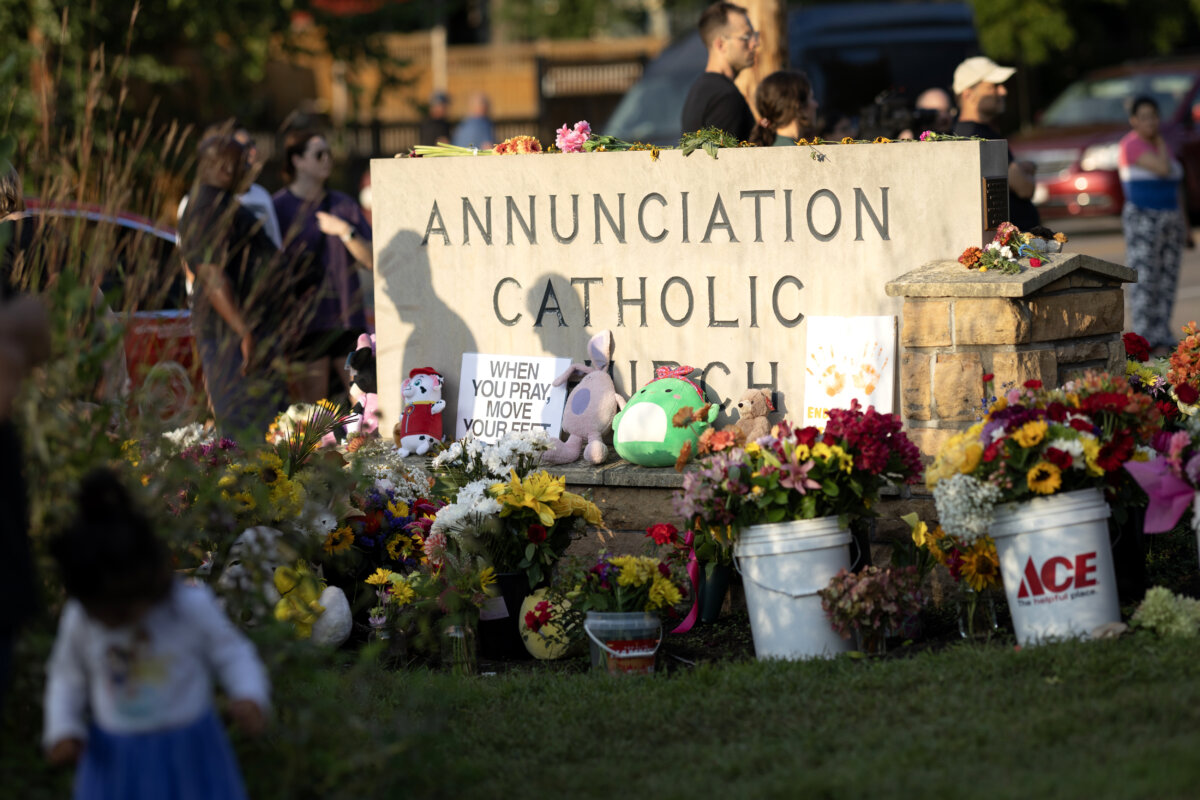
They also said their proposals would remove weapons of war from society, equip owners to safely handle and store firearms, and prevent crimes such as the Aug. 27 shooting at Annunciation Catholic School in Minneapolis.
“It’s just making sure that someone who owns a deadly weapon has training in how to safely use that deadly weapon,” Democratic Sen. Liz Boldon said of her proposal to require training.
As it became clear there would not be much agreement between the parties, the discussion became more contentious.
Cochair Sen. Zaynab Mohamed, a Democrat, accused Republicans of prioritizing politics over the lives of children.
Mohamed said she understands the issue because she’s been a crime victim.
She accused the GOP of amassing political power rather than protecting children.

“When it comes to a woman’s abortion, they don’t honestly care about the truth,” Mohamed said. “They don’t care about your families. They don’t care about your kids. They care about power, gaining it, keeping it. That’s the honest truth.”
Republican Sen. Jeff Howe took issue with Mohamed’s statement.
Howe said he is a combat veteran whose son was at Rocori High School in Cold Spring on Sept. 24, 2003, when one of his classmates killed two students.
Howe said that day had a deep impact on him and his son. He denied being motivated by political power.
He said he supports shoring up physical security at schools, rather than passing laws that will be tied up in the courts for years.
“The weapon I carried in war was not the weapon that I got in my gun safe at home,” Howe said. “They’re different. If you don’t understand that, you should go take a class on it.”
Howe and other Republicans said the proposed laws would infringe on constitutional rights while failing to deliver results.
They said state resources would be better spent improving mental health care, hardening security at schools, and enforcing existing laws.
Republican Sen. Andrew Mathews said gun control laws typically fail to live up to their promises to prevent violent crime.
“I don’t think those are promises that we can accurately and truthfully make,” Mathews said.
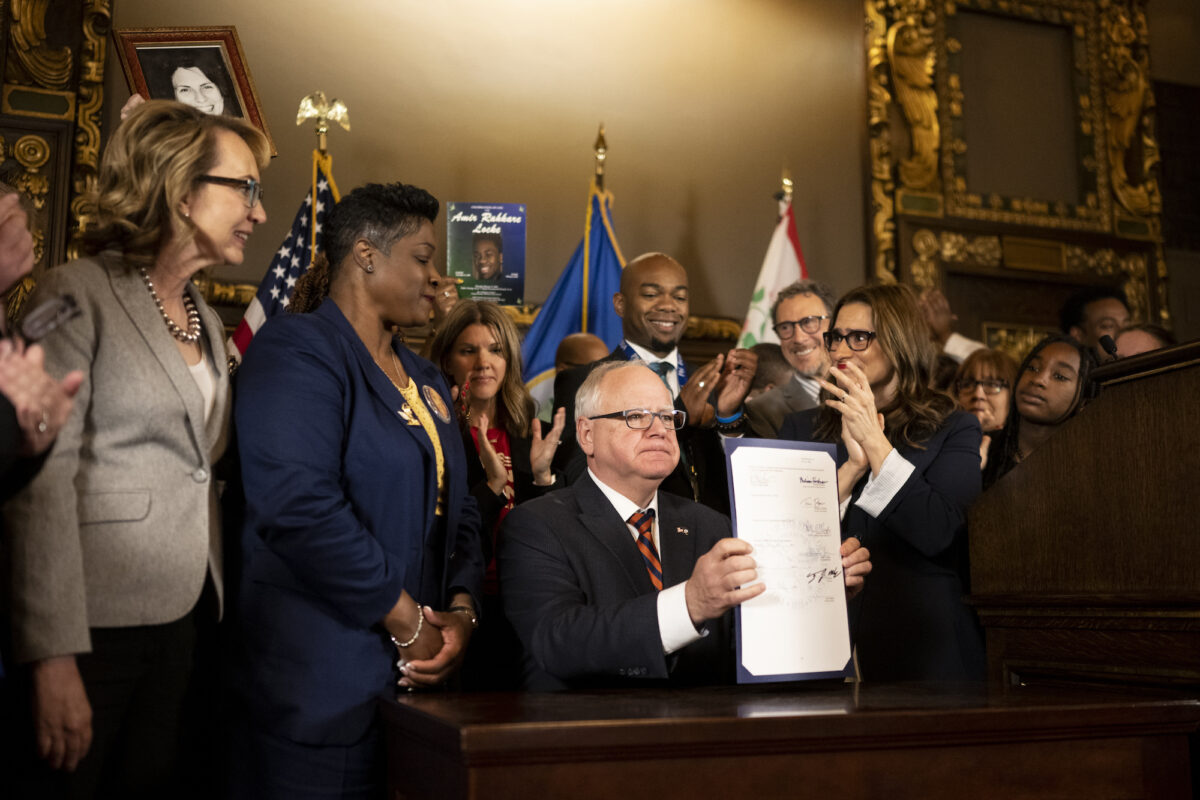
Currently, California, Connecticut, Delaware, Illinois, Maryland, Massachusetts, New Jersey, New York, Washington state, and the District of Columbia have some type of assault weapons ban.
The GOP senators voiced support for proposed legislation to improve mental health services, impose stiff penalties for impersonating a law enforcement officer while committing a crime, and fund programs to inform the public on the state’s Red Flag law.
Mathews offered a proposal to provide funding for schools that wanted to hire a school resource officer.
Sens. Boldon and Bonnie Westlin said they would support such a plan if it were paired with a gun control measure.
Latz said he had hoped to put together a package of bills that would be acceptable to both parties.
During its first meeting on Sept. 15, the group heard impassioned testimony from the parents of students who were at Annunciation Catholic School on Aug. 27.
They talked of how their children have been traumatized. They said the best way to prevent future mass shootings would be stiffer gun laws.
However, one father posited that perhaps guns were not the cause of the shootings.
Nick Carlburg said he is concerned about the need for armed security at his children’s Catholic school. But he also pointed out that in years past, guns were taken to schools with no problem.
“What has changed? Every gun can become an assault weapon because it depends on the individual, not the object,” Carlburg said.
Walz has publicly stated that he will call a special session to address gun control after the shooting at Annunciation Catholic School.
The school shooting was preceded by the June 14 shootings of Minnesota Sen. John Hoffman of Champlin and state Rep. and Speaker Emerita Melissa Hortman of Brooklyn Park, and the spouses of the two officials.
Hoffman and his wife were wounded in what has been labeled a politically motivated attack.
Hortman and her husband were allegedly killed by the same gunman who attacked Hoffman and his wife.
Vance Boelter, 57, was charged with two counts of murder for murdering Hortman and her husband, Mark, and two other counts for shooting Hoffman and his wife, Yvette.
Hoffman authored the proposed bill to increase penalties for criminals who impersonate law enforcement officers because his and Hortman’s attacker was disguised as a policeman.
Jack Phillips and Joseph Lord contributed to this report.
Correction: A previous version of this article gave an incorrect date for the Minnesota State Senate Gun Violence Working Group’s second meeting. The Epoch Times regrets the error.
 Friends Read Free
Copy
Facebook
Tweet
Friends Read Free
Copy
Facebook
Tweet