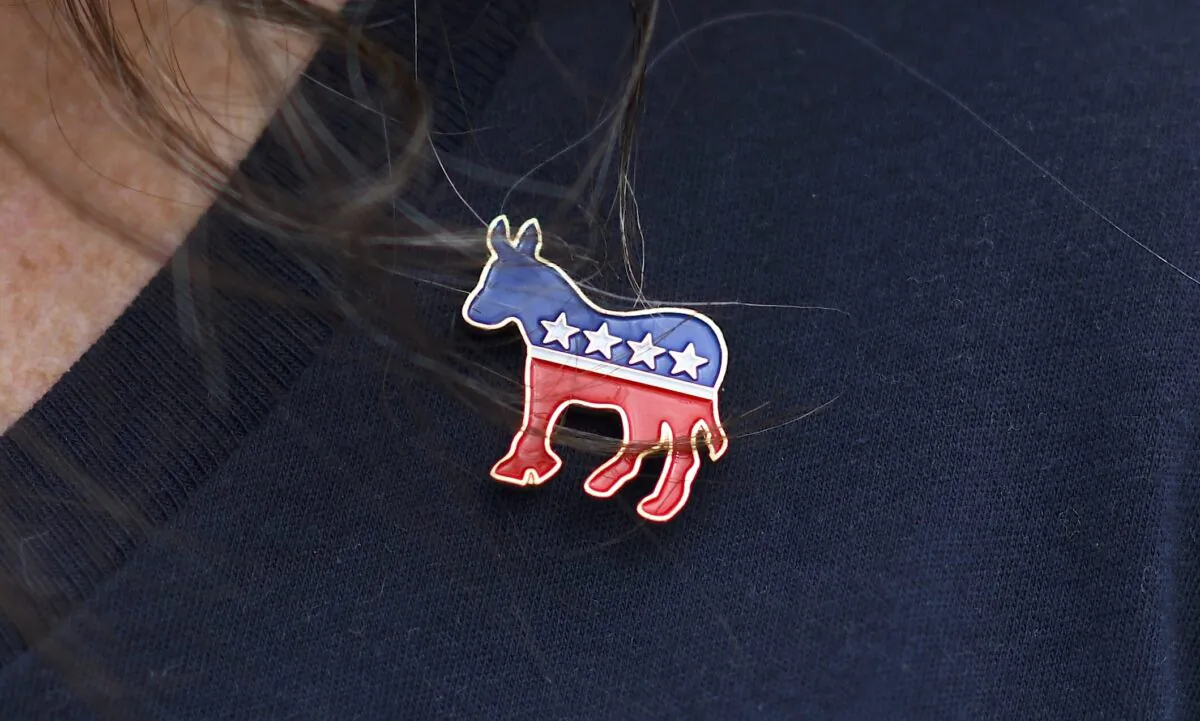

Third Way—a moderate-leaning Democratic think-tank—is warning Democrats that the language they use could cost them persuadable voters, arguing that some commonly used phrases sound “extreme, divisive, and superior” rather than inclusive.
In a statement, Third Way said the party cannot afford to drive people away with terminology that is often mocked in focus groups. The group pointed to figures ranging from comedian Sarah Silverman to Kentucky Gov. Andy Beshear raising concerns about how Democrats’ rhetoric can come across to average voters.
The memo, titled “Was It Something I Said?,” was published on Aug. 22 and outlines words and phrases the group says put “a wall between us and everyday people of all races, religions, and ethnicities.” According to the memo, these terms were intended to signal empathy and inclusiveness, but instead are perceived as elitist or confusing.
The memo categorizes problematic language into several areas, including “therapy-speak,” “seminar room language,” “organizer jargon,” and “gender/orientation correctness.” Terms cited include “birthing person,” “Latinx,” “microaggression,” “safe space,” “the unhoused,” and “justice-involved.” Third Way said these terms are rarely, if ever, used by voters in their focus groups, except as a way to parody Democrats.
The group argued that Democrats often avoid plain language out of concern about backlash from activists and advocacy organizations, which can pressure policymakers to adopt their preferred terminology. According to the memo, that dynamic has led to phrases like “birthing person” being substituted for “mother.”
The memo does not call for banning specific words but stresses the need for clarity and accessibility. It warns that unfamiliar terms can activate distrust among voters and give the impression that Democrats are disconnected from the average American.
Third Way said the language conveys the notion of, “I’m smarter and more concerned about important issues than you. Your kitchen-table concerns are small.”
The release of the memo comes as Democrats continue a broader debate about the party’s direction.
In recent months, leaders have urged the party to reconnect with working-class voters and younger men, with figures such as Arizona Sen. Ruben Gallego, Minnesota Gov. Tim Walz, and former Transportation Secretary Pete Buttigieg calling for sharper, clearer messaging.
Party leaders have also been grappling with redistricting battles in Texas, California, and New York, launching new organizing programs, and debating how to respond to Trump administration policies on immigration, language, and crime.
On race, the memo notes that terms such as “BIPOC,” “allyship,” and “intersectionality” have contributed to the Democrats’ losing support from non-white voters. “We must know when to take a step back and listen, instead of peppering our websites, fundraising asks, and newsletters with sociology buzzwords.”
On crime, phrases like “justice-involved” or “incarcerated people” risk making the public feel as if victims are ignored, it says.
Third Way emphasized that Democrats should not abandon their values or commitment to marginalized groups but should focus on building broader coalitions through language that “invites, not repels.”
The memo concludes that in order to effectively oppose President Donald Trump and Republicans, Democrats must speak in ways that persuade rather than alienate.
 Friends Read Free
Copy
Facebook
Tweet
Friends Read Free
Copy
Facebook
Tweet