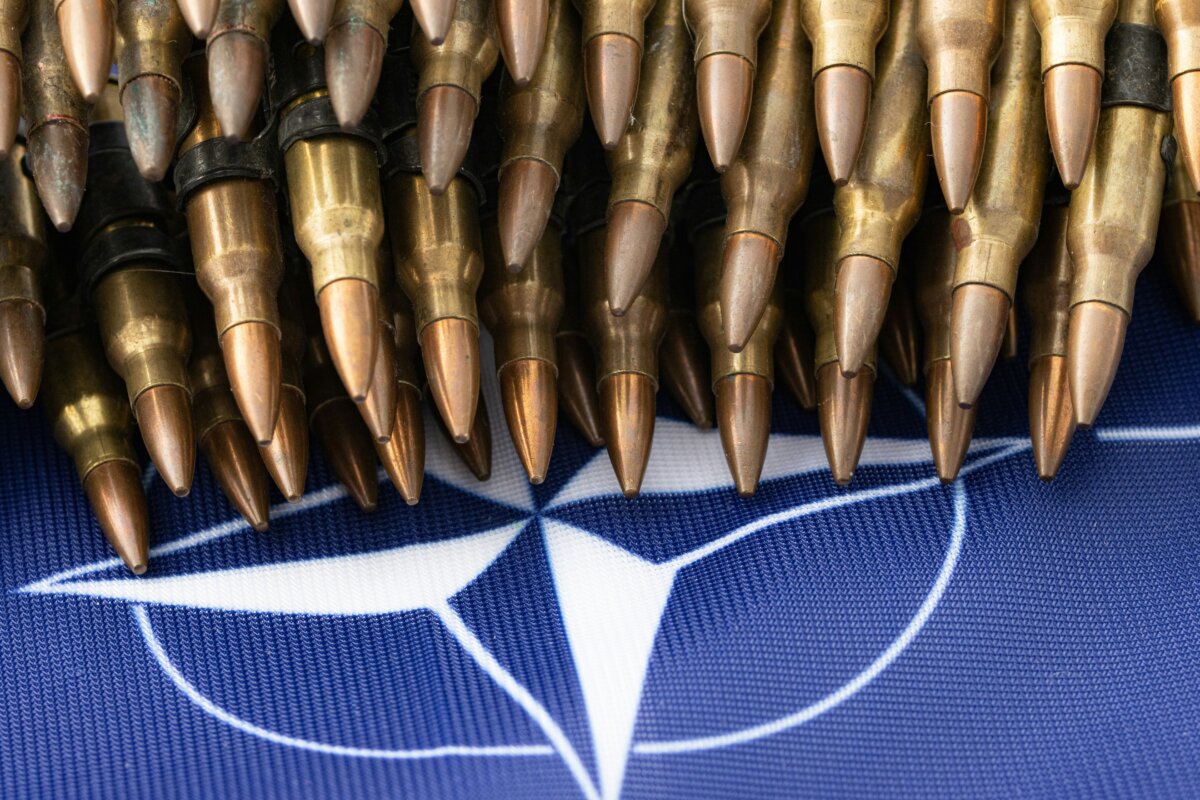

President Donald Trump has long questioned the post-Cold War purpose of the North Atlantic Treaty Organization, criticizing the alliance as a “paper tiger” dependent on American money, munitions, and muscle, and calling for a “very serious examining” of its value to the United States after none of its other 31 members responded to his appeal for assistance in the Iran war.
While Presidents Barack Obama and Joe Biden scolded Europeans as “free-riders” unwilling to pay for their own defense, Trump during his first term excoriated treaty allies as “deadbeats,” labeled NATO “obsolete,” and, since returning to office in 2025, has ratcheted up criticism, demanding they spearhead support for Ukraine in fighting off Russia’s invasion, threatening to seize Greenland from Denmark, characterizing members as “cowards” unlikely to uphold Article 5 commitments, and openly musing about withdrawing from a coalition the United States has led since its 1948 founding.
Iran’s de facto closure of the Strait of Hormuz has exacerbated the tension, with the president blasting NATO for not joining the U.S. Navy’s Arabian Sea blockade despite Europe being reliant on exports from the Persian Gulf, where 20 percent of global crude oil and liquified natural gas is shipped from, vowing member nations could face a “reckoning” should the United States leave the alliance.
Military analysts and international relations scholars told The Epoch Times they see Trump’s tough talk on leaving NATO as both a negotiation tactic and a real threat.
“The threat to leave NATO is real and closely related to the lack of European defense spending and assistance in the provision of global security, which is a global public good,” said Dr. Anders Corr, publisher of Journal of Political Risk and principal at Corr Analytics in Pittsburgh, Pennsylvania.
“Trump is doing both, leverage but also a real threat, and that’s the point,” Middle East Forum Director Gregg Roman said. “Trump doesn’t bluff for the sake of bluffing. He creates credible downside to force movement. If people who are in leadership positions in allied countries treat the threat as theater, they’ll learn the lesson, from Berlin and Ottawa, that they’ve already learned on trade. The leverage is the policy.”
Roman, who wrote a September 2025 column in The Epoch Times questioning Turkey’s NATO commitment, said the threat should not be viewed as a straight “binary choice—we’re staying in NATO or we’re leaving NATO”—but as “part of a process” in forcing Europeans to be primarily responsible for defending the continent.
“I consider myself someone who believes in the NATO alliance, but I also support restructuring the alliance, and I don’t see the contradiction between supporting President Trump’s points and being in favor of a U.S.–European defense alliance,” he wrote. “It should definitely go through a restructuring, but also a balancing.”
“Trump, the self-described great deal-maker, is trying to wrangle them into compliance” regarding meeting commitments, agreed University of Miami Professor of Politics June Teufel Dreyer, a senior Foreign Policy Research Institute fellow and a former U.S.–China Economic and Security Review Commissioner. “And he may succeed.”
Pay Up or Else
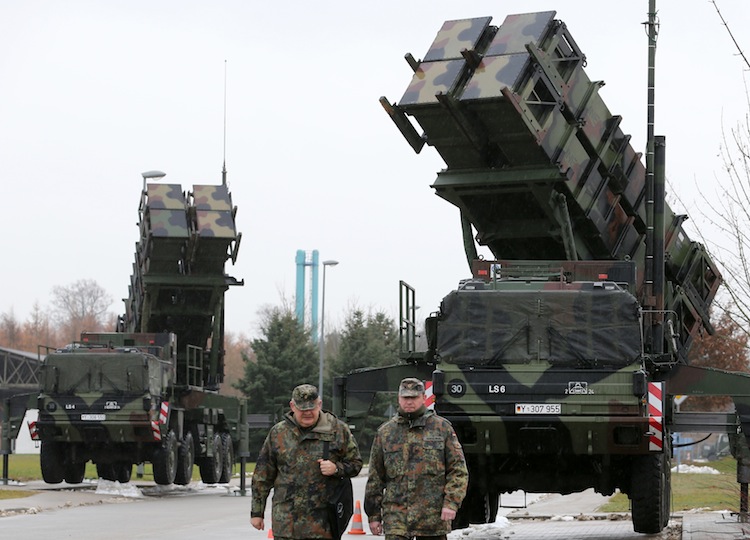
What Obama, Biden, and Trump could not do in cajoling NATO nations to commit 2 percent of gross domestic product (GDP) to defense, Russian President Vladimir Putin succeeded in doing when he launched Russia’s February 2022 invasion of Ukraine.
In response to Trump’s demand that NATO allies commit 5 percent of GDP to defense, members agreed during its 2025 summit to commit 3.5 percent to their militaries—in line with the 3.6 percent GDP the U.S. spends on its armed forces—and 1.5 percent for infrastructure improvements, such as cybersecurity, crisis response, and adapting roads, rail lines, bridges, and ports to military needs.
In a June 2025 column in The Epoch Times, Dreyer called the GDP commitments “a qualified victory” for Trump, but noted boosted allocations are approximate to proximity to Russia, with Poland spending nearly 5 percent, Lithuania 5.5 percent, and Latvia nearly 6 percent GDP for defense.
France and Germany, meanwhile, committed 3.5 percent GDP by 2030, a significant upgrade despite political pushback and economic concerns, she said.
“In Germany, the AfD [Alternative for Germany party] actually likes Putin. And the German economy, the powerhouse of Europe, has been declining,” Dreyer wrote in April. “Britain and France aren’t in good economic shape and are unlikely to improve in the near future.”
The UK’s defense spending for 2025 is estimated to be approximately 2.4 percent of GDP, increasing to 2.5 percent by 2027, and between 3.5 and 5 percent by 2035 “in response to rising geopolitical threats,” according to Parliament budget statements.
If money is policy, Dreyer said, there are still questions about many NATO nations’ “will to fight.”
He added: “The exceptions to this are Poland and the Baltic states. But the biggest states have doubts.”
Strictly viewing NATO commitments in “defense spending is a false metric,” writes Carl Schuster, a widely published military analyst and retired U.S. Navy captain, in April 11 column in The Epoch Times. “A better metric would be to require each ally contribute capabilities to the alliance.”
“That will be a challenging but, in my view, necessary,” he said in a subsequent interview. “NATO should commit each nation to a standard of combat capabilities to be achieved by 2030. This is something NATO should have done the moment Russia became an aggressor again.”
Restructuring a Revival
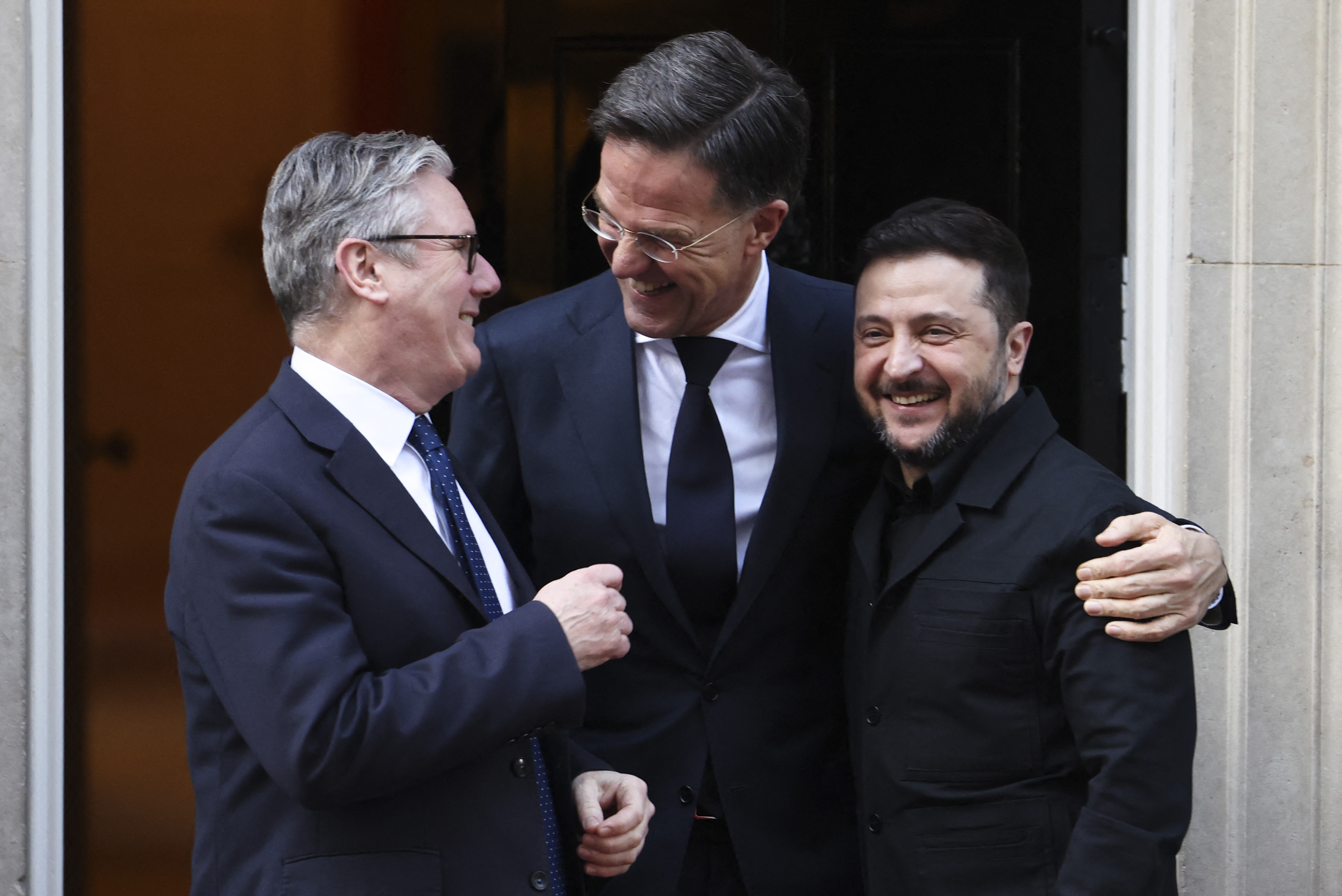
Schuster and Corr laid out for The Epoch Times ways the United States and NATO could restructure the alliance to make it stronger and more equitable.
Europeans must pay more since, unlike 1948, they can, Schuster said, and no nation should be able to condition rules of engagement when their forces are NATO-deployed, as occurred in Afghanistan, the only time Article 5 was invoked.
“NATO should say, ‘Country X commit to a number of fighter wings, number of brigades, and so forth’—all equipped and trained to a NATO standard,” he said. “Each countries’ force contributions will reflect a balance shaped by their demographics and areas of expertise. The result will be a NATO that knows what it can rely on during a crisis or conflict.”
That’s already “theory,” Schuster said, but NATO “has never held members to a level of equipment, logistical support, and combat readiness. The Portuguese Navy, for example, did not have ‘Link 14’ or any of the other computer ‘Link’ systems supposedly required for operations in a NATO naval task group.”
Corr said members that meet defense requirements can defray costs on those that don’t, citing a 2021 column he wrote in The Epoch Times explaining the concept.
“The provision of global security requires a country or willing coalition provide the public good up front and then donate the costs or charge other countries afterwards for its provision,” he said, pointing to the Strait of Hormuz impasse as an example.
“This charge could come in the form of a tax” which the United States, since it is acting unilaterally, could impose “on adversary shipping through the strait to cover the cost of containing Iran,” Corr said, before France and the UK agreed on April 17 to lead an undefined multinational mission to safeguard the strait just as Iran announced it was “open.”
If NATO nations won’t pay for their own defense, make them pay those that do, he said.
“President Trump has raised the issue himself for the Strait of Hormuz,” Corr said. “Our allies need to understand we cannot provide global security for free, and if they do not assist, we will need to find other sources of revenue that will make us whole.”
Congress is Watching
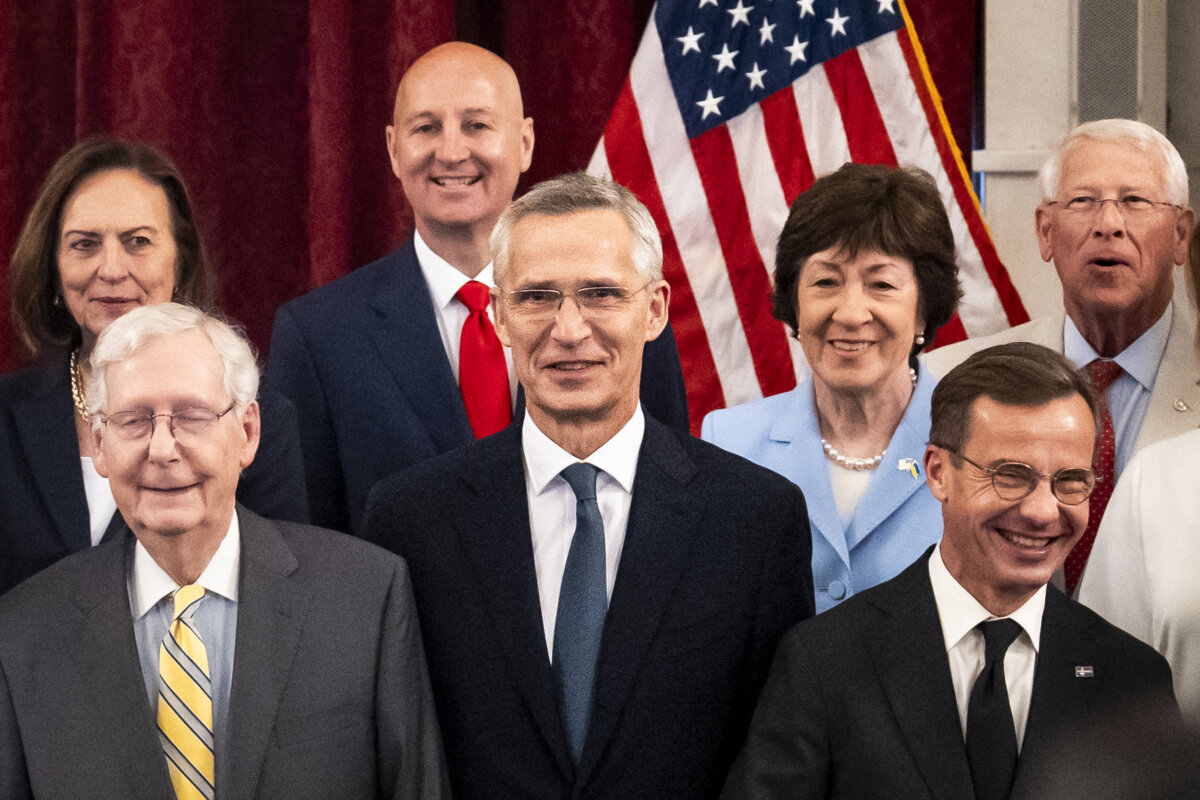
A president cannot unilaterally repeal a treaty without congressional approval and there appears to be little appetite among lawmakers to disengage from NATO, although refashioning the 78-year-old alliance to reflect 21st century realities is on the table.
“We need to have some tough conversations with our NATO allies,” Sen. Josh Hawley (R-Mo.) told The Epoch Times, outlining conditions for sustained U.S. support.
“No. 1, European nations need to be paying more,” he said. “No. 2, they need to be doing more on the continent of Europe. The whole Ukraine crisis … they ought to be the ones taking the lead in dealing with Russia.”
The alliance has been “cherished by all” in thwarting the Soviet Union during the Cold War, Rep. Chuck Fleischmann (R-Tenn.) said, but its failure to “step up and see the urgency of this situation [in the strait] and the potential for resolving a situation with Iran that could quell the single-largest state sponsor of terrorism in the world” is duly noted in Congress.
“It behooves [NATO] countries to do what the United States would be doing,” he told The Epoch Times. “So I wish there were more cooperation.”
Rep. Troy Nehls (R-Texas) was blunt. “I’m not a big supporter” of entanglements tied to NATO, the European Union, and the United Nations, he told The Epoch Times.
“Are we really benefiting by providing all the resources and the funding to help them?” he asked. “We’re putting billions and billions of dollars into Ukraine. What the hell has that gotten us? Nothing. So whether it’s France or some of those other countries, I don’t have a lot of faith and confidence in them, quite honestly.”
NATO has congressional supporters, including the influential House Armed Services Committee Chair Rep. Mike Rogers (R-Ala.).
“I’m a big supporter of NATO,” he told The Epoch Times. “I’m disappointed in their participation in the Middle East, but we should not be looking at NATO ‘restructuring’ as a result.”

‘Comfort of the Status Quo’
Corr and others say what Rogers is referring to in dismissing “restructuring” is NATO’s sole focus on defense against attacks on one of its members, all but the United States and Canada, in Europe. So it is, therefore, defensive and Euro-centric.
In refusing to assist the United States and Israel in attacking Iran as a preemptive strike to short-circuit a perceived threat, that’s a potential precedent in mission creep not within NATO’s purview. But not responding to Trump’s appeal to “open” the Strait of Hormuz is less easily shrugged off, Corr said.
“In the case of opening the Strait of Hormuz, it is both true that this is in Europe’s interest, and that Europe did not agree to the operation in advance of the decision to engage in regime change in Tehran. This is the source of tension between the U.S. and some European countries,” he said.
Middle East Forum’s Roman said if Europeans heed Trump’s tough talk, they could avoid Russian adventurism.
“If you look at what’s possible with restructuring NATO, the 2 percent floor moving to a 5 percent floor, the new German rearmament, Polish procurement, these are things that come after the American president threatened the comfort of the status quo,” he said. “Pressure works, but reassurance does not.”
Europe’s “comfort of the status quo” is over, Nehls said.
“Everybody wants the American people to come in and the [American] taxpayer to defend Europe,” he said. “And then, when we need Europe to defend us? They’re not there.”
It’s a brave new world, and maybe redefining roles, renewing vows, so to speak, could save the relationship, Roman said.
“NATO is worth saving, worth reforming, but it’s not going to reform without applying the leverage Trump is bringing to bear because, if you think about the alternative, a polite, underfunded, compromised alliance that can’t even defend the Strait of Hormuz, that’s the thing that kills NATO,” he said. “The reevaluation Trump is putting forward isn’t a threat to the alliance, the status quo is.”
Nathan Worcester contributed to this article.
 Friends Read Free
Copy
Facebook
Tweet
Friends Read Free
Copy
Facebook
Tweet