The New Civil Liberties Alliance (NCLA) on Tuesday came to a settlement with the federal government that prohibits agencies from requesting social media companies to suppress constitutionally-protected speech, as in the case of the Biden administration’s “whole of government” approach to censorship, according to the organization.
The agreement was outlined in a consent decree awaiting final approval by the U.S. District Judge Terry Doughty in Louisiana. This closes the lawsuit originally filed as Missouri v. Biden. The case ultimately went to the Supreme Court as Murthy v. Missouri before being sent back to district court.
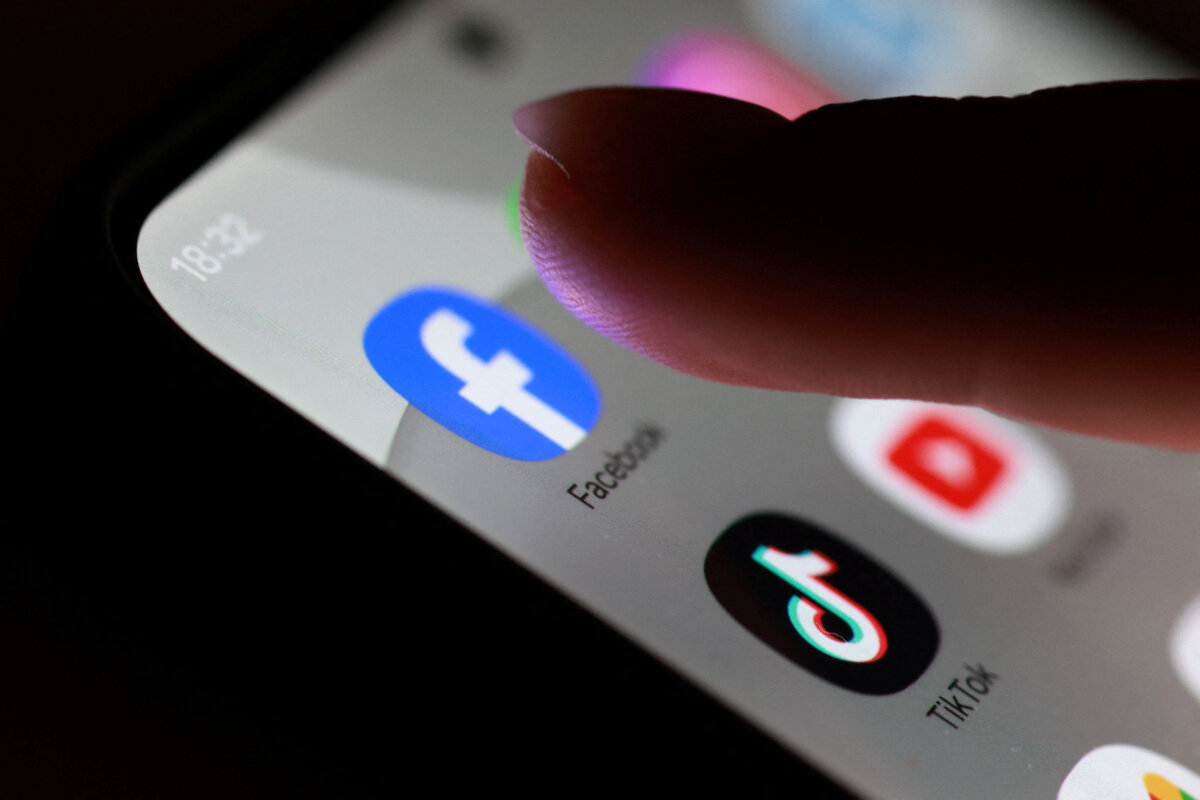
The terms of the settlement block the U.S. Surgeon General, the Centers for Disease Control and Prevention, and the Cybersecurity and Infrastructure Security Agency from telling social media websites such as Facebook, Instagram, X, LinkedIn, and YouTube to delete or suppress protected speech.
The agencies are also prohibited from directing or overriding the companies’ internal content moderation choices.
The NCLA filed the lawsuit on behalf of plaintiffs Jill Hines and Dr. Aaron Kheriaty, who claimed their posts were censored under a broad government campaign to stifle viewpoints on COVID-19, elections, and other public issues.
“This case began with a suspicion, that blossomed into fact, that led to Congressional hearings and an Executive Order that government censorship of Americans’ social media posts should end. Freedom of speech has been powerfully preserved by our clients, past and present, who initiated this suit,” John Vecchione, senior litigation counsel at NCLA, said in a statement.
The Supreme Court in June 2024 quashed a preliminary injunction handed down by the 5th U.S. Circuit Court of Appeals, determining that the Kheriaty and Hines lacked standing at the time. NCLA then litigated the case in district court, in which discovery yielded details of the government conspiring with social media platforms.
“The United States government cannot abridge speech directly, nor by inducing intermediaries to do so at its bidding. As recognized by last year’s Executive Order, that is exactly what happened, sometimes driven by a prior administration, sometimes driven by bureaucrats, but always unlawful,” said Zhonette Brown, NCLA’s general counsel and senior litigation counsel.
President Donald Trump evoked the issue on his first day in office via an executive order denouncing such censorship practices.
The settlement upholds that designating speech as “misinformation,” “disinformation,” or “malinformation” does not override First Amendment protections.
Philip Hamburger, NCLA’s founder and CEO, called the federal government’s social media censorship “the most massive suppression of speech in the nation’s history, it was profoundly important to resist it.”
Mark Chenoweth, NCLA president, said: “Our clients joined this case to ensure there would be standing to oppose the federal government’s blatant censorship. NCLA is thrilled to vindicate Jill Hines, Dr. Aaron Kheriaty, and our former clients now in government service. Federal officials may police the line between lawful and unlawful speech, but they have no role in deciding if speech is true or false—even so-called misinformation, disinformation, or malinformation.”
The consent decree confers on Hines and Kheriaty the right to enforce its terms, if violated. The Trump administration has agreed to the settlement, including the payment of attorneys’ fees.
The NCLA continues to litigate censorship lawsuits against the State Department and other officials.
 Friends Read Free
Copy
Facebook
Tweet
Friends Read Free
Copy
Facebook
Tweet