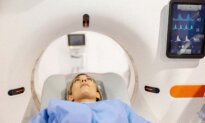

NEW YORK CITY—On Wednesday, 100 inmates from the Rikers Island jail complex in New York moved into a new residential ward at Bellevue public hospital that opened the day prior to provide specialized medical care.
“Rather than wait critical hours and travel offsite to get the care they need, specialty services will be just an elevator ride away,” Mayor Zohran Mamdani said from Bellevue Hospital on Tuesday, announcing the opening of the facility. Designed to provide inmates with better access to medical care, the new ward is taking on patients from the island jail’s infirmary, which will allow the mayor to close that facility, a first step in his effort to close Rikers Island.
The outposted housing unit is the first of its kind. Two similar facilities to house inmates within hospitals are projected to be completed in 2029, one at Woodhull Hospital in Brooklyn and another at North Central Bronx Hospital. Together, the three facilities will be able to house 340 inmates.
After stepping off the elevator, anyone entering the secure ward must pass through metal detectors. The inmates’ residential areas are behind secure interlocking doors. The facility has open dormitory-style sleeping quarters with multiple beds as well as single rooms that require a keycard to enter or exit. Frosted glass windows allow for natural light.
The secure ward provides space for physical and occupational therapy. It also has an indoor sitting area for recreation and an enclosed outdoor space with a basketball court and sitting area.
Those housed in the North Infirmary Command on Rikers Island transferred to the Bellevue facility on April 8, which is a key step before the Department of Corrections closes down North Infirmary Command in June, and eventually Rikers Island.
In March, two inmates on Rikers Island died while in need of medical care, the first to die in 2026. In 2025, 15 inmates died in custody according to the New York City comptroller. From 2019 to 2026, a total of 76 inmates died in custody, with 33 of those being medical related.
“Today, we are charting a different course, one that diverts from the path of neglect and begins the process of closing Rikers Island once and for all,” Mamdani said.
In 2019 the City Council passed a law mandating the city shut down Rikers Island by Aug. 31, 2027. On April 7, Mamdani said the city could not meet that deadline, blaming former Mayor Eric Adams’s administration for failing to actively work to shut down the facility.
“It is going to take us quite a bit of time to ensure that we can put our city back on the path that the City Council voted for in 2019,” Mamdani said.
Closing the Rikers facility depends on completing construction of borough-based jails to house the population on Rikers, which is nearly 7,000. However, the four planned jails based in Brooklyn, the Bronx, Queens, and Manhattan are still in progress, and even when completed will be able to house only around 4,000 inmates.
This is “not by mistake,” wrote attorney and adjunct fellow at the Manhattan Institute Christian Browne in a January op-ed for City Journal, “but because of activists’ plan to leave the city with ‘dramatically reduced’ jail capacity. In fact, the borough-based jails are deliberately designed to force ‘decarceration.’” Browne pointed to the Department of Corrections website, which reads: “New York is leading a historic decarceration plan to close Rikers Island and replace it with a smaller network of safer modern jails.”
Aside from the Bellevue Hospital residential ward, none of the new jail facilities are expected to be ready by the 2027 deadline to close Rikers.
The Bellevue outposted unit was also delayed. Despite the completion of construction in early 2025, the ward remained closed due to difficulty staffing the facility.
Dr. Patricia Yang, head of Correctional Health Services, a division of the public hospital system, said Tuesday at the opening that the need for the facility became clear after her division of NYC Health + Hospitals took over medical care for inmates in 2016. She said back then they found that among the sickest inmates, many were declining to be treated because the trip to Bellevue Hospital was too exhausting.
 Friends Read Free
Copy
Facebook
Tweet
Friends Read Free
Copy
Facebook
Tweet