
LOS ANGELES—After several days of testimony from a lead agent in the federal arson case against Jonathan Rinderknecht, the 29-year-old Uber driver accused of starting a blaze that prosecutors say ultimately led to the catastrophic Palisades fire of 2025, jurors on June 11 and June 12 heard from a string of witnesses describing interactions with the defendant in the days before and after the alleged incident.
“He had ‘incel’ energy,” Brennan White, an Uber passenger, told the court about his ride with Rinderknecht on the evening of Jan. 1, 2025, about 24 hours after prosecutors say the defendant started a brush fire at the summit of a popular hiking trail above an affluent neighborhood in the Santa Monica Mountains.
White and his fiancée, Ashley Comandatore, recounted that Rinderknecht spent most of the 35-minute ride delivering what they described as an agitated, expletive-laden invective about President Donald Trump, the general state of humanity, and frustrations with women while he sped and drove erratically.
“He was speaking very fast, ranting, one thought after the next,” White said. “It was the most memorable Uber ride I’d ever had.”
Attorneys for the defendant repeatedly questioned the relevance of such encounters to the case, which involves three arson counts related to the destruction of federal property.
“He never mentioned anything about a fire, did he?” defense attorney Steve Haney asked.
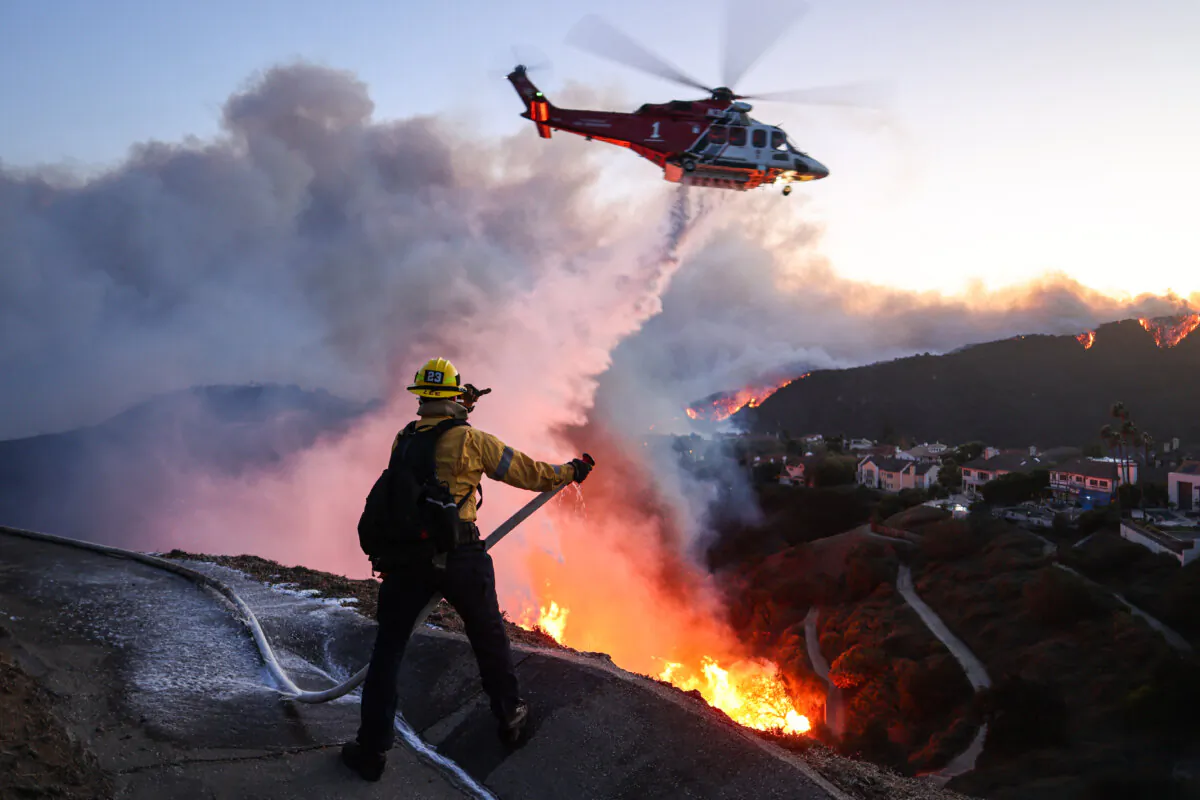
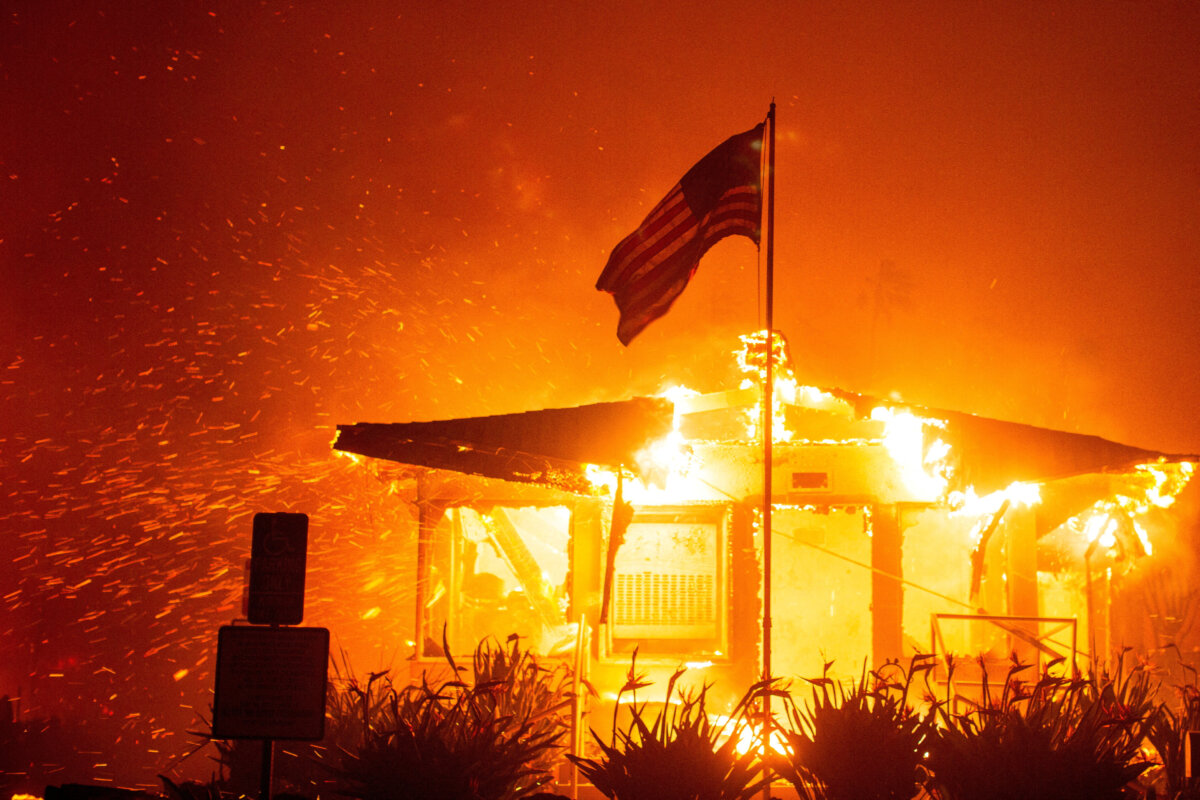
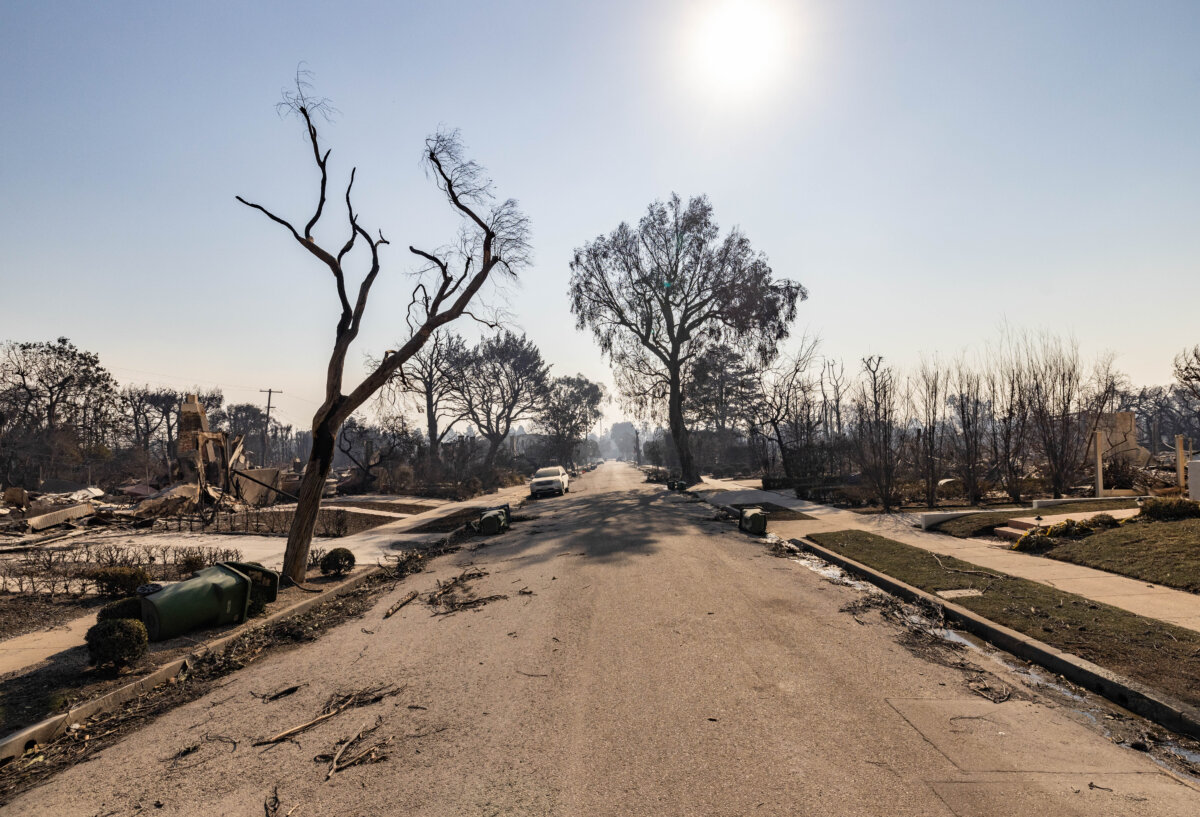
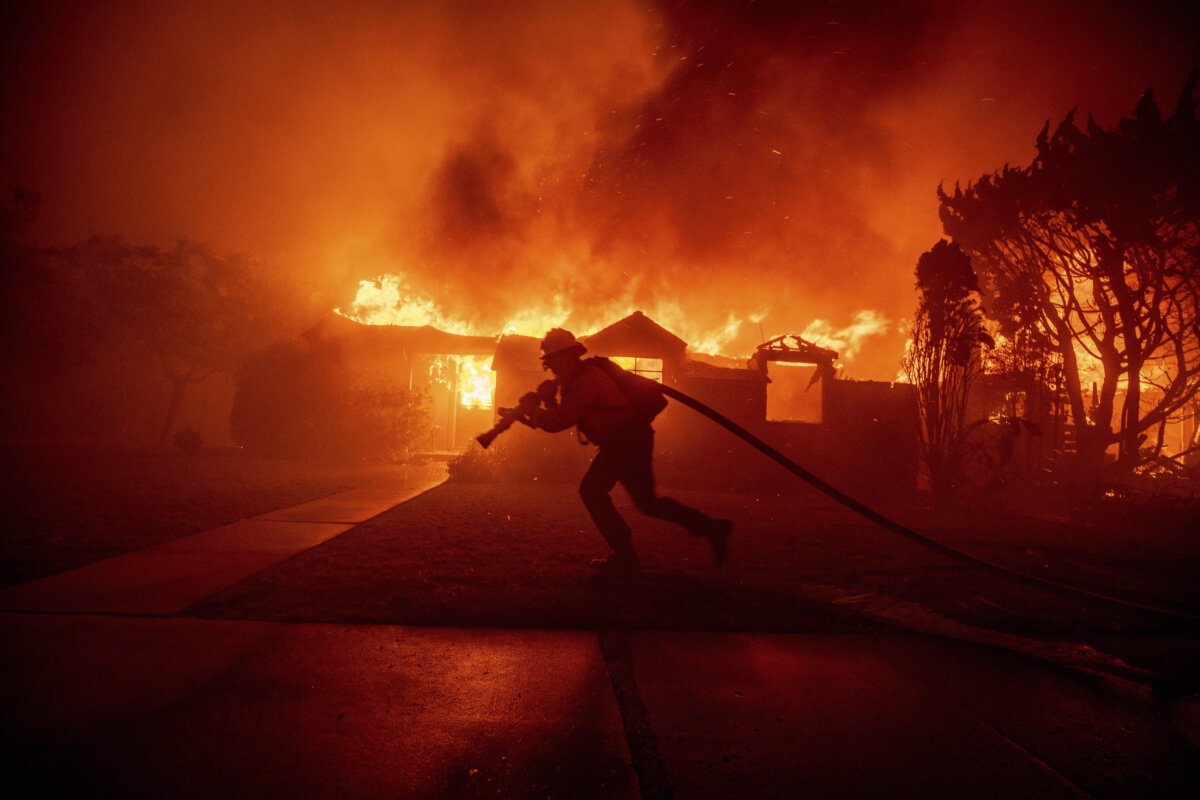
Prosecutors allege that the defendant started the Lachman fire, a blaze that began in the Santa Monica Mountains in the early morning hours of Jan. 1, 2025, which investigators maintain became a so-called holdover fire, smoldering underground until Jan. 7, when powerful Santa Ana winds whipped it into the inferno that killed 12 people and leveled more than 6,000 homes in the wealthy coastal enclave of the Pacific Palisades.
In addition to a detailed tracking of the defendant’s physical movements, the government has built its case on a kind of psychological profiling of Rinderknecht as a would-be vigilante driven by anger and a desire for “revenge on society.”
Another Uber passenger described a similarly unnerving ride with Rinderknecht during which he expressed an affinity for Luigi Mangione, the man accused of killing United Healthcare CEO Brian Thompson on Dec. 4, 2024.
“He was saying [the murder] was a good thing,” said Macy Miller, who also rode with Rinderknecht on New Year’s Day 2025. “He was anti-capitalism. … Trump came up; he hated Trump. He was going on about these topics: vigilantism, capitalism. He was talking fast and passionately about the political stuff, so I couldn’t really keep up and was kind of nervous.”
She recalled telling a friend afterward: “He’s a psychopath. … I had such a bad feeling about it.”
Judge Anne Hwang of the U.S. District Court for the Central District of California has allowed such witness accounts insofar as they may offer insight about Rinderknecht’s demeanor in the days surrounding the alleged arson and about his support for vigilantism and figures such as Mangione.
But Hwang, on June 12, admonished attorneys for allowing testimony, including from Uber passengers and police officers who had pulled Rinderknecht over for a traffic stop on Jan. 1, 2025, to stray beyond that limited scope, into speculation about his general character.
Prosecutors have woven such accounts of Rinderknecht’s behavior, along with digital evidence they said reflect his state-of-mind, innermost thoughts, and political predilections—including those gleaned from more than 8,000 interactions with ChatGPT and countless internet searches, videos, photos, songs, and other media—with a detailed timeline of his movements in an attempt to prove that a desire for “revenge against society” motivated the alleged arson.
Defense attorneys argue that the evidence shows that Rinderknecht reported the fire in good faith. They said that even though federal investigators have obtained 40 warrants and combed through every aspect of the defendant’s life, they have failed to produce any evidence that he started the Lachman fire, let alone that he is responsible for the Palisades fire that succeeded it a week later.
Lonely Chats
Michael Montevidoni, a special agent with the U.S. Bureau of Alcohol, Tobacco, Firearms, and Explosives (ATF) who led the federal criminal investigation, testified for several days about how law enforcement identified Rinderknecht as a person of interest using cellular geolocation data and security camera networks, then surveilled him and ultimately obtained more than 40 search warrants for his home, vehicle, and digital records.
In particular, the government has focused on Rinderknecht’s mental state and interiority, as it may relate to motive, evidenced in a sweeping cache of digital records retrieved during the investigation.
Montevidoni sifted through more than 8,000 interactions Rinderknecht had with ChatGPT, OpenAI’s artificial intelligence (AI) chatbot, which he said the defendant used as a “diary” to express grievances over a set of recurring themes.
“On multiple occasions, [it] was disparity of wealth and climate change, and how people who are rich are in power are enslaving society and causing harm to the planet and the environment … and him having a difficult time coming to terms with not being able to do anything about it,” the agent said.
Rinderknecht prompted ChatGPT to generate dozens of related images, depicting rich people “dining and enjoying themselves in a very evolved city with AI,” indifferent to or even enjoying suffering and environmental destruction around them, the agent said.
For perhaps the first time in the trial, Rinderknecht, on June 10, had a visibly emotional reaction, quietly drying his eyes and conferring with his attorney as Montevidoni described his ChatGPT records.
Hwang, at the time, offered limiting instructions for the jury, advising that evidence being presented about the defendant’s ChatGPT records, internet searches, and content consumption was not evidence of the central arson claims but was admitted as evidence of his potential motive, state of mind, or intent.
Montevidoni said the defendant’s grievances, as expressed to ChatGPT, intensified throughout 2024.
“Why am I so angry all the time?” Rinderknecht asked the chatbot. “The cost of life out here brings me anxiety. My loneliness brings me anxiety.”
The agent also recounted the defendant’s repeated Google searches for Mangione.
Haney noted that there was nothing in Montevidoni’s investigation indicating that the defendant considered Mangione a positive figure.
“Would you agree that just because someone Googled Luigi Mangione, it doesn’t mean they’re an arsonist?” Haney asked.
“I don’t see the connection,” Montevidoni responded.
Haney said: “Neither do I. That’s my point.”
But Montevidoni said Rinderknecht’s embrace of vigilantism against the rich and powerful was evidenced elsewhere, in more concrete terms.
“He was asking ChatGPT for the CEO of DoorDash’s address because he stated he was going to kill him,” Montevidino said of prompts he reviewed from Summer 2025. “He asked if the DoorDash CEO had security cameras and if he had children and if they were home.”
Montevidoni said he found it suspicious that Rinderknecht, who became a person of interest after the Palisades fire on Jan. 7, 2025, was repeatedly Googling information about the catastrophe in the immediate aftermath.
Many people were doing the same, Haney argued on cross-examination.
“Are you saying that is evidence of arson?” Haney asked.
Montevidoni replied, “I would say it’s more the timeframe and the number of times conducting the searches, as well as the number of days, and researching statistics.”
Concealing Evidence
Although law enforcement agents were able to procure a massive amount of data from the defendant’s devices and online accounts, they could not get everything they were after.
Investigators found a Tor browser, which allows users to access the dark web without being detected by law enforcement, on Rinderknecht’s desktop, along with “onion files,” which can be accessed only through the dark-web browser.
After investigators interviewed him in late January 2025, Rinderknecht was asking ChatGPT how to make sure all media and messages have been deleted from an iCloud account, Montevidino said.
“To me, it seems like he was trying to delete all the media, including videos and images, about a week after we interviewed him and seized all his digital devices,” Montevidino said.
“Later in February, when he was trying to negotiate, he provided us with another Apple device as a bargaining chip. … At that point, he’d already searched how he could delete the contents of his iCloud.”
Investigators were never able to access the onion files or the full contents of Rinderknecht’s iCloud, the agent said.
New Year’s Eve
Rinderknecht’s attorneys do not dispute his whereabouts on the night the Lachman fire started, but they deny that he started it. They have said that he called 911 repeatedly when he saw it break out.
“You don’t hear panic in that man’s voice?” Haney asked about a recording played for the court.
Montevidino responded, “I don’t hear panic in that voice.”
Haney argued that his client didn’t flee from the scene or make any effort to hide himself or his car.
Geolocation data obtained by investigators show Rinderknecht descending from a clearing where they believe the fire started and making his way back to his car as he called 911 repeatedly.
He drove away, then returned to the scene and filmed several videos of the blaze. In one, taken from inside his car, a green Bic lighter, which investigators allege he used to start the fire, is visible in the open glove compartment.
“In my experience, it’s common for [arsonists] to run away from the scene and return to the scene,” Montevidino said. “My understanding is that they can return to the scene to sometimes enjoy watching their fire, or call [first responders] to get that rush.”
On June 12, Joshua Pickens, a technical surveillance specialist with ATF, testified about the cellular data analysis he performed from several tower dumps near the suspected origin of the Lachman fire, offering a detailed timeline of Rinderknecht’s movements in the area.
An initial dump indicated more than 1,000 T-Mobile and AT&T users in the area during a relevant time frame, Pickens said, but “there was one phone that stood out in that immediate area.”
The only one that consistently showed up was Rinderknecht’s, he said.
Haney noted that the ATF was not able to get data from Verizon when it began its investigation on Jan. 10, 2025, because the carrier saves its data for only a limited timeframe—meaning that they could have missed many more people in the area—and that not everyone who climbs up a hiking trail on New Year’s Eve would necessarily have a cellphone.
Pickens said he looks at the totality of information, noting that Rinderknecht told investigators that he was the only one in the area and that security camera footage shows that he was the only one driving through the neighborhood to the trailhead at the relevant time.
Haney noted that Pickens had also analyzed where Rinderknecht was on Jan. 7, 2025.
“He wasn’t anywhere near the origin of the Palisades Fire, was he?” Haney asked.
Pickens responded, “That is correct.”
The U.S. Attorney’s Office is expected to rest its case by June 17.
 Friends Read Free
Copy
Facebook
Tweet
Friends Read Free
Copy
Facebook
Tweet