
Pennsylvania officials have reported a fourth measles-associated death, with the latest case being an 18-year-old from Mifflin County, located in the center of the state.
The county coroner’s office recorded the cause as acute disseminated encephalomyelitis, a rare and severe neurological complication of measles.
On Saturday, a 40-year-old woman from Jefferson County, a rural part of western Pennsylvania, died of measles complications. Last month, two measles-infected infants died in Lancaster County, in the southeast.
The two adults were unvaccinated, according to the state health department. The infants were too young for shots under current recommendations.
The United States is having its worst measles year since 1991. Officials have counted seven measles-associated deaths in the last two years, which is more than the combined total reported over the previous three decades.
In Pennsylvania, 676 measles cases have been reported this year across 38 counties, including 108 cases in the last seven days and a total of 124 hospitalizations. State officials say the measles-associated deaths are the first reported in Pennsylvania in 35 years.
Jefferson County Coroner Greg Furlong said the woman who died Saturday died “from complications associated with measles.” Testing was still pending to confirm the infection, he informed news outlets, though she showed symptoms after contact with a neighbor who had a laboratory-confirmed case.
“This is a heartbreaking loss for the family and an unfortunate reminder that measles can be a serious and potentially life-threatening disease,” Furlong said. “Our thoughts and prayers are with the family during this difficult time. We ask that the public and media respect their privacy as they mourn the loss of their loved one.”
The Pennsylvania Department of Health said it was aware of the Jefferson County report.
“We are in touch with the coroner and appreciate his commitment to keeping the public informed,” the department stated. “The Department of Health is conducting a thorough review of this case and will provide the public with updated information when it becomes available.”
The two Lancaster County deaths announced in late August set off a public dispute over how those cases should be counted.
Lancaster County coroner Dr. Stephen Diamantoni said one infant died from a laceration to the spleen. The baby tested positive for measles, but the coroner’s office ruled measles out as a factor because “there was no swelling or enlargement whatsoever” of the spleen, Diamantoni said.
He later said the second death was a 6-week-old infant with Amish lethal microcephaly, a rare genetic condition. Most babies born with the condition don’t survive their first year. That infant did die from measles, the coroner said.
Pennsylvania Health Secretary Dr. Debra Bogen said, “As a pediatrician with more than 30 years of caring for children, I have thoroughly reviewed the case investigation information and sadly can confirm that there were two recent measles-associated deaths in Lancaster County.”
After officials announced on Aug. 26 that Pennsylvania had recorded the first deaths related to measles in 35 years, Health Secretary Robert F. Kennedy Jr. said that “the announcement appears to have been premature, and the deaths may even have been altogether fabricated by one of the Governor’s hopeful staffers.”
“The Lancaster County Coroner says that it has no record of any measles deaths. State law requires that all measles deaths be reported to the coroner,” Kennedy wrote in a post on X at the time.
The Centers for Disease Control and Prevention (CDC) has not included Pennsylvania’s deaths in its national tally. On Sept. 11, the agency said it “does not currently have any death records from 2026 that indicate measles is the underlying cause.”
CDC Director Dr. Erica Schwartz previously said in a statement that Pennsylvania officials did not notify her agency of the Jefferson County death and have not accepted offers of CDC help.
“By contrast, Texas, South Carolina, Virginia, Kansas, New Mexico, and Wisconsin have officially requested CDC Epi-Aids and worked alongside federal teams to help bring their measles outbreaks under control,” she said. “CDC remains ready to provide Epi-Aid support to Pennsylvania as soon as the state officially requests our help.”
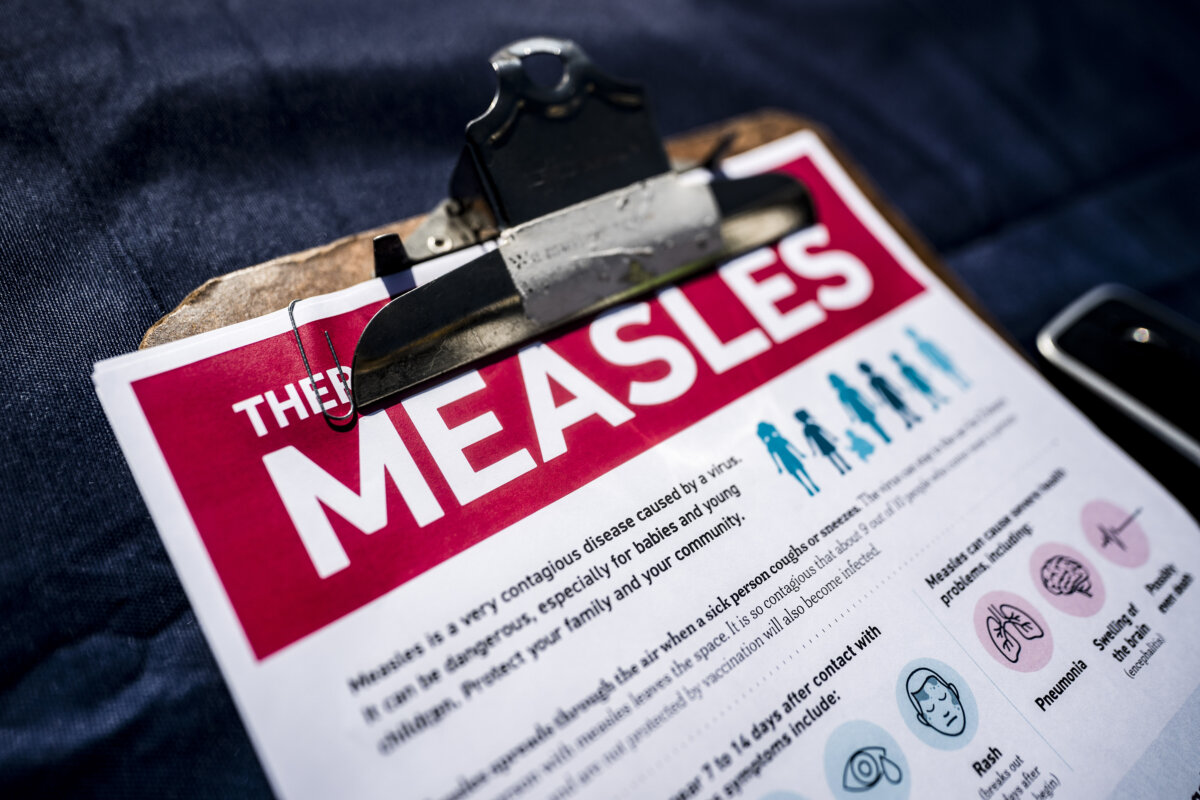
Measles spreads through contact with an infected person or droplets. Symptoms usually begin seven to 14 days after exposure and include high fever and rash. Health officials have urged people who are eligible to get the measles, mumps, and rubella vaccine.
 Friends Read Free
Copy
Facebook
Tweet
Friends Read Free
Copy
Facebook
Tweet