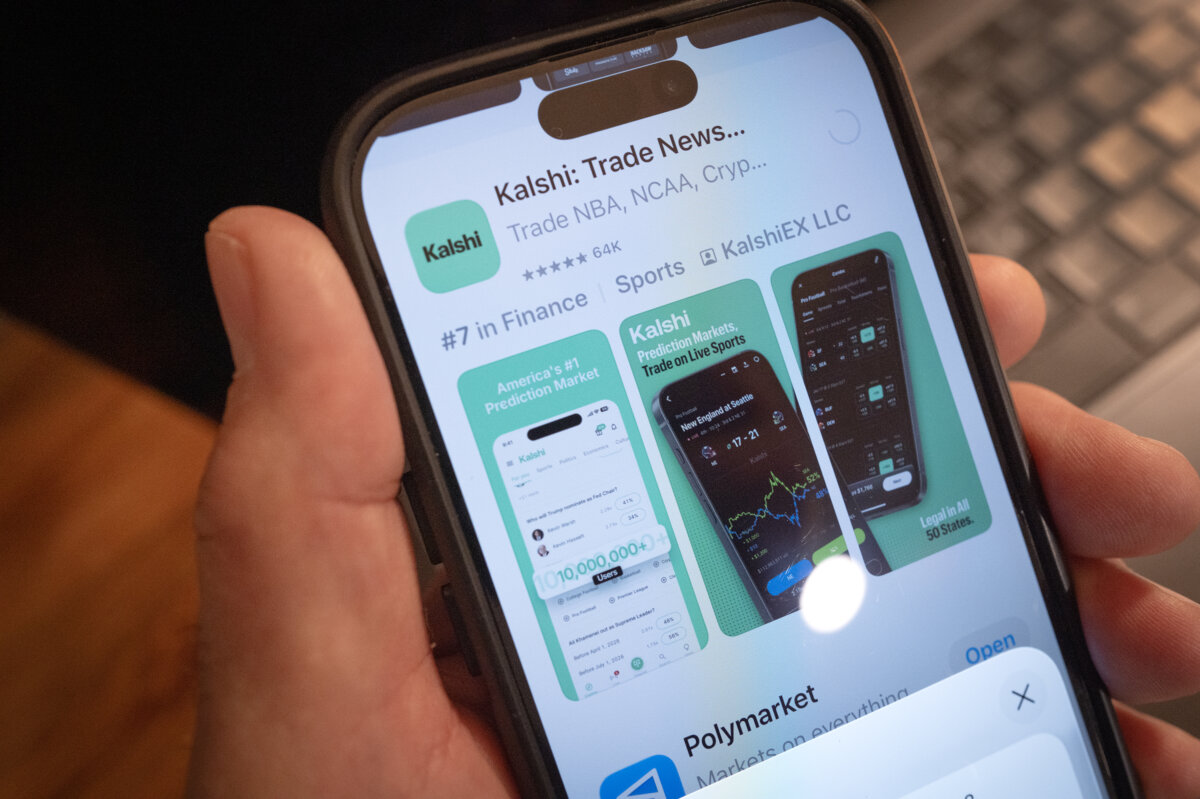

A betting industry that has grown exponentially over the past two years is facing increasing scrutiny over a series of alleged insider trading scandals that have rocked congressional races and recently led to the arrest of a U.S. soldier.
Last week, Gannon Ken Van Dyke was indicted after betting on the mission to capture former Venezuelan leader Nicolás Maduro.
The Army soldier was accused of using his advance knowledge of the mission to place bets on Polymarket, a prediction market that allows users to trade on whether real-world events will occur.
That same week, Polymarket’s competitor Kalshi fined and suspended three congressional candidates after the men allegedly placed bets on the outcomes of their own elections.
France is investigating whether someone may have intentionally tampered with temperature sensors at Charles de Gaulle International Airport to place weather-based bets on Polymarket.
Prediction markets have exploded in popularity in recent years. The platforms have grown their monthly notional volume from less than $100 million to more than $13 billion since early 2024, according to a report from Keyrock.
Wagers are being placed on everything from the timing of a potential permanent peace deal between the United States and Iran to how many times X CEO Elon Musk will post on the platform in a given week.
As allegations of insider trading on prediction markets rise, regulatory efforts are underway to limit who can place bets on these platforms.
“When millions of Americans price news events in real time, it changes how news gets covered and how people consume information,” Matt Bresler, the cofounder and CEO of Odditt, which builds infrastructure for sports betting operators, told The Epoch Times.
How Prediction Markets Work
Prediction markets such as Kalshi and Polymarket allow users to bet on the outcome of specific events by purchasing a “claim.”
In most prediction markets, each holder of the winning claim is paid a dollar, while the losers walk away with nothing.
If it costs 90 cents to bet that Musk will only make 150 X posts in a single week, and that is the winning bet, those who placed the bet receive 10 cents of winnings per claim. One can bet multiple times on an event.
The concept of a prediction market has been around for hundreds of years, dating back to early medical schools in the 1600s.
The Iowa Electronic Market, a modern-day prediction market, began allowing bets of up to $500 on U.S. politics in 1988, and it has correctly predicted the outcome of every U.S. presidential election since its establishment.
Polymarket and Kalshi have generated $21.5 billion and $17.1 billion, respectively, since January 2025 in total notional trading volume, but this is not limited to a single or even several trading topics.
Sports account for roughly 85 percent of Kalshi’s notional volume, and other topics have 3 percent to 4 percent shares, but Polymarket has more trading diversity.
Sports, politics, and crypto together have accounted for more than 90 percent of Polymarket’s notional volume activity since early last year.
“The power of prediction markets derives from the fact that they provide incentives for truthful revelation, they provide incentives for research and information discovery, and the market provides an algorithm for aggregating opinions,” Justin Wolfers and Eric Zitzewitz wrote in a 2004 paper titled “Prediction Markets.”
These markets are quickly becoming household names.
Thirty-six percent of U.S. voters have used a prediction market to check forecasts or to trade, according to a March survey by Paradigm. The share of use is higher among men (46 percent) than among women (31 percent).
Trades Lead to Scrutiny
The three congressional candidates caught, fined, and banned by Kalshi were likely caught because of how the platform operates, Bresler said.
“Catching this kind of trade isn’t exotic. Kalshi is a [regulated] exchange. They have to run surveillance,” Bresler said.
“They built a screen that checks accounts against lists of declared candidates. A candidate trades his own race, the system pings. It’s a name match.”
The U.S. soldier caught allegedly insider trading on Polymarket left a paper trail by using his identity to create a profile on the website, according to federal prosecutors, and he made more than $400,000 in wagers based on his knowledge of the Maduro raid. Van Dyke pleaded not guilty on April 28.
Some are pushing to restrict who can place bets on prediction markets.
California Gov. Gavin Newsom signed an executive order last month banning appointed state officials with insider information from using the platforms.
There may even be rules placed on members of Congress if a resolution brought by Sen. Bernie Moreno (R-Ohio) becomes law. He wants to ban senators from participating in prediction markets, or to prevent them from entering into “an agreement, contract, or transaction that provides for any purchase, sale, payment, or delivery that is dependent on” the outcome of a particular event.
“Any senator who came to D.C. to cash in, game prediction markets, or treat public office like a side hustle is betraying the oath they swore to their country,” Moreno said on social media.
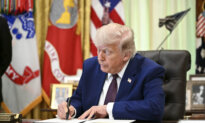
President Donald Trump, who invested in casinos throughout his real estate career, told reporters last week that he was “never much in favor” of prediction markets, saying they had turned the world into “somewhat of a casino.”
When asked on April 25 whether his administration would change its regulatory stance on the growing industry, Trump seemed less critical.
“A lot of other countries are doing it, and when the other countries do it, we get left out in the cold if we don’t do it,” he said. “I know people that are in the prediction market business, and they’re pretty happy with it.”
The president’s son Donald Trump Jr. is an adviser to both Kalshi and Polymarket.
Rise of Gambling Addiction
Many prediction market critics have derided the platforms as promoting a form of gambling that transcends mere sports betting.
Forty-three percent of U.S. adults are already concerned that legalized sports betting in much of the United States is bad for society, according to an October 2025 Pew Research Center poll.
The Supreme Court paved the way for this rise in sports betting when it legalized state-sanctioned sportsbooks in 2018 with the Murphy v. NCAA decision.
Recent studies have recorded a rise in gambling addiction in the years since that decision.
Between 2018 and June 2024, web searches for assistance with addiction to gambling increased by 23 percent nationwide.
States that have legalized sports betting, such as Illinois, Michigan, New York, and Virginia, all had some of the highest increases in gambling addiction-related web searches after they opened sports books statewide.
“The significantly higher search volumes observed in all eight states make it virtually impossible that our findings occurred by chance,” said Atharva Yeola, a student researcher in the University of California–San Diego Qualcomm Institute, which conducted the study and published it in early 2025 in JAMA Internal Medicine.
Critics of prediction markets have said that if the proliferation and use of prediction markets rise similarly to the use of sports betting markets, there could be comparable jumps in the number of users who struggle with addiction.
Searches for gambling addiction initially surged by 61 percent when online sportsbooks first became available in several states, the JAMA study found.
The addiction increase may come for prediction market traders next.
“Prediction markets now seem like a natural outgrowth of the massive U.S. gambling expansion,” Ryan Butler, senior news analyst at Covers.com, an online sports betting information platform, told The Epoch Times.
“It’s the hybrid of the sportsbook boom and the Robinhood, day-trading phenomenon that have exploded in popularity since the pandemic.”
Bresler said sportsbooks also benefit from having more experience in addressing potential gambling issues in their users.
“Regulated sportsbooks have spent years building the responsible gambling stack: deposit limits, time limits, self-exclusion, problem gambling helplines,” he said. “Prediction markets are catching up to that level.”
As for concerns about insider trading, prediction markets may pose even more inherent risks, Bresler said, since the sports betting industry has built surveillance networks to “catch suspicious betting” over decades of operation.
“The equivalent doesn’t exist for a Senate primary or an earnings event,” he said. “Markets are thin, public information is limited, and an insider can move prices without leaving a footprint.”
Tom Gantert contributed to this report.
 Friends Read Free
Copy
Facebook
Tweet
Friends Read Free
Copy
Facebook
Tweet