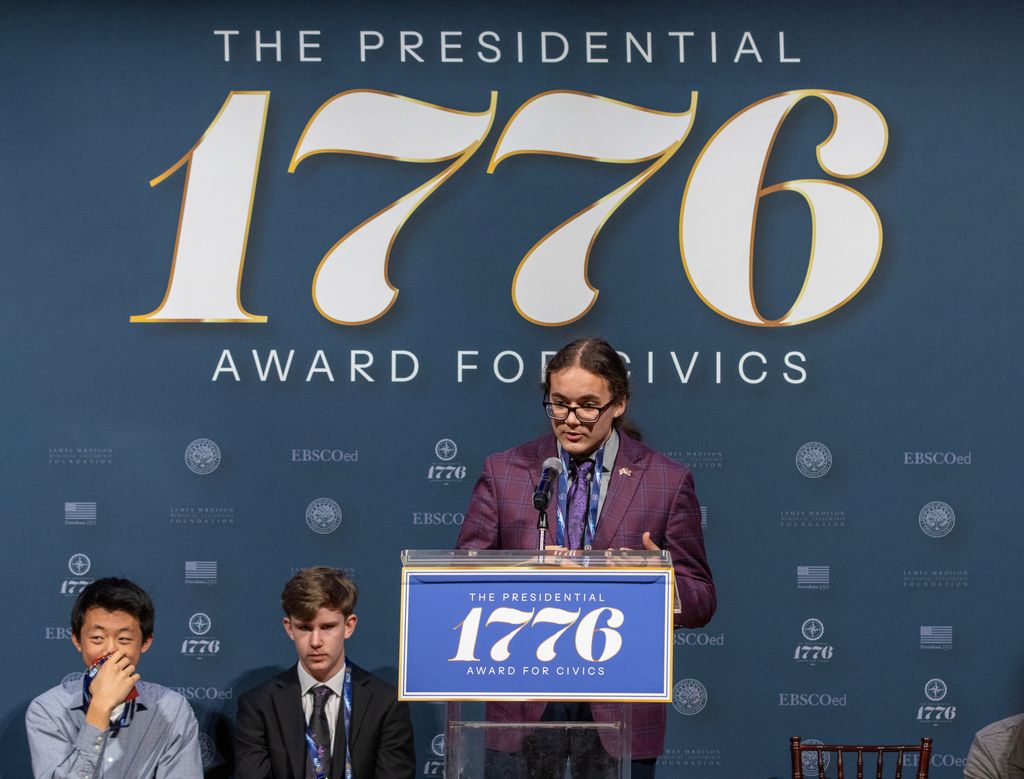

Macon Harrell and Summer Brondstetter will follow two very different paths after high school, but a common passion has led them both to the nation’s capital: civics.
Harrell, a senior at Mississippi’s Oxford High School, has visited all 50 states, stopping at national historic sites to supplement what he had already learned in school, read about on his own, or observed in documentaries.
Brondstetter, a junior from suburban Seattle, took up multiple foreign languages, guitar lessons, Russian literature, and just about every type of art she could try—anything to foster curiosity and new ways of learning.
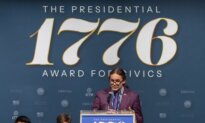
Both public school students have advanced through two rounds of the Presidential 1776 Award national civics competition to reach the finals planned for June 9 at the Trump Kennedy Center in Washington.
They emerged from a starting pool of more than 8,000 students across all 50 states who completed the first round of the so-called impossible civics test online.
From there, 173 students competed in live regional events on May 2. Harrell was at the Jimmy Carter Presidential Library and Museum in Atlanta, while Brondstetter traveled to the Richard Nixon Presidential Library and Museum in Yorba Linda, California.
They and just 18 others placed in the top four in their regions to reach the first-ever championship event in their nation’s capital.
“It’s been a bit of a roller coaster,” Harrell told The Epoch Times.
Brondstetter said, “I was pretty nervous at first, but it didn’t bother me.”
Participants in this national contest are evaluated on their understanding of civics and the principles that shaped the United States, according to the Department of Education, which launched this initiative to commemorate America’s semiquincentennial. The top three finishers will receive scholarships of up to $150,000.
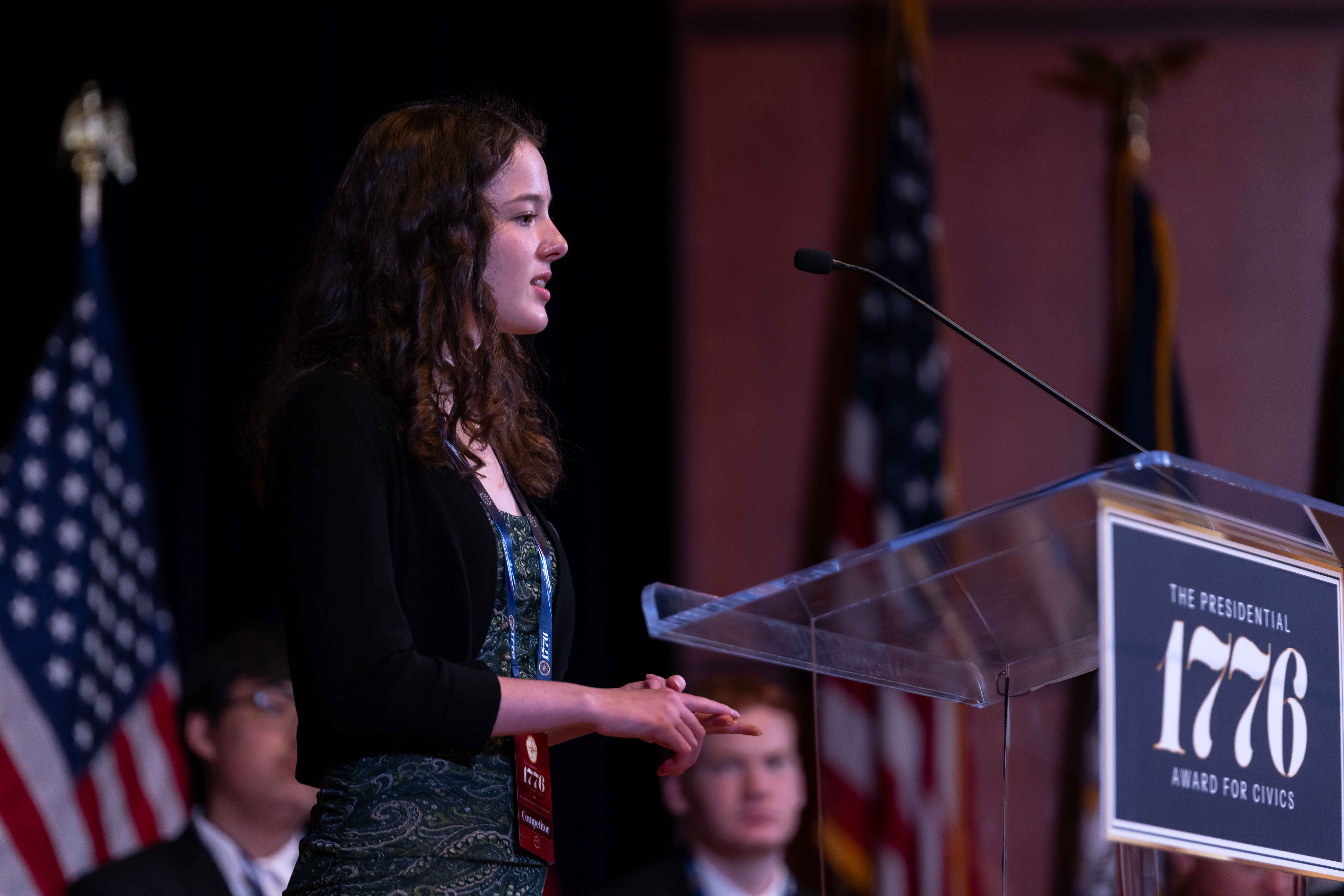
The first round was a multiple-choice exam. The second round was a verbal competition, in which students responded to short-answer questions that tested their understanding of the Constitution and key moments in the nation’s history. Student travel and lodging costs are covered for those who advance to the finals, according to the official event website.
In the finals, students will answer up to 10 questions (30-second responses) in each of the two stages. A panel of judges will determine whether answers are correct and award points accordingly. The top three finishers that day will advance to a championship stage, where they will have up to 60 seconds to answer questions, according to the contest’s official rules.
The top finisher will receive $150,000 toward a college scholarship. Second place will get $75,000, and third $25,000.
So far, Brondstetter said she found the questions about specific passages of the Constitution and the Magna Carta to be the most difficult. Harrell said he thought that the toughest task was explaining the purpose of rhetoric in the Federalist Papers.
Brondstetter begins her senior year at Mercer Island High School in the fall. She has balanced her preparation for this event with the upcoming SATs.
“The timing has been tricky,” she told The Epoch Times. “I don’t know if I can ever be totally comfortable going into the finals.”
On the flip side, Brondstetter said, her social studies class this semester provided key, timely instruction on the American Revolution. She loves history, literature, and languages, and aspires to practice law someday for American companies that have a presence in Europe.
Regardless of what college or university she attends, Brondstetter hopes to minor in German, a language she has not tried yet.
As for civics, Brondstetter said she loves following politics and engaging in passionate debate. She credits her school with providing a setting in which young people with a variety of perspectives can discuss ideas “without getting nasty.”
Brondstetter has two younger sisters. Although she and her dad often talk about politics, the whole family is engaged in current events and enjoys a home where each other’s viewpoints are heard and respected.
“It comes up a lot,” said her mother, Deborah Brondstetter.
Harrell graduated from high school earlier this month and is committed to studying physics and astronomy at the University of Mississippi—“Ole Miss”—this fall. Beyond his passion for STEM—science, technology, engineering, and math—he is an avid reader, gamer, documentary fan, domestic traveler, and history buff.
He said four years on his high school debate team prepared him well for this competition. He specialized in congressional debates, in which he and fellow competitors played the role of federal lawmakers and deliberated theoretical pieces of legislation. It was a great way to develop research, improvisation, and public speaking skills.
“Before high school, I was incredibly shy,” he said. “Even going out to a restaurant, I was barely able to properly order a meal. This has helped me in every way.”
Harrell’s debate team members refer to him as “Dad” because he fusses over whether they get enough rest and nutrition before competitions. He actually enjoys talking to his teachers after school and graduated with perfect attendance, said his mother, Amber Dyehouse.
“He’s always looked at school as his job, but he also wants to be there,” she said.
Education Secretary Linda McMahon, in a previous email response to The Epoch Times, commended every student participant as her department launched multiple initiatives to restore civics and American history curricula to U.S. public schools.
“To all of the students showing off their knowledge of our amazing nation and leaving their mark celebrating our Semiquincentennial, you’ve earned a big round of applause for challenging yourselves and taking civic literacy seriously,” she said.
The federal government’s push for civics education is relatively new. It includes McMahon’s History Rocks tour across several states so far, most recently Alaska on May 8, and the America 250 Civics Education Coalition, a partnership of more than 50 state and national organizations dedicated to providing instruction about the ideas, individuals, and events that define the American story.
At the classroom level, K–12 civics education is gaining ground across the nation.
The National Conference of State Legislatures reported that since 2023, at least 23 states and the District of Columbia have passed laws requiring civics curricula. This was, in part, a response to a 2022 report from the National Center for Education Statistics revealing that one in six Americans could not name any branches of the U.S. government.
On Sept. 15, McMahon announced that $160 million in competitive grants will be available for U.S. history and civics instruction as the federal government shifts money away from education programs based on racial and ethnic quotas.
The National Assessment of Educational Progress, the federal agency that reports on public school standardized test scores, will begin reporting state-level civics test scores in 2028.
 Friends Read Free
Copy
Facebook
Tweet
Friends Read Free
Copy
Facebook
Tweet