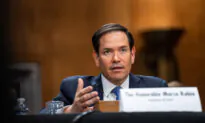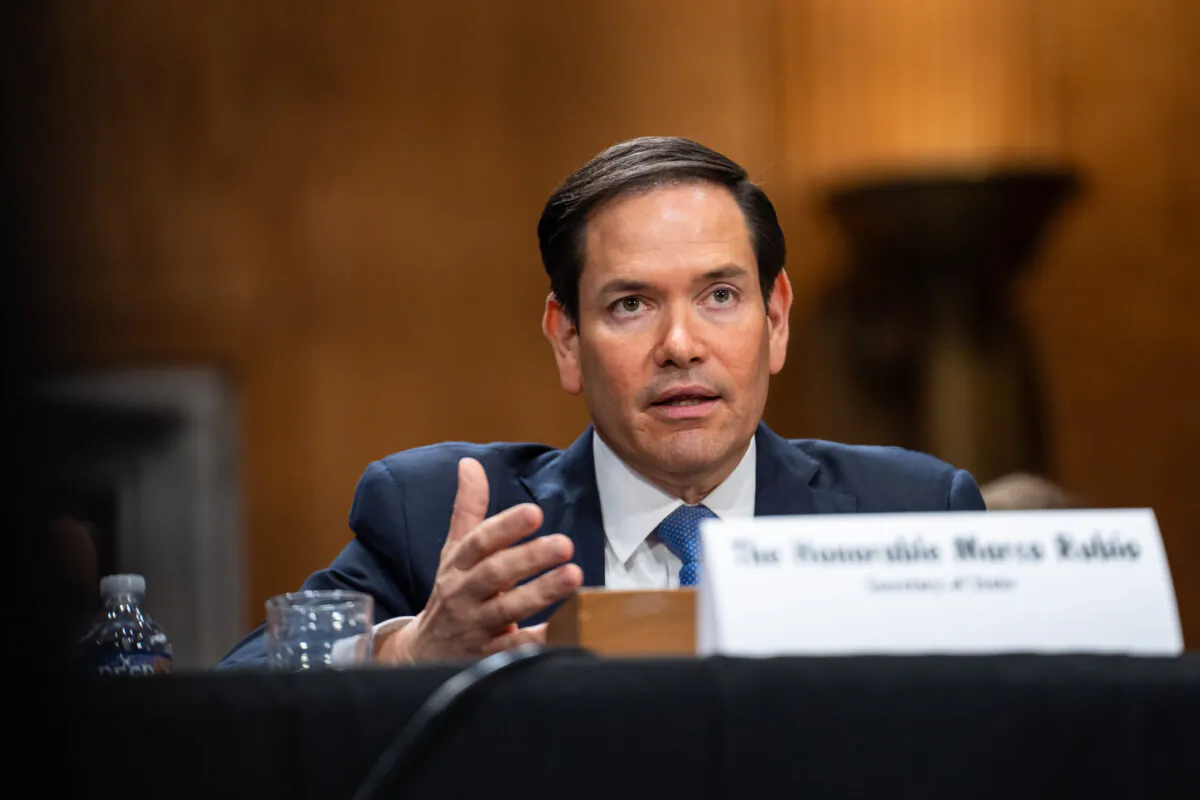
U.S. Secretary of State Marco Rubio is spearheading an effort to draft security guarantees for Ukraine, according to retired Lt. Gen. Keith Kellogg, the U.S. special representative for Ukraine and Russia.
“What they’re doing right now—like as we speak—they’re looking at the security guarantees, what do they actually look like, and bringing a list of options—under Secretary Rubio—a list of options they’ll bring to the president and to the allied leaders as well,” Kellogg told Fox News host Larry Kudlow in an interview released on Aug. 19.
Kellogg said that if the Rubio-led effort produces a workable menu of options, Ukrainian President Volodymyr Zelenskyy could present them in an expected summit with Russian President Vladimir Putin “so he can settle this conflict.”
“I think we’re on a path to do that,” Kellogg said. “And it took bold leadership to do it. It’s something that’s going to be written about in history, and we should be very, very proud of what President [Donald] Trump has done.”
Kudlow had pressed Kellogg on a Wall Street Journal report that Rubio would lead a task force of national security advisers and NATO officials to draft a security package, including a military presence, air defense, arms provision, and cease-fire monitoring. Kellogg confirmed that Rubio had been tasked by Trump to lead the effort, although he avoided the label “task force.”
“I wouldn’t use the word ‘task force’—you can use a lot of different words for it—but they’re going to get together and present options,” Kellogg said.
He described the plan as a “menu” of courses of action, ranked from high- to low-risk, that would include “everything” from diplomatic steps to military measures.
He said the package of guarantees will be central to a peace settlement in the war, now in its fourth year, and could culminate in a trilateral summit between Trump, Putin, and Zelenskyy.
While the contours of U.S. guarantees remain unclear, Trump has ruled out sending American ground troops to Ukraine. However, he has signaled openness to providing U.S. air support for a peacekeeping mission and has suggested that a “NATO-like” multinational force could be deployed to reassure Kyiv.
After hosting Zelenskyy and European leaders in Washington on Aug. 18, Trump had a 40-minute phone call with Putin, during which he proposed a direct meeting between the Russian and Ukrainian leaders—something Moscow had previously resisted. White House press secretary Karoline Leavitt later said that Putin agreed “to begin the next phase of the peace process,” beginning with a Putin–Zelenskyy meeting that could be followed by a trilateral summit with Trump.
Russian Foreign Minister Sergey Lavrov, speaking to the Russia-24 TV channel, said Moscow has no objections to direct talks with Ukraine and is open to any format. However, he stressed that any top-level summit must be prepared “step by step, gradually” and handled with “the utmost care.”
At the same time, Lavrov accused European leaders of “aggressive escalation” and of trying to pressure the Trump administration into deeper commitments to Ukraine during their Washington meetings.
“The Russian president has repeatedly said that we are ready to work in any format, provided that the work is honest and does not boil down to attempts … to create conditions that would drag the U.S. into an aggressive, belligerent campaign to preserve and strengthen Ukraine as a tool to contain Russia and wage war against Russia and everything Russian in the region, including Ukraine,” Lavrov said, according to state-run news agency TASS.
He also said that talks on Ukraine’s security guarantees cannot succeed without Moscow’s involvement.
“We cannot agree with the fact that now it is proposed to resolve questions of security, collective security, without the Russian Federation. This will not work,” Lavrov said in Moscow on Aug. 20. “I am sure that in the West and above all in the United States they understand perfectly well that seriously discussing security issues without the Russian Federation is a utopia—it’s a road to nowhere.”
 Friends Read Free
Copy
Facebook
Tweet
Friends Read Free
Copy
Facebook
Tweet