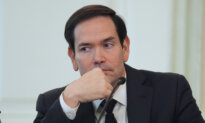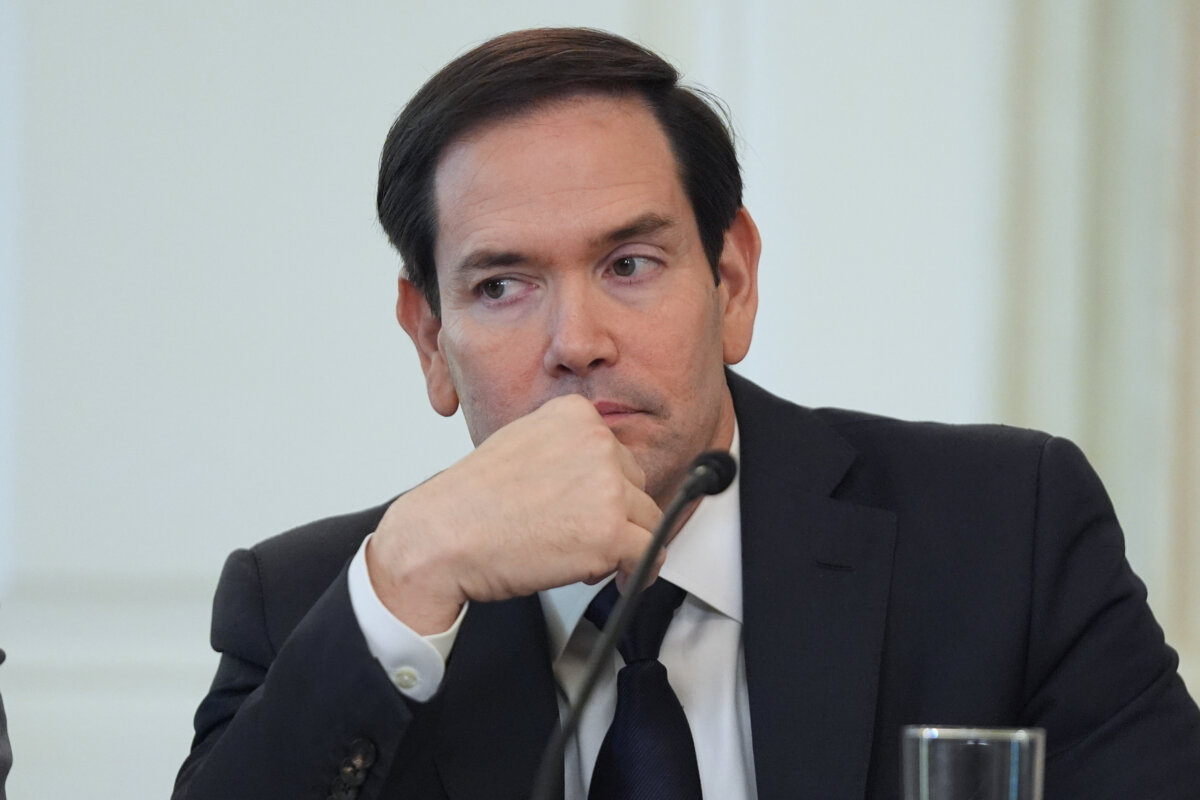

U.S. Secretary of State Marco Rubio has dismissed media reports that the UK has ceased sharing intelligence related to narcotics-carrying maritime crafts because of apprehensions over U.S. bombings in the Caribbean.
He said that no recent changes have undermined federal operations.
After a meeting with the Group of Seven (G7) in Canada, Rubio said none of the other countries had broached the topic of U.S. actions in the Caribbean, including the UK.
“It didn’t come up once in any of the gatherings that we had, either last night or today,” he told reporters on Nov. 12.
Rubio called the report, published by CNN and citing unnamed sources, “false news” and reaffirmed that the United States has a strong relationship with the UK.
When asked about Europeans’ concerns about boat strikes, he said: “I don’t think that the European Union gets to determine what international law is. They certainly don’t get to determine how the United States defends its national security.
“I do find it interesting that all these countries want us to send and supply, for example, nuclear-capable Tomahawk missiles to defend Europe. But when the United States positions aircraft carriers in our hemisphere where we live, somehow that’s a problem.”
The United States is currently engaged in military actions against suspected drug-trafficking boats in the Caribbean and the Pacific. At least 19 confirmed strikes have been carried out in the Caribbean Sea and off the Pacific coasts of Latin American countries.
Tensions in the region have escalated, as Colombian President Gustavo Petro, on Nov. 11, suspended intelligence sharing with U.S. agencies, criticizing U.S. military actions on Caribbean sea traffic as worsening bilateral relations over anti-narcotics strategies. Petro’s directive requires that Colombian security agencies at every level stop cooperating until Washington halts its bombing campaign.
U.S. operations have been taking place in the region since September and are being led by War Secretary Pete Hegseth.
The U.S. telegraphed its change in approach in August, when Deputy Secretary of State Christopher Landau said that relations with Venezuela are moving away from diplomacy to a matter of law enforcement.
In a post on social media, Landau alleged that Venezuela had been taken over by a criminal gang.
“Usually when there are differences between countries, representatives from both governments can get together to try to work them out—that’s what diplomacy is all about. But that assumes that both countries actually have governments,” Landau stated in an Aug. 7 post on X.
Facing U.S. sanctions and an indictment on drug trafficking charges, Nicolás Maduro, Venezuela’s leader, has sought more diplomacy. On Sept. 6, he sent a letter to U.S. President Donald Trump requesting dialogue to resolve “many controversies,” including allegations that his government is tied to drug trafficking gangs.
“This is the most egregious instance of disinformation against our nation, intended to justify an escalation to armed conflict that would inflict catastrophic damage across the entire continent,” Maduro wrote in the letter.
The White House has not publicly responded.
In October, Maduro said Venezuelan security forces prevented a “false flag” plot by right-wing extremists targeting the closed U.S. embassy in Caracas, Venezuela. He argued that the plot was an attempt to blame his government and cause further conflict with Washington.
Trump said on Oct. 15 that his administration has not ruled out land-based strikes against Venezuelan drug cartels.
The United States is also reviewing its membership in the Organization of American States (OAS) because of the body’s response to Venezuela’s political crisis, Landau told an OAS assembly in June.
Reuters contributed to this report.
 Friends Read Free
Copy
Facebook
Tweet
Friends Read Free
Copy
Facebook
Tweet