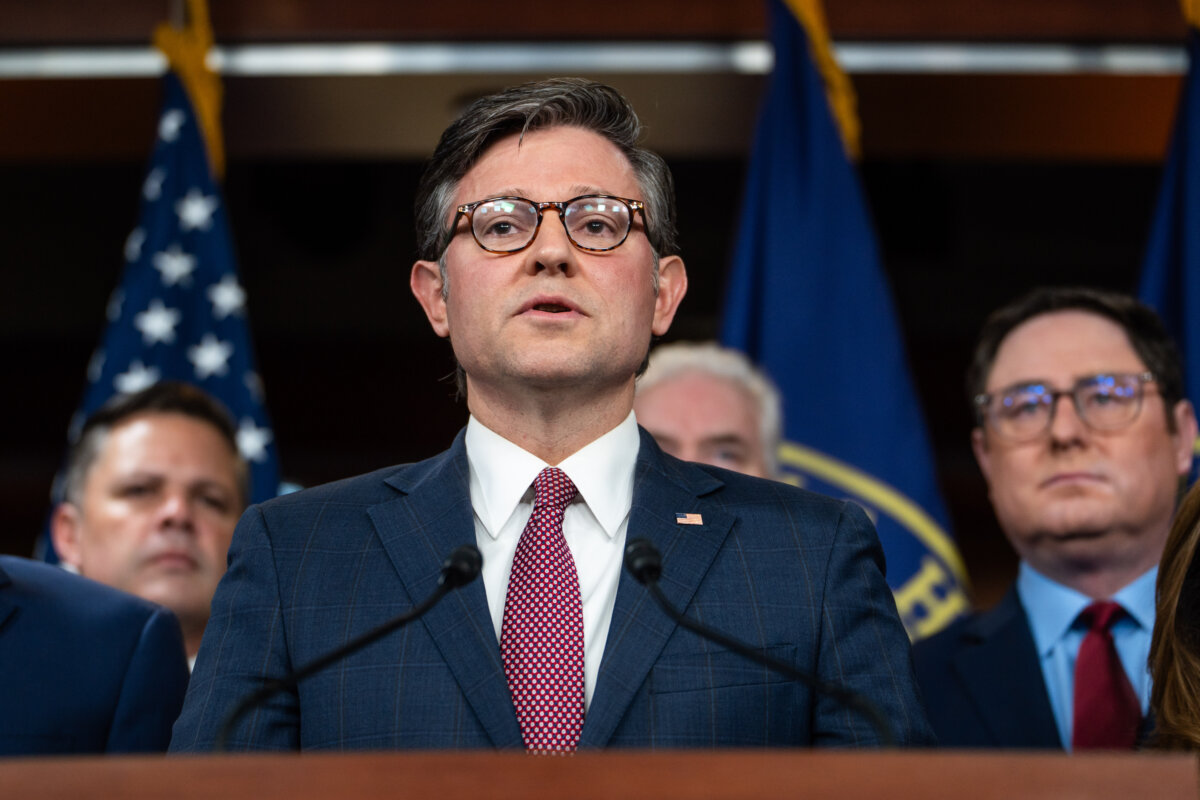

The Senate again failed to pass a continuing resolution that would temporarily fund the government as a shutdown of the federal bureaucracy enters a third week.
The 51–44 vote on Oct. 15 marked the ninth time the Senate defeated a resolution to end debate and bring the Republican-sponsored measure to the floor.
Under Senate rules, 60 votes are needed to end a filibuster.
Nearly all Republicans and a few Democrats vote in favor of the resolution, which would extend federal funding at current levels through Nov. 21.
Most Democrats supported a competing measure that would temporarily extend funding while making permanent the enhanced subsidies under the Affordable Care Act (ACA), or Obamacare, and repealing all health-related provisions of the One Big Beautiful Bill Act.
That measure also failed multiple votes in the Senate.
The Committee for a Responsible Federal Budget has said the package would add $1.5 trillion in debt over the following 10 years.
The Impasse
Republicans contend that they have offered a “clean” continuing resolution that simply extends funding at current levels, which were set by Democrats in 2024, to allow annual funding negotiations to be concluded.
“We have big differences we need to negotiate, and the clean CR that we passed over to the Senate does not resolve those differences. It just gives us some more time to have that negotiation,” House Majority Leader Steve Scalise (R-La.) said on Oct. 15.
Democrats say American health care is in crisis, and by refusing to negotiate over solutions now, Republicans are forcing the shutdown.
“We are ready, we are willing, and we are able to negotiate a bipartisan spending agreement that actually meets the needs of the American people, reopen the government, and decisively address the Republican health care crisis,” Jeffries said.
Democrats have pictured the country on the brink of a massive loss of accessibility to health care.
“We know a health care crisis is just around the corner because the big, ugly bill, law enacted by Republicans in Congress and the Trump White House, it’s coming,” Heather Brauth, a nurse and union officer from Connecticut, said at a Democratic press conference on Oct. 15.
“Hospitals and clinics will close or cut essential services, forcing patients to travel further and wait longer for care. Up to 15 million people could eventually lose their health care coverage, and millions more will see their health care premiums increase.”
Layoffs, Military Pay
Approximately 400,000 federal employees have been furloughed, according to Johnson. Those workers received a partial paycheck on Oct. 14 but will not be paid again until the shutdown ends.
Trump ordered that certain unspent federal funds be used to issue one-time pay to approximately 1.3 million active duty service members on Oct. 15.
The Office of Management and Budget announced the layoff of some 4,000 federal employees on Oct. 10.
-

Trump also said that he will use the shutdown to further his aim of reducing federal spending and terminating programs he believes are ineffective.
“We are closing up Democrat programs that we think that we disagree with, and they’re never going to open again,” Trump told reporters on Oct. 14.
Johnson said the move was an effort to manage government operations amid a lack of funding.
“They’re having to triage federal spending,” Johnson said on Oct 15. “Any person who’s in the White House, regardless of party … is given this unfortunate, reluctant task.”
The speaker added that each party would likely evaluate the situation “with a different set of lenses.”
Endgames
Republicans, including House Majority Leader Lisa McClain (R-Mich.) and Sen. Mike Rounds (Wyo.), have speculated that Democrats may be more willing to compromise after the No Kings protest rally scheduled for Oct. 18 in Washington.
Johnson suggested that Senate Minority Leader Chuck Schumer (D-N.Y.) was motivated to continue the shutdown to fend off “a primary challenge from his left wing.”
The remark apparently referred to speculation that Rep. Alexandria Ocasio-Cortez (D-N.Y.) may challenge Schumer in the 2026 election.
“[Democrats] care about one thing and one thing only: appeasing the radical left,” House Majority Whip Tom Emmer (R-Minn.) told reporters on Oct. 15.
Garcia said Republicans would be motivated to negotiate in the coming days.
“The pressure will grow, especially after the Affordable Care Act, notices of increases, big increases in the cost of health care,” Garcia said.
Democrats insist that the shutdown will not end until Republicans negotiate over their demands on health care.
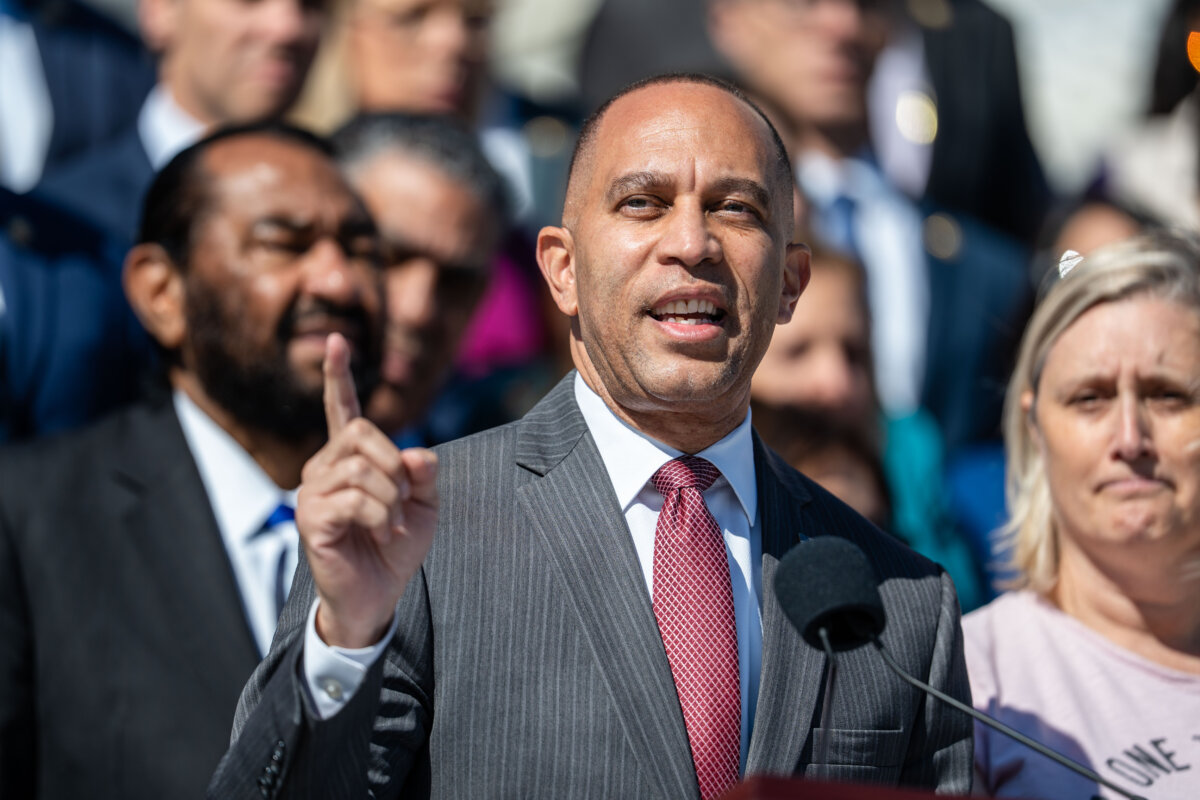
“Donald Trump and Republicans in Congress … shut down the government 15 days ago,” House Minority Leader Hakeem Jeffries (D-N.Y.) told reporters on Oct. 15.
“We are ready, we are willing, and we are able to negotiate a bipartisan spending agreement that actually meets the needs of the American people, reopen the government, and decisively address the Republican health care crisis.”
Nathan Worcester contributed to this report.
 Friends Read Free
Copy
Facebook
Tweet
Friends Read Free
Copy
Facebook
Tweet