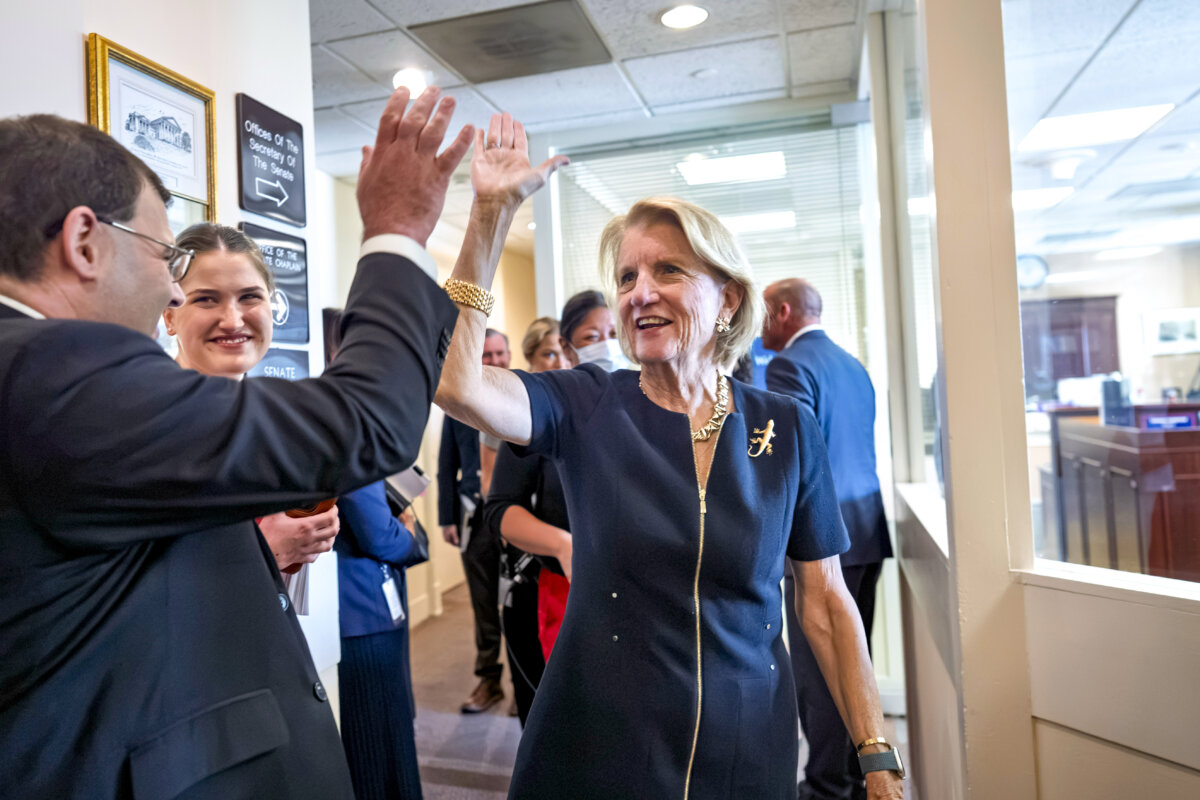

A bipartisan Senate deal was reached on Sept. 30 to reform laws permitting large energy and infrastructure projects, senators from both parties confirmed.
The Bipartisan American Affordability and Jobs Act bill, however, will not be voted on until after the midterm elections in November.
According to a draft of the bill published on Sept. 30, the legislation would accelerate federal approvals for projects such as data centers, wind and solar farms, and gas pipelines by implementing deadlines for environmental reviews, limiting court challenges, and making it harder to overturn issued permits.
It would also impel involved agencies to complete major reviews within one to two years and improve coordination across departments.
The bill places a special focus on the United States’ electrical grid, creating fresh procedures for approving transmission lines and upgrades, as well as including steps to speed up renewable energy projects.
Additionally, the bill would also include protection against federal agencies engaging in what it calls a “pattern of disparate treatment” against specific types of technology.
Sen. Shelley Moore Capito (R-W.Va.), chairman of the Senate Environment and Public Works Committee, announcing the move, saying, “For far too long, our broken and outdated federal environmental review and permitting processes have stood in the way of energy reliability, secure jobs, modern infrastructure, and economic growth.”
“[The reforms will] transform our nation’s ability to power our economy and fuel future growth, while continuing to protect the land, water, and wildlife we all cherish,” Capito said.
Sen. Sheldon Whitehouse (D-R.I.), the ranking Democratic member on the same committee, said the bill would go a long way toward getting lower energy bills and more clean energy.
“If we can pass this bill, we will flood the grid with clean, affordable energy and make data centers start paying their fair share,” he said.
“Like all major pieces of bipartisan legislation, this bill is a compromise. We believe it is a compromise that will result in a brighter, cleaner, more affordable future.”
The Bipartisan American Affordability and Jobs Act bill also includes a clause that states that the energy costs incurred by data centers cannot be passed on to other customers in the area. The agreement on this bill came on the same day that Senate Democrats voted down a Republican-backed bill that specifically called on states to impose similar measures.
The senators said they plan to take up the bill immediately after they return from the November midterm elections.
“Our goal is to have it be the first vote when we come back—at least to begin the process,” Capito said, according to The Hill.
The House of Representatives, which has not passed the bill, is set to be in recess until after the midterms.
A White House official told The Epoch Times, “We support this deal, which will deliver transformative policies to lower Americans’ energy and housing costs, drive new construction and investment in American infrastructure, and create American jobs.”
“We look forward to seeing it pass quickly,” the official said.
Industry, clean-energy, and pro-building groups have expressed support for the bill following the deal, although some environmental groups have opposed it.
National Association of Manufacturers President and CEO Jay Timmons said the bill represents a “breakthrough that delivers long-overdue reforms to [the] nation’s permitting process, while maintaining America’s commitment to environmental stewardship.”
“Manufacturers are all in on this game-changing agreement and getting it across the finish line,” he said, describing the current permitting system as “outdated and burdensome.”
Brett Hartl, government affairs director at the Center for Biological Diversity, however, described the bill as a “climate kill shot.”
“It’s absurd to ensure our planet chokes with greenhouse gases, gut endangered species protections and eviscerate the Clean Water Act for what seems to be a nearly meaningless victory against Trump’s war on offshore wind,” Hartl said.
 Friends Read Free
Copy
Facebook
Tweet
Friends Read Free
Copy
Facebook
Tweet