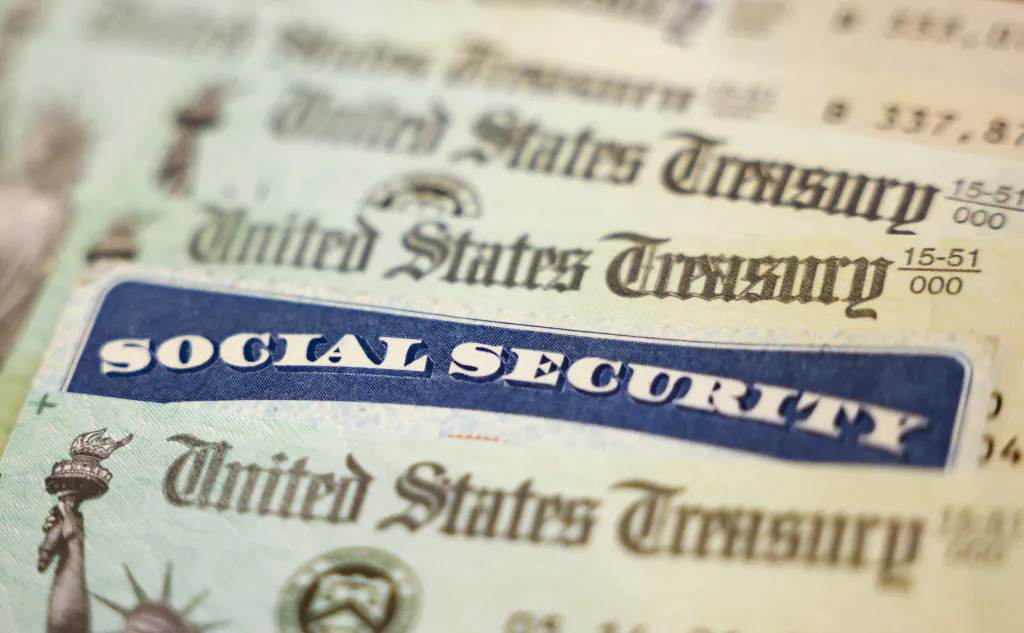

In an Oct. 8 scam alert, the Office of the Inspector General (OIG) of the Social Security Administration (SSA) warned against malicious actors resorting to fake Supreme Court letters to dupe Social Security recipients out of their money.
The government impostor scam involves “an official-looking letter identified as a ‘certificate’ on a fake U.S. Supreme Court letterhead using forged signatures of U.S. Supreme Court Chief Justice John Roberts and Associate Supreme Court Justice Sonia Sotomayor,” the watchdog said, adding that fraudsters may also send emails or texts claiming to be from the Supreme Court.
“This high-pressure scam urges individuals to cooperate with the named SSA official, pressuring them to send money or share personal information,” the watchdog said.
The letter, addressed to the target, claims that the target is a primary suspect in legal proceedings involving criminal charges. It claims that the proceedings are conducted under the oversight of Attorney General Raúl Torrez of New Mexico and may use the real name of an SSA executive.
In the letter, recipients are characterized as potential identity theft victims, and the letter states that their Social Security numbers (SSNs) have been compromised per findings by the SSA and the “Drug Enforcement Agency,” an incorrectly named agency, the alert said. In the United States, laws against drug trafficking are enforced by the Drug Enforcement Administration.
Moreover, recipients are assured that the SSA will issue a new Social Security number.
The letter informs the target that the Supreme Court has asked financial institutions to freeze their assets and asks them to cooperate with the Treasury Department. It claims that the target cannot maintain more than $10,000 in any bank account or hold $80,000–$100,000 in investments.
“The letter ominously closes by stating, should the recipient encounter any difficulties in safeguarding assets, the recipient will bear full liability for any losses incurred following the suspension of their SSN,” the alert said. “Scammers most likely will follow up with text messages or telephone calls.”
The OIG asked citizens to beware of anyone pretending to be from the SSA or another government agency and to speak only to trustworthy people in handling the issue.
Acting Inspector General Michelle L. Anderson said such letters were “completely false.”
“Scammers continue to exploit fear and confusion by impersonating government agencies and officials,” she said. “These criminals are falsely accusing an individual of a crime and using federal agencies and federal officials to try to scare and legitimize their scam—if you get this type of letter, rip it up and report it. Be aware of any variations of this scam.”
A similar alert was issued by the SSA and OIG in March, when it warned about scammers posing as SSA representatives to dupe beneficiaries.
Fraudsters typically use four Ps under this scheme—pretend, prize or problem, pressure, and payment. They will contact targets via phone, social media messages, or emails and claim there were problems with the individual’s Social Security number or benefits, the SSA said.
The scammers can use spoofed caller IDs to appear as genuine government phone numbers. Some even send forged documents to victims to make them transfer funds or divulge information.
“Social Security will never tell you that your Social Security number is suspended,” SSA clarified.
The agency also never contacts beneficiaries to demand an immediate payment; threaten them with arrest; ask for their credit or debit card numbers over the phone; request gift cards, wire transfer, gold, cash, cryptocurrency; or promise a Social Security benefit approval or increase in exchange for information or money.
In October 2024, the SSA warned that bad actors were spreading false information that beneficiaries had to take certain actions to ensure they received the annual cost-of-living adjustments (COLA) on their benefits.
The SSA clarified that such COLA changes are done automatically and that beneficiaries do not need to take any action in this regard.
Rep. Tom McClintock (R-Calif.) introduced the Consequences for Social Security Fraud Act in January to tackle the issue of the duping of beneficiaries, particularly by illegal immigrants.
Specifically, illegal immigrants convicted or admitting to having committed Social Security fraud or other scams would be deemed deportable under the bill. If the person is not in the United States, he or she risks being classified as inadmissible. The bill was referred to the House Committee on the Judiciary.
 Friends Read Free
Copy
Facebook
Tweet
Friends Read Free
Copy
Facebook
Tweet