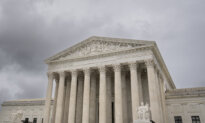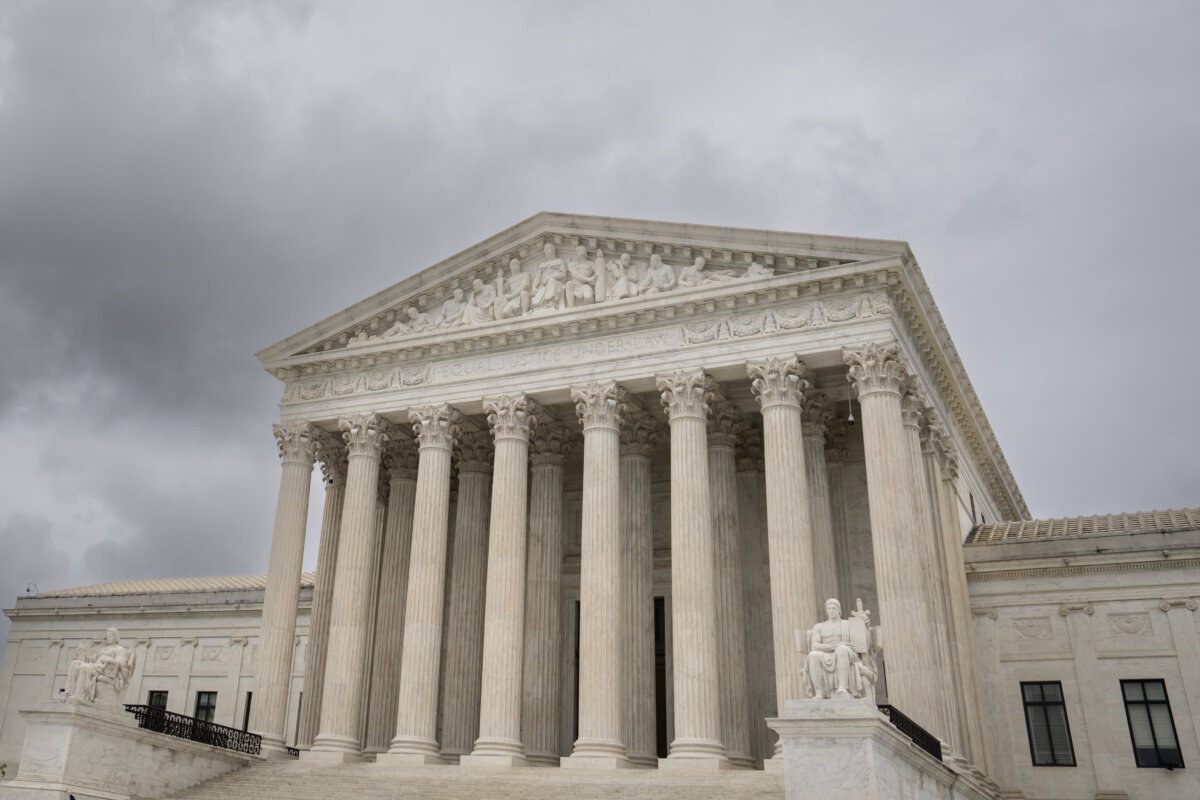

The Supreme Court is expected to issue a series of rulings on President Donald Trump’s policies in the coming days that are poised to define the power of the executive branch and immigration procedures.
Perhaps the most anticipated case is its ruling on Trump’s attempt to limit birthright citizenship. That decision, along with one on temporary protected status, could significantly hinder Trump’s immigration agenda. Other cases focus on Trump’s attempt to fire high-level federal officials and could result in landmark decisions about the separation of powers.
Here are the top Trump cases to watch as the Supreme Court’s 2025–2026 term comes to an end.
Birthright Citizenship
Trump signed an executive order on Inauguration Day stating that the federal government would no longer recognize the children of illegal immigrants and other temporary visitors as citizens. The case, Trump v. Barbara, emerged amid many lawsuits over the president’s order.
Several federal judges blocked the order on the basis that it violated the citizenship clause of the 14th Amendment.
That portion of the amendment says that “All persons born or naturalized in the United States, and subject to the jurisdiction thereof, are citizens of the United States and of the State wherein they reside.”
The Supreme Court ruled on this issue in 1898 with its decision in United States v. Wong Kim Ark. It said the amendment granted citizenship to a man whose Chinese parents were permanently domiciled in the United States when he was born.
Judges cited that decision, saying it showed the Supreme Court already held policies like Trump’s were unconstitutional. Trump, meanwhile, said the decision was more limited in that it only clarified that birthright citizenship applied to people whose parents had stronger ties to the country, such as permanent residence.
The American Civil Liberties Union, which represented a group of mothers, disagreed and told the Supreme Court that Trump not only violated the Constitution but federal law as well. It pointed to a law known as the Immigration and Nationality Act, which Congress passed with the same language as the citizenship clause.
When Congress passed the law in the 20th century, it also said it didn’t intend to exclude people from citizenship based on things like domicile. The Justice Department argued that Congress should be bound by the 14th Amendment’s original meaning.
Deportation Protections
Temporary protected status was created by Congress to shield certain groups from deportation if returning to their home countries was considered unsafe. During Trump’s second term, the Homeland Security Department revoked this status for Syrians, Haitians, and other nationalities.
Lawsuits followed and courts blocked those revocations on the basis that the department failed to follow proper procedures. One judge in Washington also held that Trump’s revocation of Haitians’ status was based on racial animus and a form of unconstitutional discrimination.
That case, Trump v. Miot, and one focused on Syrians—Mullin v. Doe—reached the Supreme Court with oral argument in April. It’s unclear how the justices will rule, but their eventual decision will likely touch less on conditions in those countries, and more on whether the lower court judges exceeded their authority.
One of the Trump administration’s primary arguments was that the Immigration and Nationality Act contained a provision barring judges from reviewing temporary protected status determinations. The other side countered that the provision didn’t stop judges from reviewing the underlying process for revoking those protections.
FTC Firing
In Trump v. Slaughter, the Supreme Court is expected to rule on how far Congress can go in erecting legal hurdles to the president’s firing power. The high court held nearly a century ago that Congress could limit presidents’ ability to remove the heads of so-called independent agencies like the Federal Trade Commission (FTC).
That decision, known as Humphrey’s Executor v. United States, was cited by lower court judges when they blocked Trump’s removals of former FTC Chair Rebecca Slaughter and other agency heads. The Justice Department told the Supreme Court those blocks were erroneous, and suggested the court should overturn Humphrey’s Executor.
It based its arguments on Article II of the Constitution, which vested the president with the executive authority of the federal government. That provision, it said, gave Trump much more flexibility than judges had allowed.
The eventual decision could alter not just future presidents’ firing power but the nature of so-called independent agencies within the executive branch as well.
During oral argument, Chief Justice John Roberts suggested Humphrey’s Executor faced a bleak future. “Humphrey’s Executor is just a dried husk of whatever people used to think it was,” Roberts, often considered a swing vote, said in December.
Federal Reserve Firing
Based on oral arguments, observers predicted that the Supreme Court would uphold Trump’s FTC firing. However, Trump’s removal of Federal Reserve Governor Lisa Cook could face a much different fate.
Congress passed similar laws requiring the president to have some kind of “cause” for firing members of both the FTC and Federal Reserve. However, the justices suggested earlier in the term that the Federal Reserve was more independent and that its members deserved greater protection.
In a case similar to Slaughter’s, a majority of the justices rejected two fired agency heads’ attempts to compare their situation to the Federal Reserve.
The “Federal Reserve is a uniquely structured, quasi-private entity that follows in the distinct historical tradition of the First and Second Banks of the United States,” a majority of the court said.
Trump fired Cook over an allegation that she committed mortgage fraud. Before reaching the Supreme Court, Trump’s firing was blocked by a federal judge who held that he failed to give her enough due process before removing her. Cook also alleged that Trump didn’t provide enough cause to remove her.
When the justices heard Trump v. Cook, the case challenging Cook’s firing, their questions indicated skepticism of the president’s position. For example, Justice Brett Kavanaugh told the Justice Department that its view of Trump’s authority “would weaken, if not shatter, the independence of the Federal Reserve.”
 Friends Read Free
Copy
Facebook
Tweet
Friends Read Free
Copy
Facebook
Tweet