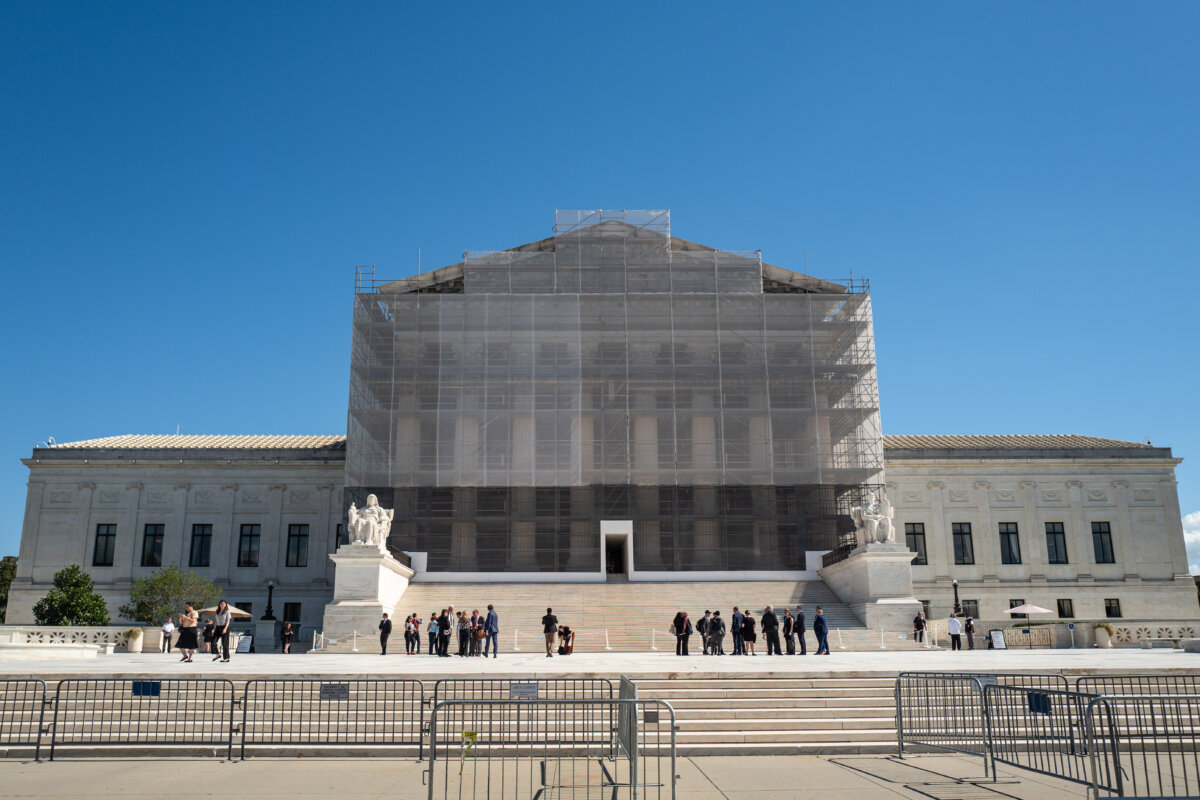

Supreme Court justices on Oct. 20 turned away a petition to consider a case accusing Merck of violating antitrust law by misrepresenting the efficacy of its mumps vaccine to the Food and Drug Administration.
Justices did not offer an explanation of the rejection of a petition from doctors who sued Merck.
Lawyers for the parties did not return requests for comment by the time of publication.
The physicians sued Merck in 2012. They said they bought Merck’s mumps vaccine at a price that was inflated due to the company’s alleged anticompetitive behavior.
A U.S. district judge in 2023 rejected Merck’s bid to throw out the litigation, finding that there were disputes over whether Merck deceived regulators and whether its actions triggered an exception to Supreme Court rulings granting immunity to entities and people for actions aimed at influencing government officials.
In a 2024 ruling, a split panel of the U.S. Court of Appeals for the Third Circuit overruled the judge and dismissed the lawsuit.
“The record contains troubling evidence that Merck sought to extend its apparent monopoly by misrepresenting facts about its mumps vaccines on the FDA-approved drug labeling,” the majority said at the time. “But those allegedly false claims were the result of Merck’s genuine and successful petitioning of the FDA.”
That means Merck is immune under the Noerr-Pennington doctrine, which stems from Supreme Court rulings in cases in the 1960s that established immunity for actions taken to influence government officials, the majority said.
While there is a so-called sham exception, or an exception for actions that are meant to interfere with competitors instead of actually influencing officials, Merck “cannot have intended to commit a sham if it sought to use the result of petitioning the government (i.e., FDA-approved drug label claims)—as opposed to the petitioning itself—to harm competition,” according to the majority.
The dissenting judge said parties that make misrepresentations and material omissions when petitioning the government should not be given antitrust immunity.
The doctors asked the Supreme Court to weigh in to clarify the limits of the immunity because different circuit courts have judged those limits differently.
“Under settled Third Circuit precedents, there is only one exception to Noerr-Pennington immunity, and it does not apply if the antitrust defendant has ‘succeeded’ in getting what it wanted from the government—even if that outcome was the result of intentional deception,” they said in their petition to the court. “In each of those other circuits, this case would have come out the other way.”
Merck told the court in response that “even if Merck had made any misrepresentations to FDA—and it did not—those alleged misrepresentations were neither material nor made in an adjudicative proceeding.”
 Friends Read Free
Copy
Facebook
Tweet
Friends Read Free
Copy
Facebook
Tweet