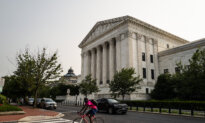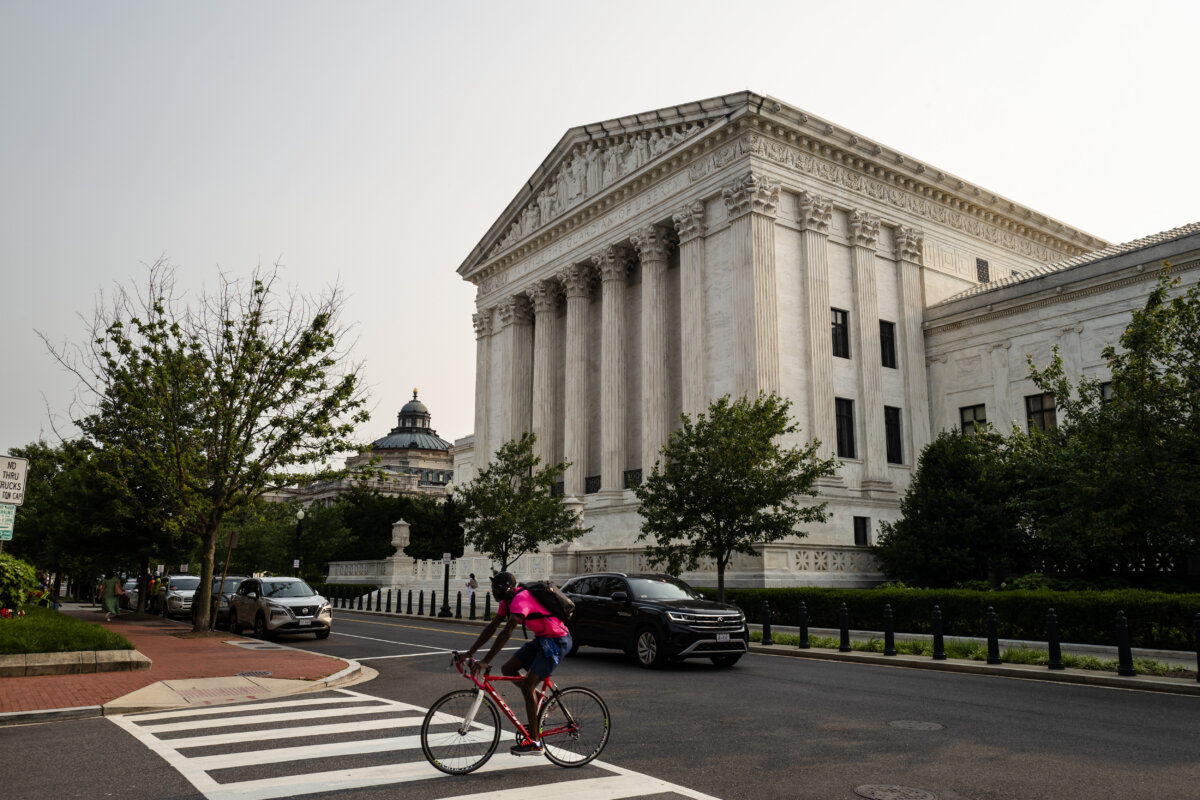

The Supreme Court’s landmark decision on nationwide injunctions was a win for those who criticized the practice, which has been used to block the Trump administration’s policies since President Donald Trump returned to the White House. But, as some of the justices indicated, plaintiffs can still seek widespread blocks on the administration.
Republicans’ primary argument for ending nationwide injunctions was that they exceeded judges’ authority by providing relief for parties not involved in the lawsuit before the court. For example, two federal judges prevented Trump from limiting birthright citizenship for the children of pregnant women who hadn’t sued.
Entities such as states and nonprofits challenging the president’s policies may still pursue broad relief through legal avenues such as class-action lawsuits, including for classes that reach across the nation. As Justice Brett Kavanaugh said in his concurring opinion, judges may still be able to issue the “functional equivalent of a universal injunction.”
The key to Justice Amy Coney Barrett’s majority opinion was that courts could block policies insofar as their orders provided “complete relief” to the individuals or organizations suing. For birthright citizenship and other issues, that can be complicated when entities such as states are seeking relief. That’s because of how individuals can cross state lines after being in a state where Trump’s order is still in effect.
The decision left open the question of whether the president’s order restricting birthright citizenship accorded with the 14th Amendment of the Constitution. The court stated that the president’s restrictions would be delayed for 30 days after its decision.
Class-Action Lawsuits
During oral arguments in May, Justice Samuel Alito wondered whether eliminating nationwide injunctions would have any practical impact if judges granted blocks for classes that included people throughout the country. That question has already come up in Maryland, where one of the nationwide injunctions on Trump’s birthright citizenship order originated.
When judges certify or approve a class, they allow plaintiffs to represent large groups of people who may be affected by a particular policy. In those cases, class certification allows judges to provide relief to affected people not directly before the court.
Hours after the Supreme Court’s decision on June 27, the plaintiffs in the birthright citizenship case filed a request to convert their suit to a class action. They asked the judge to certify a class of individuals that included children who would be precluded from receiving citizenship under the president’s order.
The American Civil Liberties Union and other groups on June 27 filed a similar class lawsuit in the District of New Hampshire on behalf of the proposed class of babies and parents who could be affected by the executive order.
In his concurring opinion, Alito was concerned that courts would use class certification as a “significant loophole” to the court’s decision. Referring to the section of federal law outlining the requirements for class certification, Alito said judges must scrupulously adhere to them.
“Otherwise, the universal injunction will return from the grave under the guise of ‘nationwide class relief,’ and today’s decision will be of little more than minor academic interest,” he said.
State Plaintiffs
Both Barrett and Kavanaugh indicated that judges could act to avoid “patchwork” schemes or situations where federal policies were blocked only in certain parts of the country. Kavanaugh pointed to policies such as travel bans, student loan forgiveness, and vaccine mandates.
“Often, it is not especially workable or sustainable or desirable to have a patchwork scheme, potentially for several years, in which a major new federal statute or executive action of that kind applies to some people or organizations in certain States or regions, but not to others,” he said.
“The national reach of many businesses and government programs, as well as the regular movement of the American people into and out of different States and regions, would make it difficult to sensibly maintain such a scattershot system of federal law.”
In the birthright citizenship cases, two nationwide orders were issued to groups of states that sued the Trump administration. Barrett said that their cases were more “complicated” because states had alleged harms stemming from individuals crossing state lines. Rather than deciding how those injunctions should be modified, Barrett said she would leave it up to the lower court judges to determine whether a narrower injunction was appropriate.
It’s unclear how those judges—one in Massachusetts and one in Washington state—will rule. Both already indicated that they thought providing necessary relief meant their orders should apply to states outside of those suing.
For example, U.S. District Judge John Coughenour said states would continue encountering financial burdens from Trump’s order if they didn’t receive nationwide relief.
“Babies born in other states would travel to the Plaintiff States,” he said.
The states had argued that when the babies reached their states, those states would have to pay for services such as health care and foster care services.
During a virtual press conference after the Supreme Court’s decision, New Jersey Attorney General Matthew Platkin backed the idea of nationwide relief. His state joined Massachusetts and almost a dozen others in suing the Trump administration and obtaining a universal injunction on the president’s birthright citizenship policy.
“The federal government has not shown in any way how we could possibly administer a system of citizenship—and the benefits that flow from it—without having one standard of citizenship under birthright citizenship in every state,” Platkin said.
Massachusetts Attorney General Andrea Campbell released a statement expressing confidence that Trump’s order would ultimately be struck down.
“While today’s Supreme Court decision is disappointing and introduces additional procedural hurdles, we look forward to demonstrating why nationwide relief in this case is necessary, as the court has invited us to do,” she said.
During a hearing on June 30, Justice Department attorney Brad Rosenberg told a federal judge in Maryland that it was possible the nationwide injunction in the Massachusetts case would be narrowed.
The Justice Department referred The Epoch Times to Attorney General Pam Bondi’s prior comments on the issue. After the Supreme Court’s decision, Bondi said at a White House press briefing on June 27 that she would continue to fight for the president’s policies. She also indicated that she was confident that the Supreme Court would rule in the administration’s favor if it took up the constitutionality of Trump’s order.
Administrative Procedure Act
Another potential workaround comes through a law known as the Administrative Procedure Act (APA), which was enacted in 1946 and has also been commonly cited in the lawsuits against Trump. Under the law, judges can declare agency actions “unlawful” and set them “aside” based on various criteria.
Kavanaugh indicated that judges’ setting aside actions under the APA could serve as a “functional equivalent” of a nationwide injunction. When judges set aside agency actions, they essentially prohibit agencies from enforcing them.
“Basically, it orders the agency to discontinue the policy, and if the policy is discontinued, then it doesn’t affect anyone anywhere in the country,” Georgetown University law professor David Super told The Epoch Times.
Former federal prosecutor Neama Rahmani was skeptical about how broad a set-aside would be.
“Although some courts have held an APA ‘set aside’ to have a universal effect, other courts have not,” Rahmani told The Epoch Times.
“Kavanaugh seems to indicate that a set-aside … would be nationwide, but it’s dictum and not a definitive statement.”
A “dictum” is an aspect of a court opinion that is not binding or required to be followed by lower courts.
 Friends Read Free
Copy
Facebook
Tweet
Friends Read Free
Copy
Facebook
Tweet