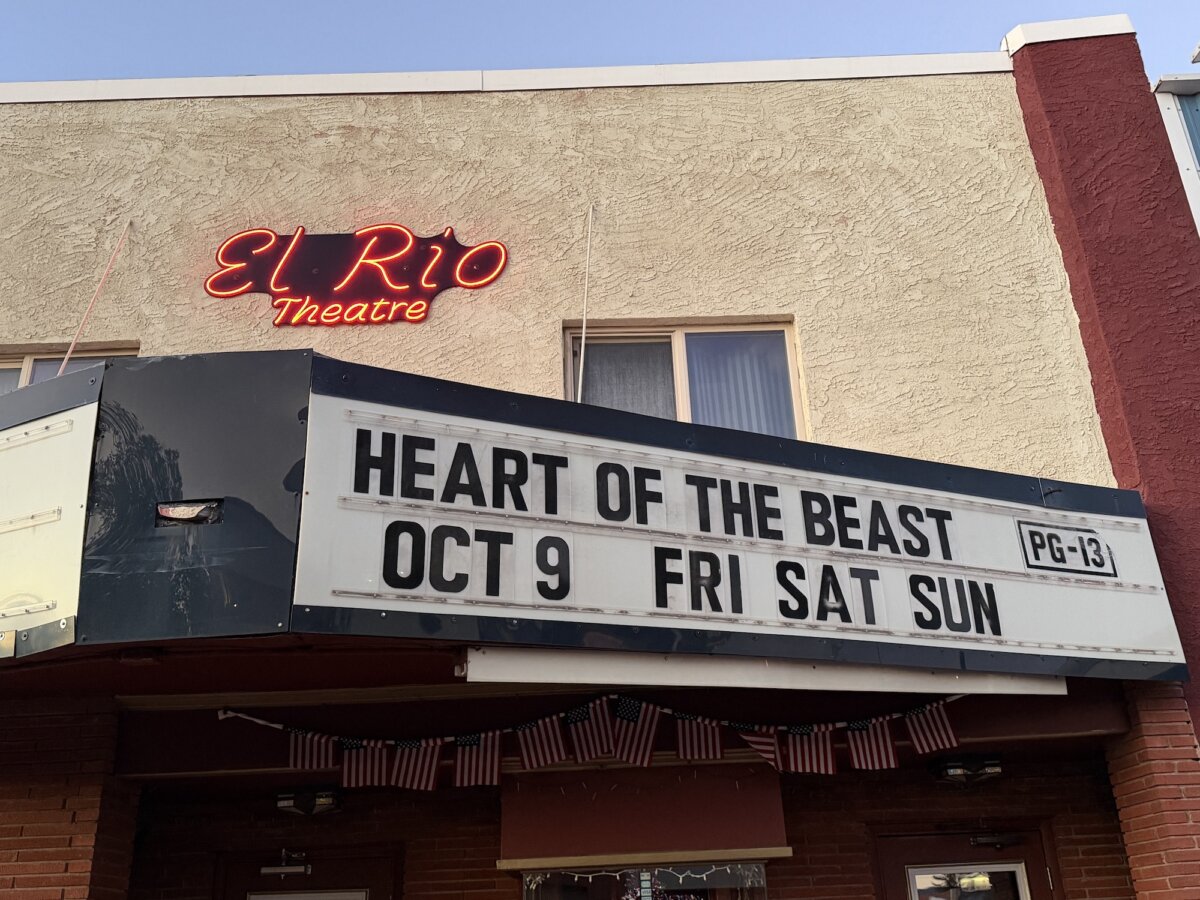

SPRINGERVILLE, Ariz.—The movie theater was dark, the screen blank, and 288 vinyl seats awaited the Oct. 9 audience.
At the El Rio Theatre in downtown Springerville, owners Ginger and Allen Harding are preparing the concession stand for the next night’s showing of “Heart of the Beast.”
The nearest alternative is the Hinkson Memorial Hometown Theater in St. Johns, another single-screen cinema 25 miles away across open grassland.
“It fills my soul. It’s been a very happy business,” Ginger Harding said of running the El Rio, a community theater that has operated for 111 years.
For 12 years, the Hardings have kept the projector rolling, screening four movies over three nights per week at what they describe as Arizona’s oldest operating cinema.
The couple had no plans to own a movie theater. They were preparing to retire when owner Sam Madariaga died, raising fears that the historic cinema would close permanently.
“It was part of a business plan [to save the El Rio],” Ginger Harding told The Epoch Times. “We were thinking that the movie theater was going to close down.”
In 2014, the Hardings bought the El Rio, complete with its vintage Art Deco vinyl seats, and invested thousands of dollars to preserve and modernize the historic theater.
Their plan was to turn the El Rio into a first-run cinema, bringing new releases to a small town where moviegoers otherwise would have to travel to see them.
“We were all in. We were excited. We thought it would go gangbusters being the only theater,” Ginger Harding said.
“I made the concerted effort to be a first-run movie theater because that’s a choice you have to make going in with studio contracts.”
The Hardings owned other businesses in town, including an Italian restaurant, Eclectica, but running a century-old movie theater was new territory.
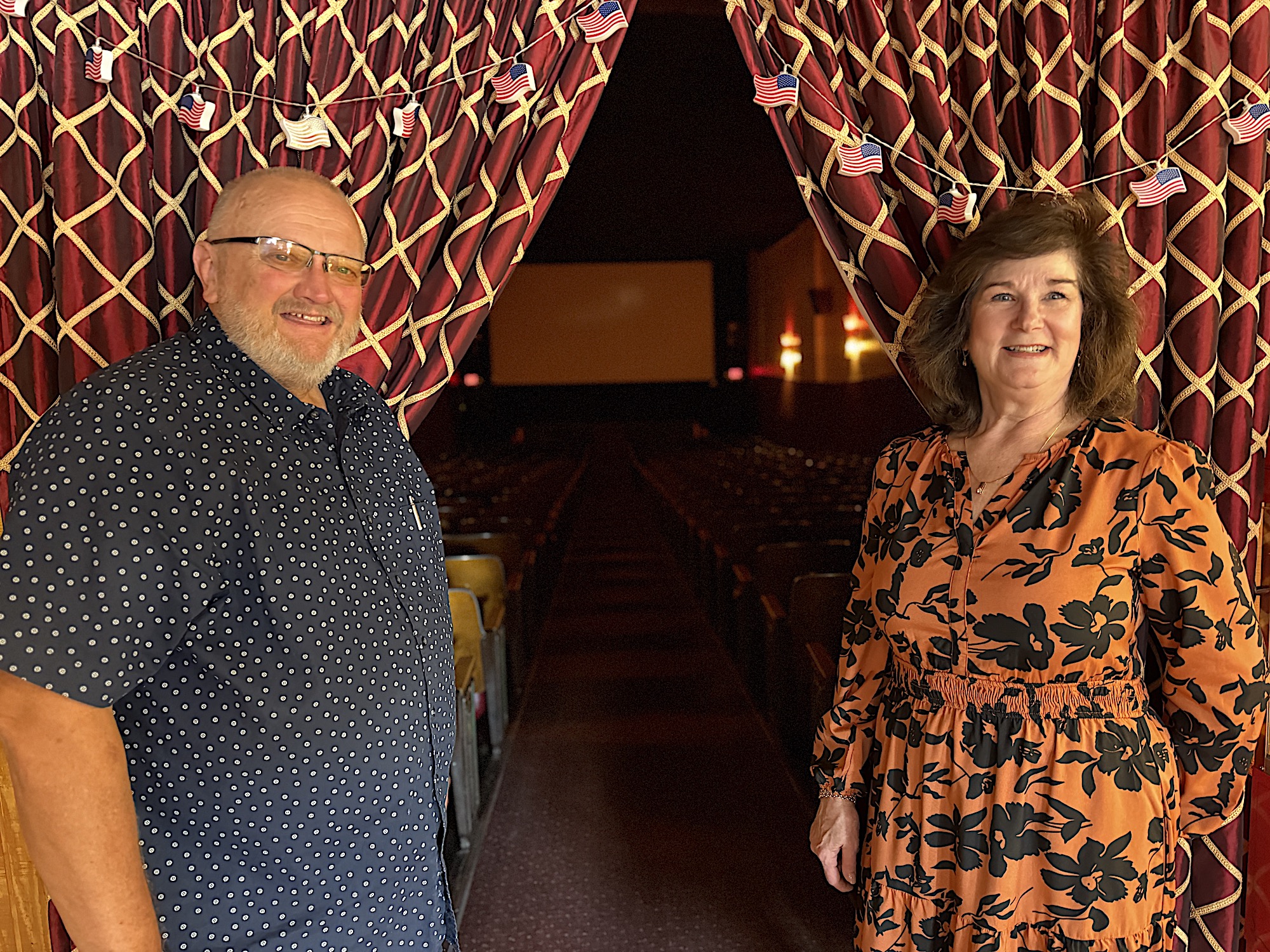 Allen Harding (L) and his wife, Ginger Harding, stand at the curtained entrance to the El Rio Theatre, a single-screen movie house that has stood for 111 years in Springerville, Ariz., on Oct. 8, 2026. (Allan Stein/The Epoch Times)
The Hardings built their part-time business around weekend screenings. They also wanted the theater to serve as a gathering place for the community.
“It is very cool. I love the theater,” Ginger Harding said.
Singular Vision
The Hardings knew the challenges of running a single-screen theater, from rising operating costs to competing with sprawling multiplexes.
Unlike multiplex theaters, the El Rio can show only one movie at a time. Each booking becomes a business decision that can make or break the weekend’s revenue.
The El Rio started as a modest movie house built from adobe and planks. Local entrepreneur Gustav Becker launched construction in 1913, and the Apache Theatre opened two years later.
It took the El Rio name in 1937.
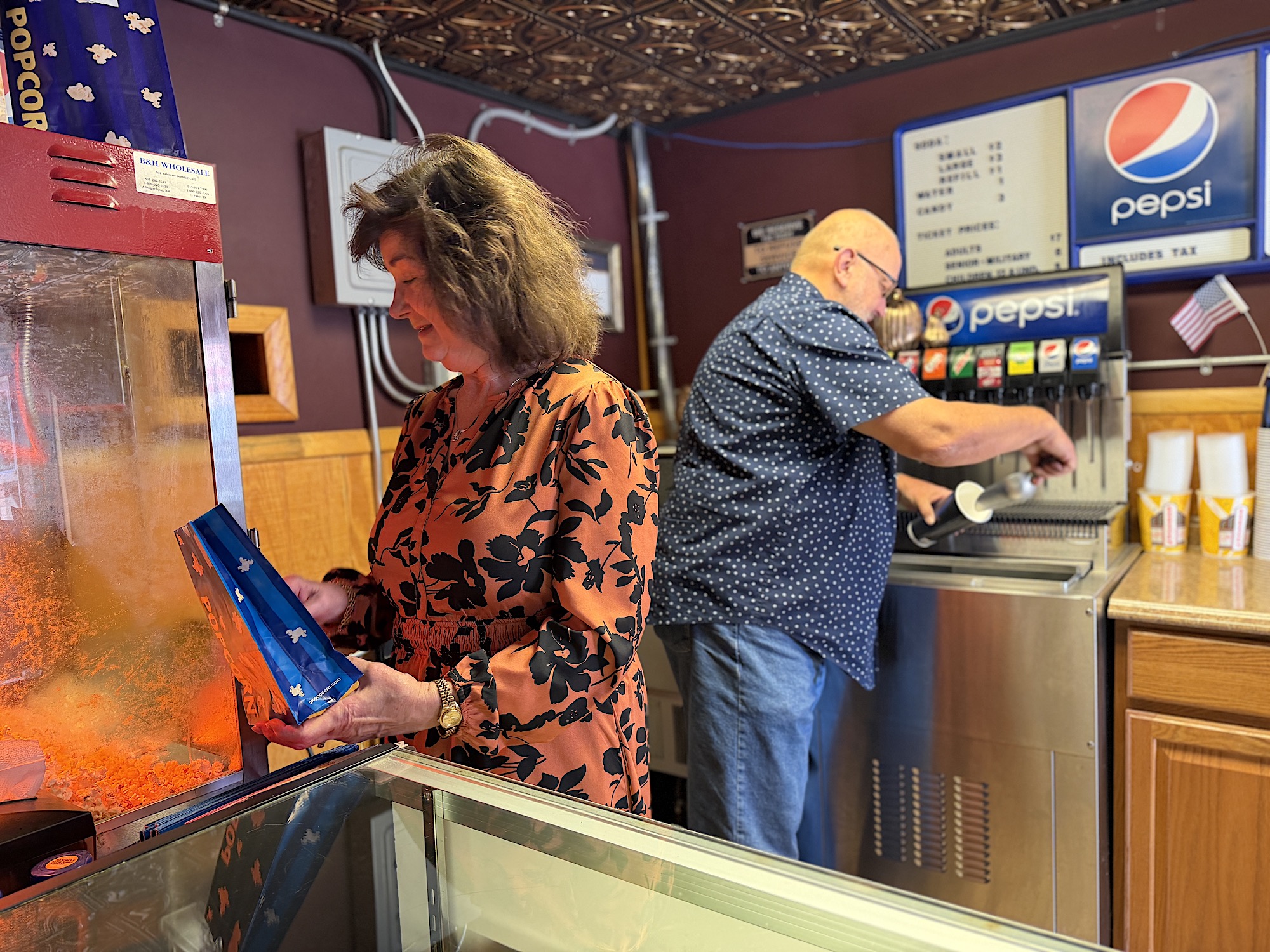 Allen and Ginger Harding, owners of the El Rio Theatre, prepare snacks inside the concession stand in Springerville, Ariz., on Oct. 8, 2026. (Allan Stein/The Epoch Times)
 Ginger Harding hands a guest a bag of popcorn at the El Rio Theatre in Springerville, Ariz., on Oct. 8, 2026. (Allan Stein/The Epoch Times)
The Hardings spent hundreds of thousands of dollars upgrading the outdated 35mm film equipment and renovating the interior.
“We did a massive renovation in the concession area and in the bathrooms. We had to install a lot of electrical changes to accommodate the projector up in the projection room,” Allen Harding said.
Today, digital projection and Dolby Surround Sound bring modern releases to the historic movie house.
The Hardings chose to preserve the theater’s vintage character rather than replace its seating with the reclining luxury chairs found in many contemporary cinemas.
“We’re not of the inclination to put in highbrow recliners and all that stuff,” Ginger Harding said. “We wanted to reupholster the seats; have them re-foamed, re-outfitted, and cleaned up; and keep using them.”
Family Friendly
For generations, children spent Saturday mornings at the El Rio watching their favorite Western heroes and adventure characters. The theater still gives residents a place to enjoy a movie on a 20- by 30-foot screen without driving to another community, Allen Harding said.
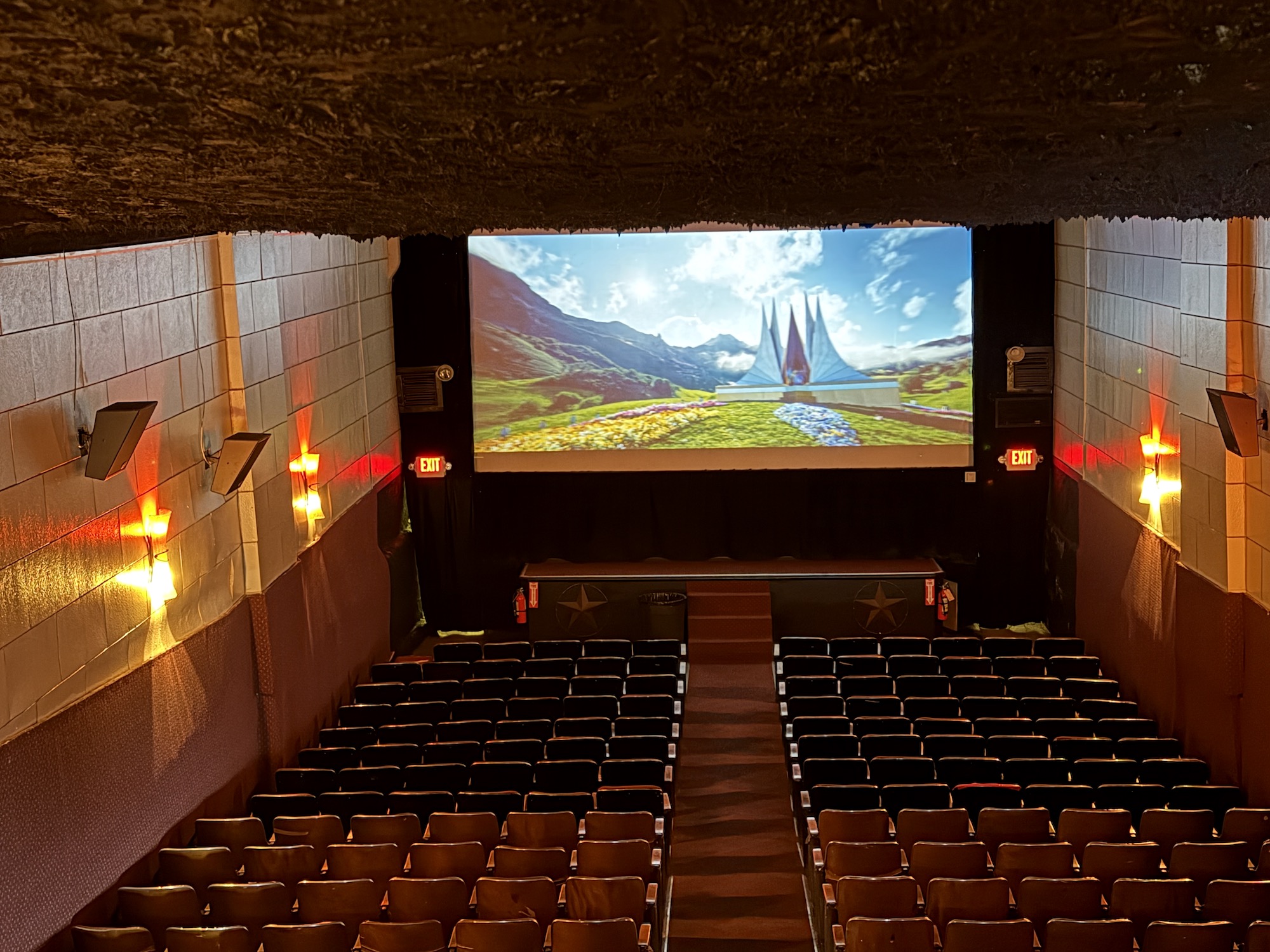 The El Rio Theatre holds 288 vintage seats and a single 20- by 30-foot movie screen in Springerville, Ariz., on Oct. 8, 2026. (Allan Stein/The Epoch Times)
“We’ve got three generations—grandma, grandpa, mom, dad, and the kiddos. And the kiddos are with grandma and grandpa, holding hands walking out,” Ginger Harding said.
“It’s just the coolest thing to see.”
The Hardings also try to match their programming to the more conservative culture of the surrounding area. They avoid profanity and films with sexually charged content or excessive violence—a policy that narrows the selection of new releases available to them.
“I think the best you can usually get away with is a PG-13 movie, so that kind of further limits the content that’s available to show,” Allen Harding told The Epoch Times.
Finding films that appeal to all age groups is an ongoing challenge.
A movie that draws children may not interest senior patrons, while a film aimed at adults may not attract enough of the younger audience that the Hardings want to reach.
Ginger Harding said many Hollywood studios impose strict rules on showing classic films. Those restrictions leave the theater with fewer options, even when older movies appeal to local audiences.
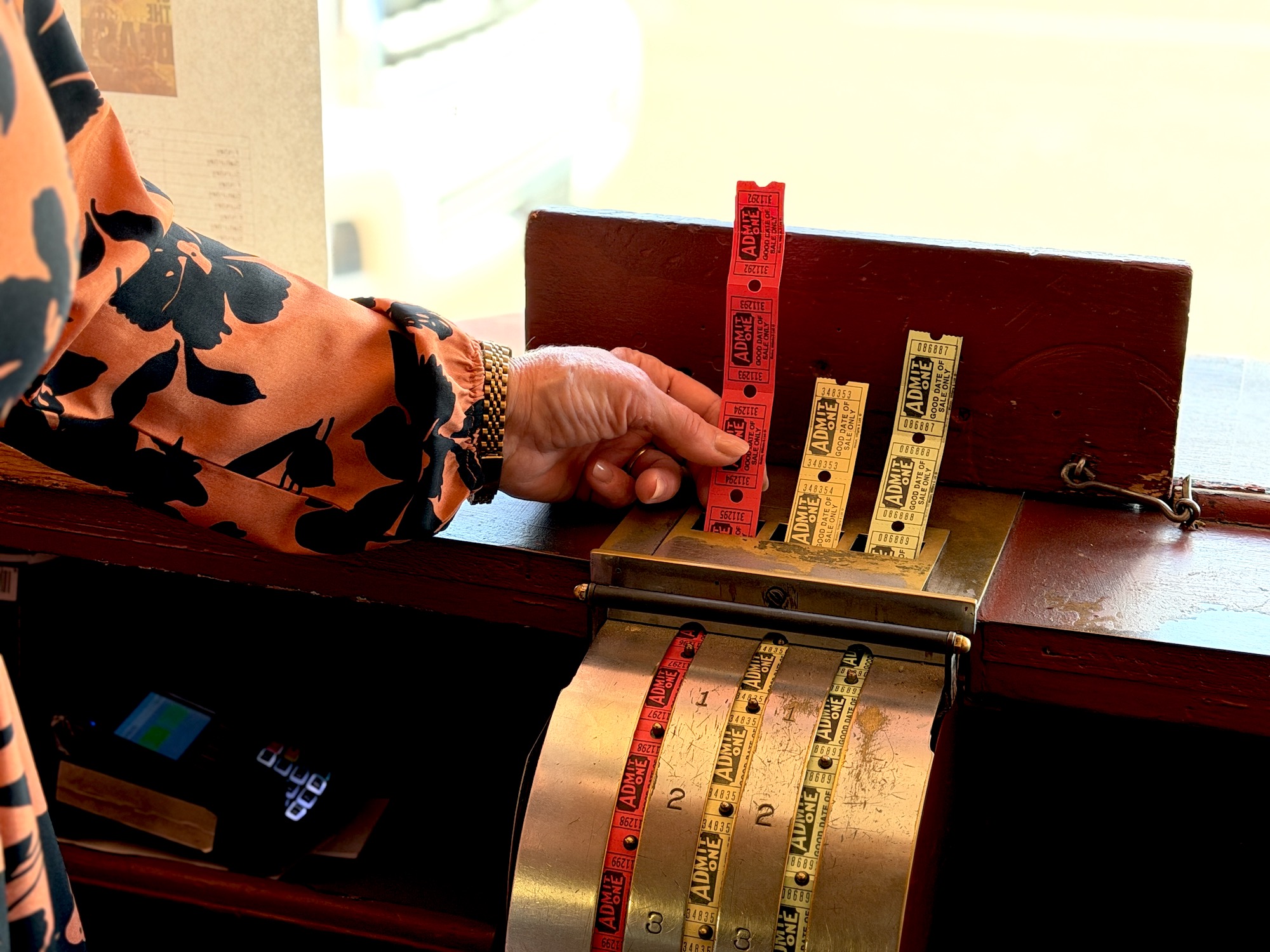 Ginger Harding operates the vintage mechanical ticket machine on Oct. 8, 2026. (Allan Stein/The Epoch Times)
“Disney will not let anyone show any classics. I can’t show ‘Bambi.’”
A Changing Audience
The Hardings fondly remember the theater’s first showing under their ownership.
“Transformers,” the sequel, filled nearly all 288 seats. The strong turnout encouraged the couple as they launched their venture as the town’s only movie theater.
Now, they said, the theater reaches only about 40 percent of its capacity—even on a busy night.
Ginger Harding said she tries to book new releases for shorter runs before audience numbers drop.
“With a single screen, I cannot show a movie for a month in a row. [The business] would die,” she said.
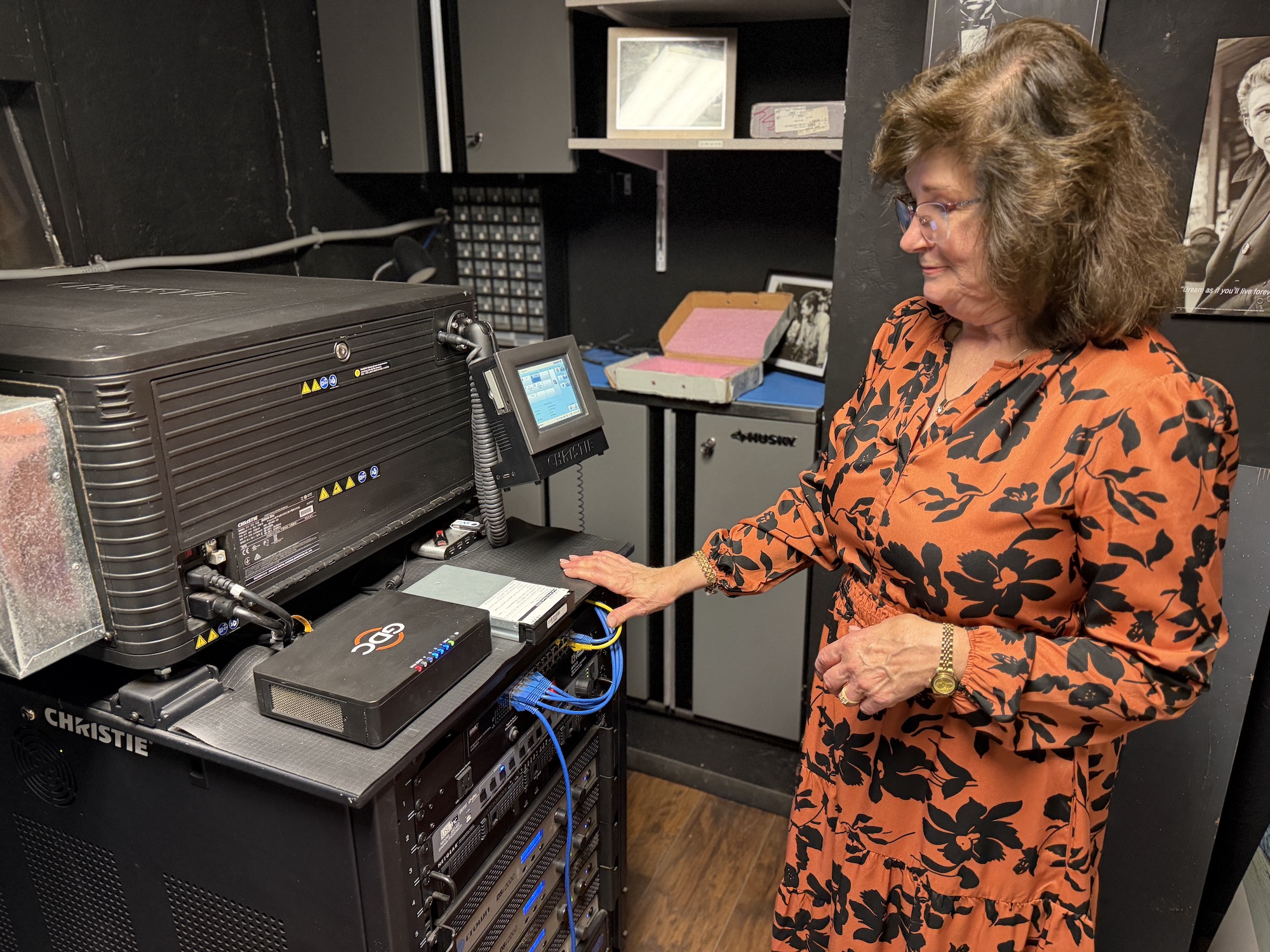 Ginger Harding loads a movie into the digital projector on Oct. 8, 2026. (Allan Stein/The Epoch Times)
Studio contracts can complicate bookings, requiring theaters to run films for weeks even when a small movie house cannot sustain the audience.
“Occasionally, especially with Disney movies, they require a three-week minimum,” Ginger Harding said.
Mandatory COVID-19 shutdowns further challenged the El Rio and other theaters. And Hollywood’s limited production of new movies added to their difficulties.
The closures halted business, and a lack of new releases made it harder for indoor theaters to draw crowds after reopening. However, many drive-ins thrived under social distancing rules.
Since the COVID-19 pandemic, some screenings have drawn just one person, Allen Harding said. But if someone makes the effort to show up, the show must go on.
If no one arrives, the theater closes after 10 minutes, he said.
Curtain Call for Single Screen?
Single-screen theaters face other challenges: to fill seats and revenues.
Only a dwindling number remain open for business in smaller American towns across the United States.
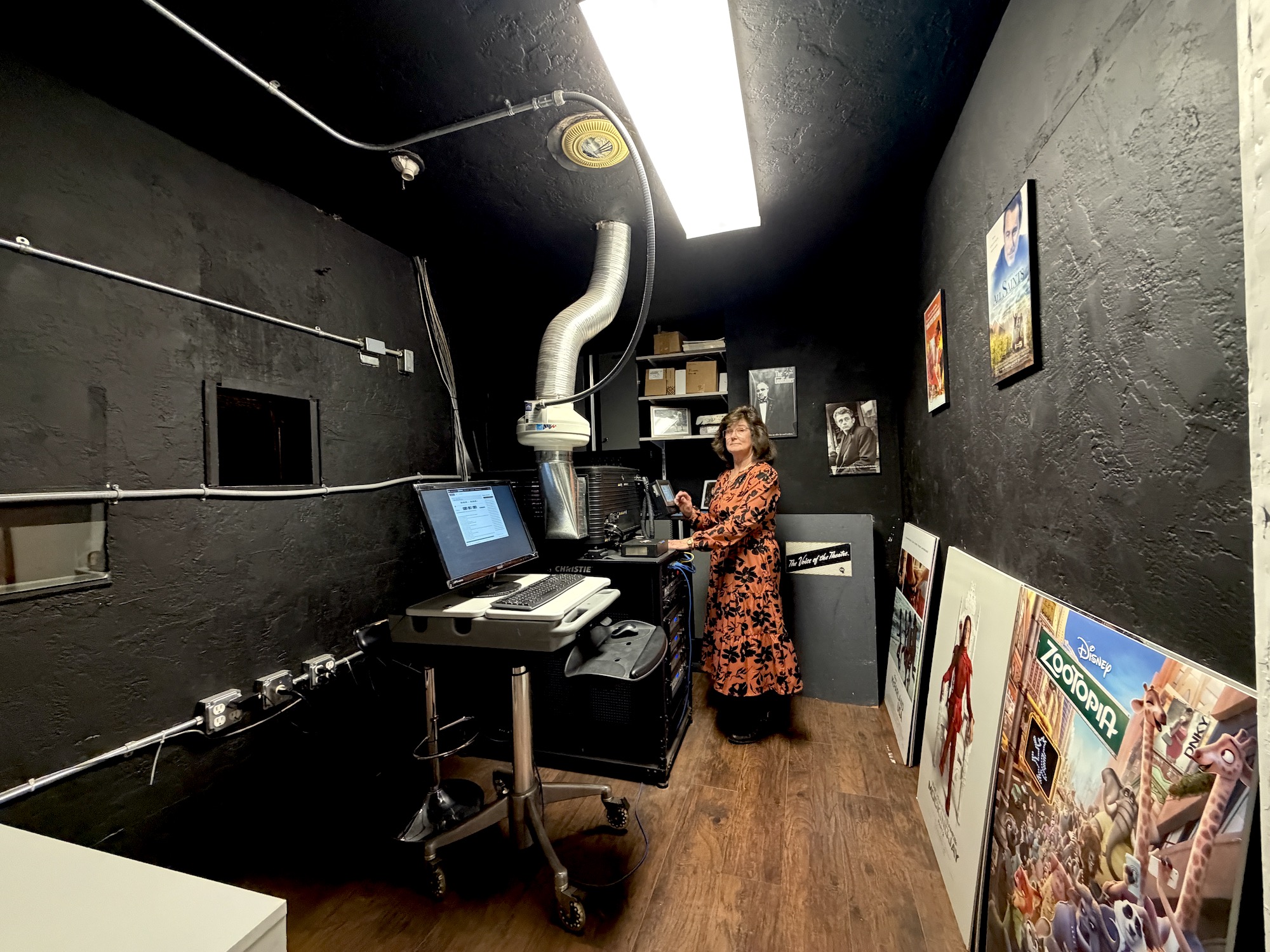 Digital projection equipment replaces older 35mm gear at the El Rio Theatre. Theatre co-owner Ginger Harding prepares the equipment for a weekend showing in Springerville, Ariz., on Oct. 8, 2026. (Allan Stein/The Epoch Times)
Their numbers fall short of modern multiplexes featuring reclining leather seats and built-in drink holders. The El Rio offers a different experience, one rooted in its historic interior and established place in the rural community.
CompanyData.com lists 15,267 registered cinema businesses in the United States. California leads with 2,058, followed by Texas with 1,291, and New York with 1,075.
Arizona has 405 registered theaters, representing about 2.7 percent of the national total, the company reported.
The number of indoor cinema sites in the United States fell to 5,477 in 2020 from about 7,200 in 1995, with the steepest decline seen in the year 2000, according to data from the main trade association for movie theater owners and operators, Cinema United.
The State Theatre in Washington, Iowa, holds the Guinness World Records title as the world’s oldest continuously operating cinema. It screened its first movie on May 14, 1897.
The Historic Park Theatre in Estes Park, Colorado, was built in 1913 and is widely described as the oldest original single-screen movie house still operating in the United States.
It was added to the National Register of Historic Places in 1984.
The El Rio’s history reaches back more than a century, but the Hardings’ immediate concern is keeping it open for the next generation of moviegoers.
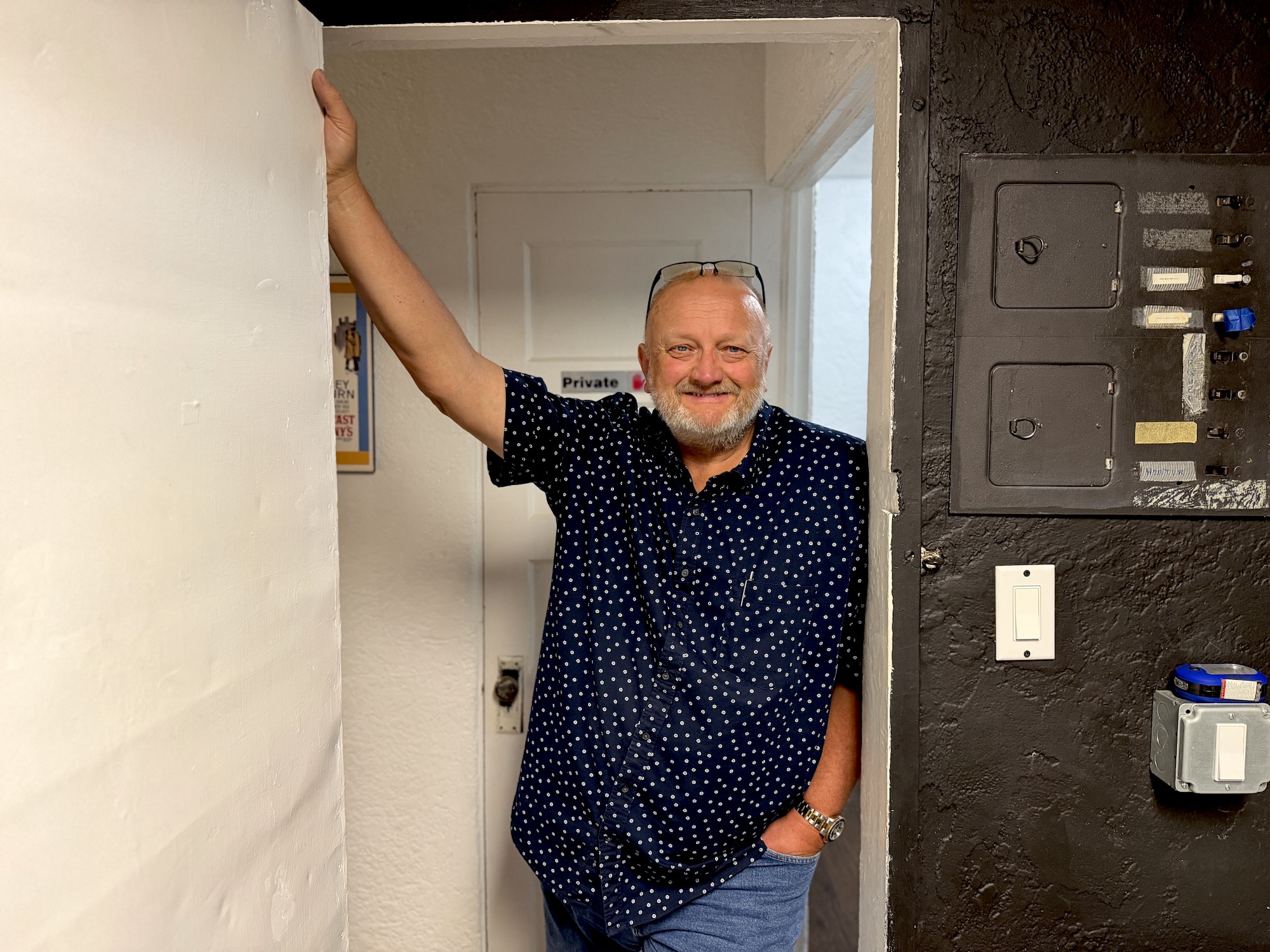 El Rio Theatre co-owner Allen Harding stands in the doorway to the digital projection room in Springerville, Ariz., on Oct. 8, 2026. (Allan Stein/The Epoch Times)
See You at the Movies
The El Rio closed briefly after Madariaga’s death on Jan. 3, 2014, before the Hardings bought and renovated the theater. Their vision of a community gathering place continues to serve the town’s roughly 1,700 residents and beyond.
During the day, visitors driving down West Main Street might easily miss the theater, tucked between neighboring shops.
On weekend nights, however, the red neon sign lights up as moviegoers line up at the vintage glass ticket booth, which still houses its original mechanical ticket machine.
The theater also works with local schools, offering select private screenings to strengthen community ties.
Those programs have introduced younger audiences to the El Rio and helped the Hardings broaden their customer base beyond the die-hard moviegoers who initially kept coming.
“All of that changed the tide,” Ginger Harding said.
“We now have groups of middle schoolers and high schoolers. I think movies are going to get better coming out of Hollywood.
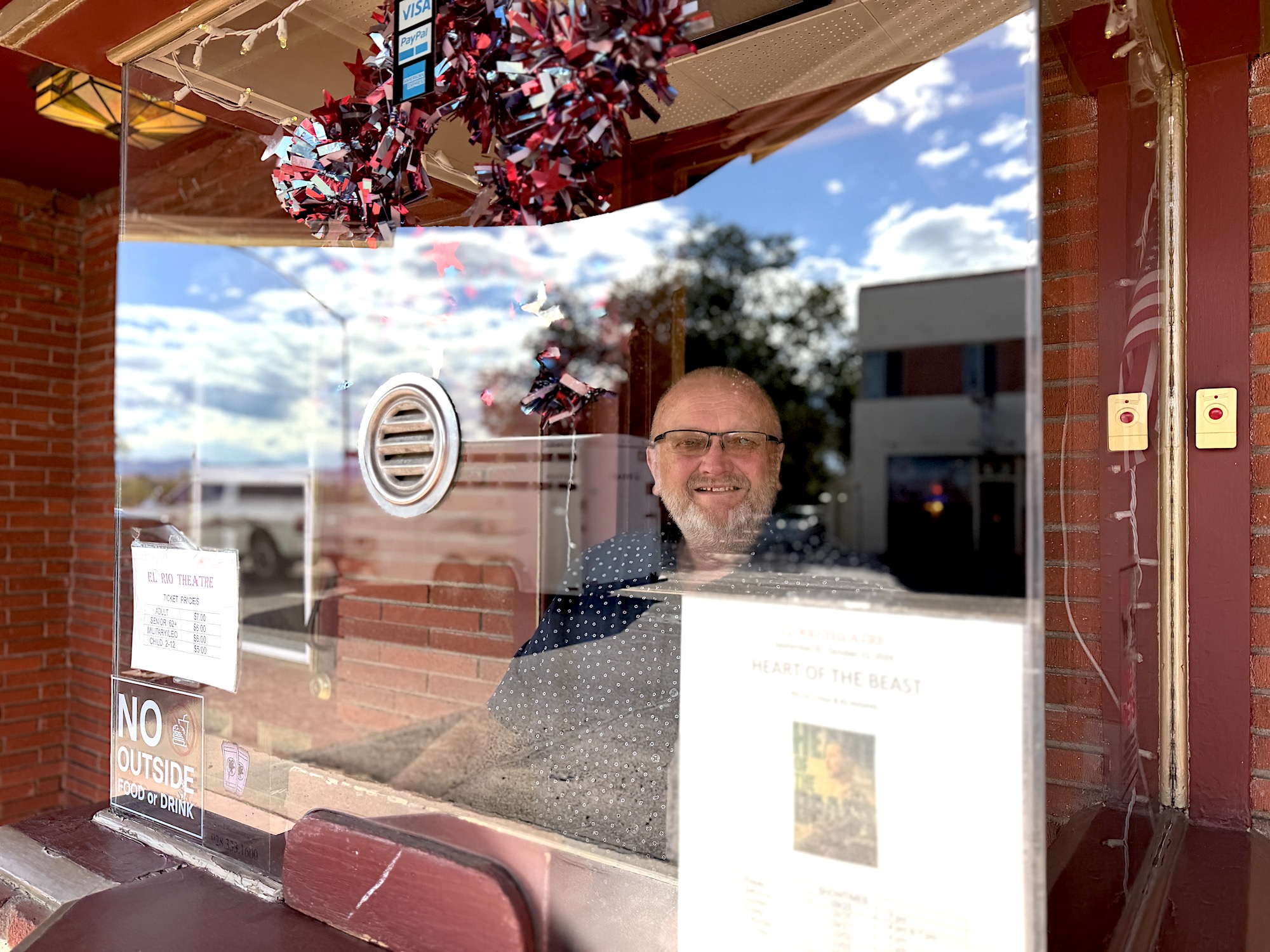 El Rio Theatre co-owner Allen Harding sits inside the ticket booth in Springerville, Ariz., on Oct. 8, 2026. (Allan Stein/The Epoch Times)
Families, seniors, and now students—“it fits our demographic very nicely,” Ginger Harding said.
Owning and operating a movie theater has been a “wonderful” business opportunity, she said.
The Hardings plan to run the El Rio for as long as they can, balancing the demands of the business with their desire to serve local residents.
“I hope it lasts a long time,” Ginger Harding said, “but we’re getting to the point where we’re supposed to be retired.”
The Hardings have chosen to keep the El Rio open rather than retire just yet.
Until then, Allen Harding has a familiar message for audiences: “See you at the movies.”
 Friends Read Free
Copy
Facebook
Tweet
Friends Read Free
Copy
Facebook
Tweet