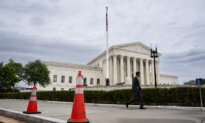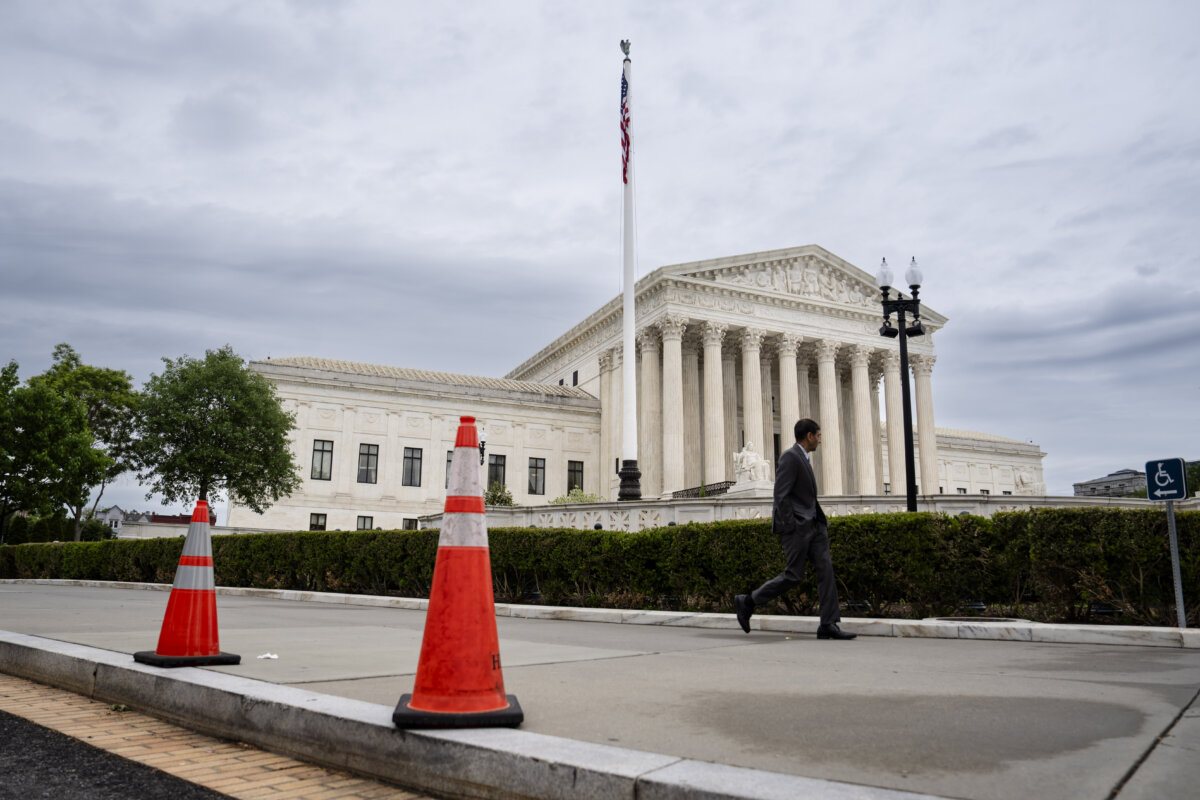

Election forecasters Sabato’s Crystal Ball and Cook Political Report on Wednesday identified seven Democratic-held House seats in the South as potential Republican targets following the Supreme Court’s landmark decision dealing with racial gerrymandering and redistricting. The impact on the 2026 midterms, however, remains uncertain, the forecasters said.
The Supreme Court ruled 6–3 in Louisiana v. Callais that the state’s redrawn congressional map was unconstitutional because race was the predominant factor in drawing the lines.
The map had been redrawn under a lower court order to include a second majority-black district to comply with Section 2 of the 1965 Voting Rights Act, which bars voting practices that discriminate by race. Democrats said the decision narrows that section of the law.
Sabato’s Crystal Ball managing editor Kyle Kondik flagged two seats in Louisiana, two in Alabama, and one each in Mississippi, Tennessee, and South Carolina as the districts most likely to be redrawn. Cook Political Report identified the same set in a separate analysis and named Georgia’s 2nd District as a possible additional target.
In Louisiana, the seats are the 6th Congressional District, held by Rep. Cleo Fields (D-La.), which the court deemed an unconstitutional racial gerrymander, and the 2nd Congressional District, held by Rep. Troy Carter (D-La.).
In Alabama, Rep. Shomari Figures (D-Ala.) and Rep. Terri Sewell (D-Ala.) could be drawn out of their seats. The list also includes Rep. Bennie Thompson (D-Miss.), Rep. Steve Cohen (D-Tenn.), and Rep. Jim Clyburn (D-S.C.).
“The decision may or may not have a major, immediate impact on 2026, but its ripple effects will be felt more deeply in subsequent elections,” Kondik wrote. He said the redistricting battle is now likely to extend into 2027 and 2028.
Cook Political Report’s Amy Walter and Matthew Klein wrote that Republicans could pick up a handful of seats this fall, but that most of the action will affect the 2028 cycle. They cited filing deadlines, primary calendars, and likely litigation as reasons states may decide to hold off.
Louisiana’s primary is scheduled for May 16, with early voting set to begin Saturday. Mississippi has already had its primary. Alabama and Georgia hold their primaries in May, while South Carolina’s is in June and Tennessee’s is in August.
Sen. Marsha Blackburn (R-Tenn.), the front-runner for Tennessee’s open gubernatorial election in November, called for a special session to redraw the state’s map shortly after the ruling. The state’s congressional delegation currently splits 8–1 in favor of Republicans.
Cook Political Report flagged Georgia’s 2nd Congressional District, held by Rep. Sanford Bishop (D-Ga.), as a possible additional target, though Walter and Klein wrote that Gov. Brian Kemp, a Republican, may be reluctant to pursue a redraw. They said the four Democratic-held seats in the Atlanta area would be riskier for Republicans to target.
Kondik wrote that Democratic-controlled states could face pressure to respond. California and Virginia voters this year approved measures allowing partisan redraws, and Cook said Illinois and Maryland—both led by Democratic governors who are potential 2028 presidential candidates—could face similar pressure to redraw their maps.
Neither Cook Political Report nor Sabato’s Crystal Ball had formally shifted any 2026 House race ratings in response to the Louisiana v. Callais decision as of Thursday afternoon. Both outlets last updated their House ratings on April 21 in response to Virginia’s voter-approved mid-cycle redistricting, with Democrats having favorable odds to retake the House.
 Friends Read Free
Copy
Facebook
Tweet
Friends Read Free
Copy
Facebook
Tweet