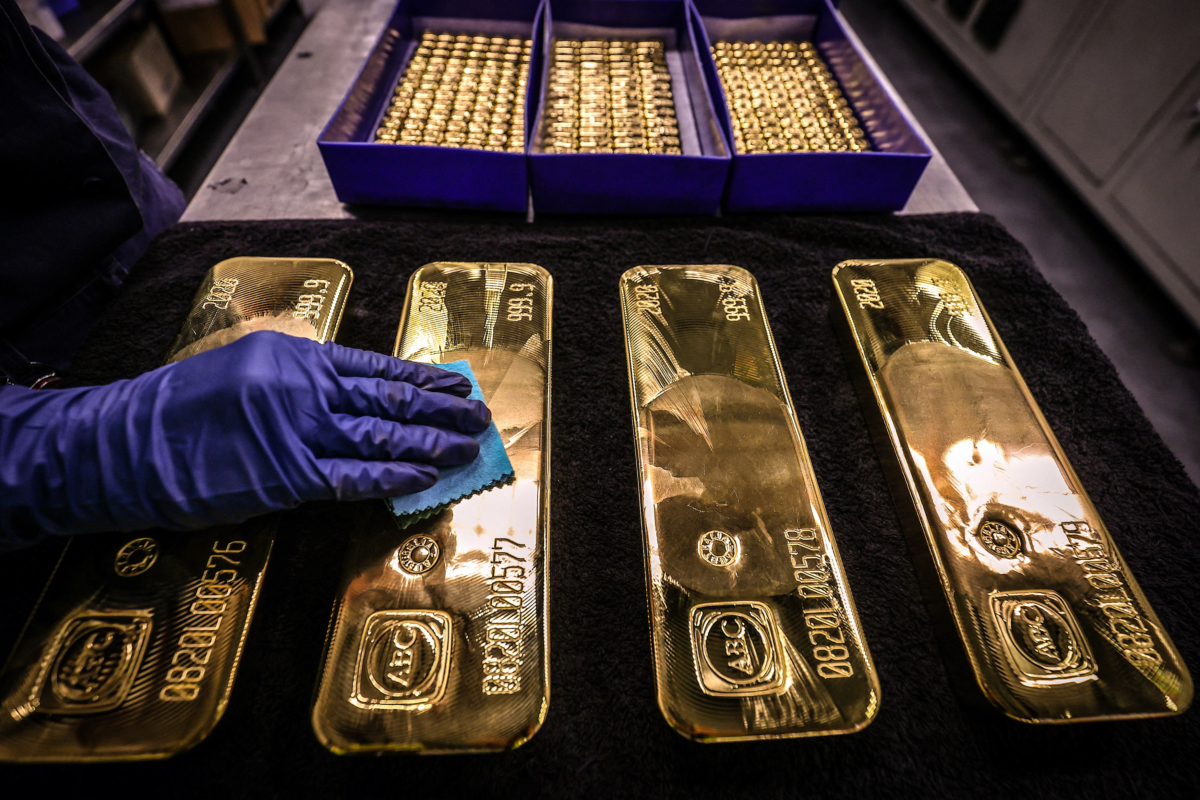

The Bureau of Land Management (BLM) has approved the Spring Valley gold mine project in Nevada. The project, located in Pershing County, is expected to create hundreds of jobs in the region, the agency said in a July 15 statement.
“Solidus Resources, LLC, is approved to construct, operate, and maintain an open-pit gold mine, three waste rock facilities, and a heap leach facility,” the agency stated.
Solidus will carry out mining activity on approximately 6,232 acres of land, of which 4,123 acres are public land managed by the BLM, with the remaining private.
“The project will employ a contractor workforce of approximately 130 employees during the initial two-year construction and approximately 250 full-time employees for the operations period. The total life of the project will be 21 years,” the BLM stated.
According to a feasibility study of the mine published by Solidus on Feb. 18, the project is a “large-scale, low-cost” gold production initiative.
The study forecasts an average of more than 300,000 ounces of gold annually from the mine, over a 10-year period.
According to the BLM, projects such as the Spring Valley gold mine support a March 20 executive order signed by President Donald Trump, titled Immediate Measures to Increase American Mineral Production.
The order stated that the United States possesses vast mineral resources that can fuel prosperity, create jobs, and cut down U.S. dependence on foreign nations.
“The United States was once the world’s largest producer of lucrative minerals, but overbearing Federal regulation has eroded our Nation’s mineral production. Our national and economic security are now acutely threatened by our reliance upon hostile foreign powers’ mineral production,” the order stated.
The order was aimed at streamlining and expediting reviews and advancement of mining projects, according to a March 20 White House fact sheet.
On June 30, Trump signed a memorandum aimed at fostering “interagency coordination” to strengthen critical mineral funding and permitting.
The memo ordered federal agencies to share information with the National Energy Dominance Council, which will review pending funding applications for energy and critical mineral projects to ensure that these funds are “utilized appropriately” across the federal government.
On July 8, the Department of the Interior announced the approval of a project to mine coal on Bryson Mountain in Claiborne County, Tennessee.
The project is expected to “produce up to 1.8 million tons of coal over the next 10 years, helping to strengthen America’s energy independence and create local jobs,” it said.
All That Glitters
The BLM’s approval of the Spring Valley gold mine comes amid gold prices trading at historic highs, making mining of the bullion an attractive business opportunity.
On July 18, spot gold traded at $3,350 per ounce, which is just $150 shy of the $3,500 peak hit in April. So far this year, gold prices are up by more than 27 percent.
Demand for gold is reflected in investor interest in the metal. In a July 8 report, the World Gold Council said global gold exchange-traded funds (ETFs) ended H1 (first half of the year) with the “highest semi-annual inflow since H1 2020.”
“All regions saw inflows last month, with North American and European investors leading the charge. During the first half, North America accounted for the bulk of inflows, recording the strongest H1 in five years,” the report stated.
“Spiking geopolitical risks amid the Israel–Iran conflict boosted investor demand for safe-haven assets and supported inflows into North American gold ETFs.”
Uncertainty regarding policies and fiscal concerns could help support demand for gold ETFs in North America over the near to medium term, the World Gold Council said.
Looking ahead, JP Morgan predicted in a June 10 report that gold prices would average $3,675 per ounce by the final quarter of this year. Average prices are forecast to breach $4,000 in 2026.
“Earlier this year, we examined the structural shift in gold’s demand and geopolitically influenced pricing drivers fueling its rebasing higher, ultimately posing the question if $4,000 [per ounce] is in the cards,” said Natasha Kaneva, head of global commodities strategy at JP Morgan.
“To answer the question—yes, we think it is, particularly now with recession probabilities and ongoing trade and tariff risks. We remain deeply convinced of a continued structural bull case for gold and raise our price targets accordingly.”
JP Morgan has said it sees central banks continuing to remain strong buyers of gold in 2025. It has predicted that central banks will buy 900 tons of gold this year, which although lower than the 1,000-ton purchases in each of the past three years, is still substantial.
 Friends Read Free
Copy
Facebook
Tweet
Friends Read Free
Copy
Facebook
Tweet