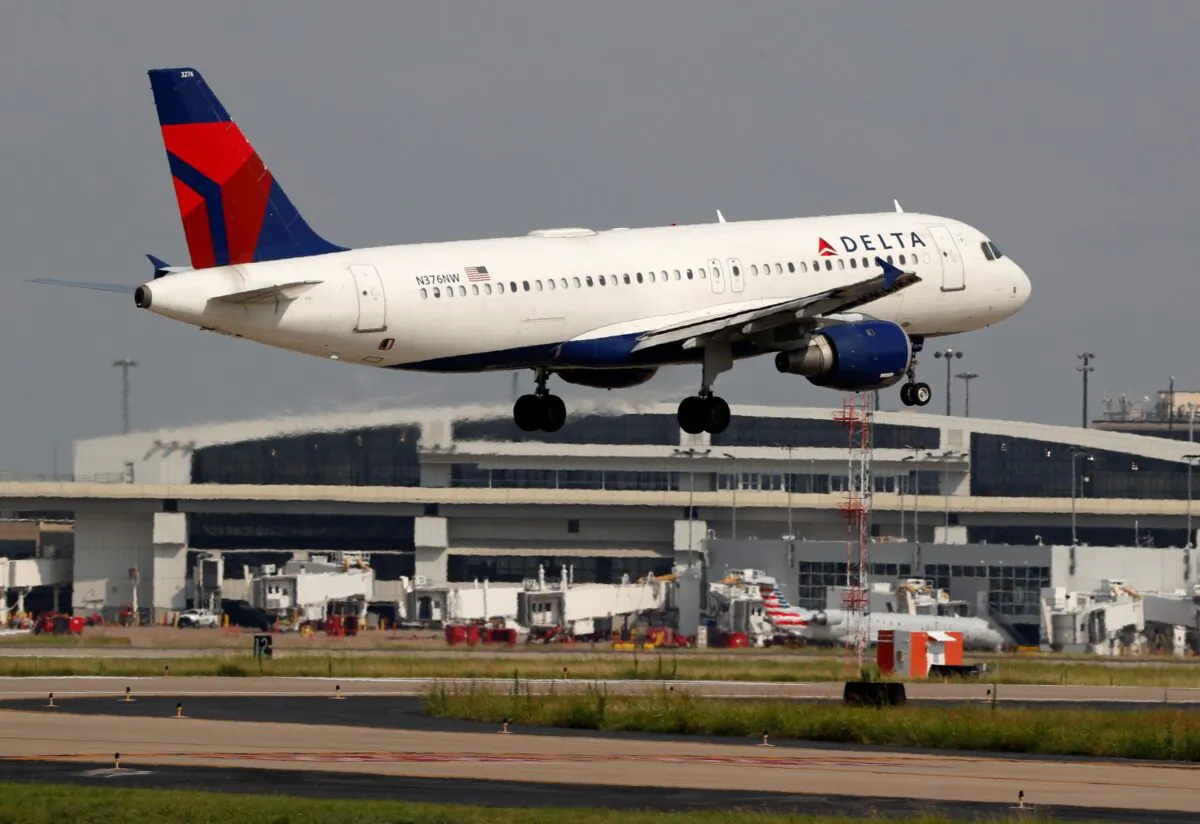

The Federal Aviation Administration (FAA) has invested over $523 million in airports across 43 states to modernize infrastructure, improve safety, and make air travel a more efficient experience for families, the Department of Transportation (DOT) said in a May 28 statement.
The funds were disbursed via 332 grants and are to be used to upgrade terminals, improve aprons and taxiways, support the rehabilitation of runways, and make other investments in airfields, the department said.
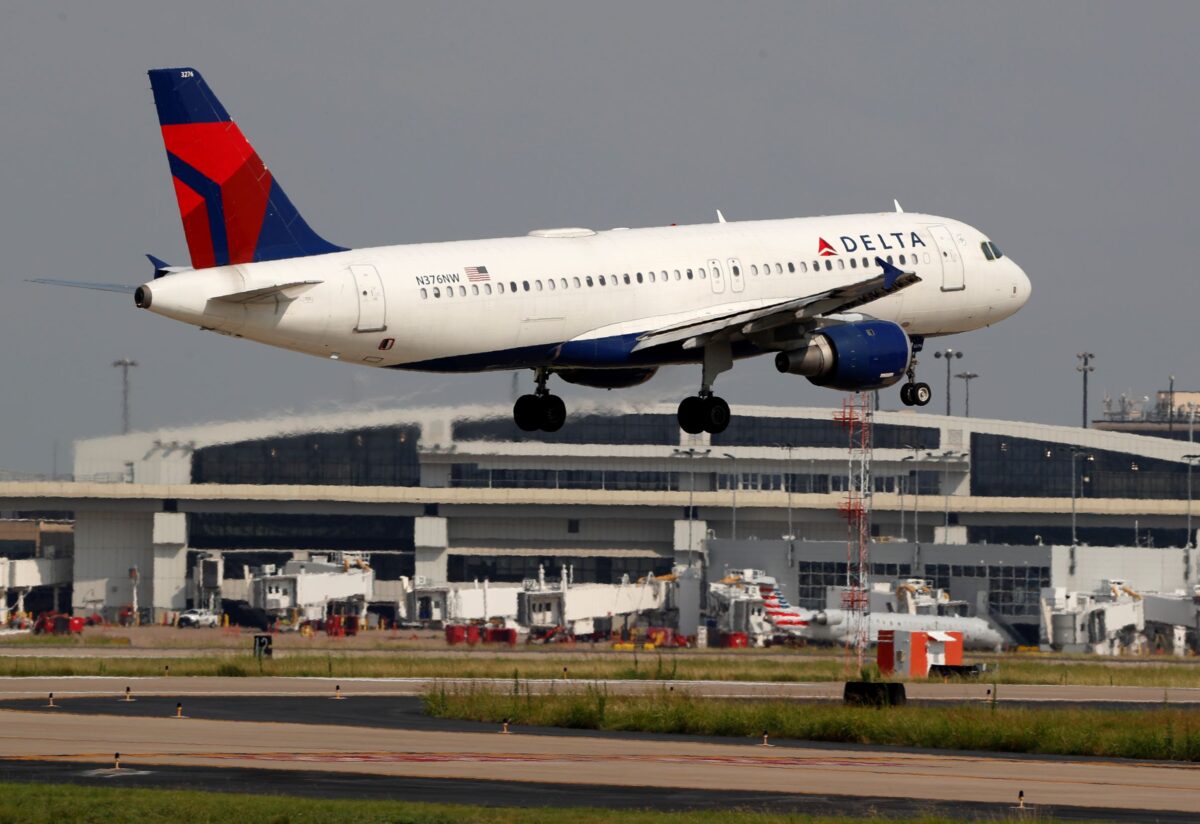
The Dallas-Fort Worth International Airport in Texas is receiving $70 million for runway rehabilitation, Charlotte/Douglas International Airport in North Carolina is getting $46.9 million for expanding aprons, and Florida’s Miami International Airport is being awarded $41.9 million for expanding fuel farms and reconstructing terminals.
New York’s Syracuse Hancock International Airport, Florida’s Fort Lauderdale/Hollywood International Airport, and Pennsylvania’s Philadelphia International Airport are receiving $18 million or more each for reconstructing and expanding deicing pads, constructing new taxi lanes, and reconstructing taxiway pavement, respectively.
Orlando Sanford International Airport in Florida is receiving $16.2 million, while Louisiana’s Baton Rouge Metro Airport and Nebraska’s Eppley Airfield are getting more than $10 million each.
The $523 million funding comes from the Airport Infrastructure Grant (AIG) program, part of the Infrastructure Investment and Jobs Act signed into law in 2021, according to a Dec. 10 update from the FAA.
AIG provided $14.5 billion over five years, beginning in fiscal year 2022, of which more than $5.5 billion remains available.
Commenting on the investment, Transportation Secretary Sean Duffy said, “Upgrading our runway infrastructure is part of our work to usher in the Golden Age of Transportation.”
“American families deserve state-of-the-art runways and infrastructure that will make their travel experience safer, smoother, and more efficient.”
The FAA has also invested $970 million across U.S. airports to improve travel experience for American families, the DOT said in a May 18 statement.
These funds were disbursed to 45 states via 133 grants through the Airport Terminals Program, which is also a part of the Infrastructure Investment and Jobs Act.
“Funding will be invested in family spaces, including mothers’ rooms, restrooms, and play areas,” the department said.
Airport Safety, CBP Officer Withdrawal
The Trump administration’s investments in the country’s aviation sector come amid concerns about aging infrastructure that could pose safety risks.
Last year, Newark Liberty International Airport in New Jersey experienced a series of critical communication outages due to issues with the FAA’s aging telecom infrastructure.
More recently, in March, a fatal collision took place between a fire truck and an Air Canada regional jet at New York City’s LaGuardia Airport after a critical runway warning system failed to trigger an alarm before the accident.
During a House subcommittee hearing in March last year, Heather Krause, managing director of physical infrastructure at the Government Accountability Office, said that an FAA evaluation found major issues with America’s air traffic control systems.
“Of the 138 systems, 51 (37 percent) were deemed unsustainable by FAA and 54 (39 percent) were potentially unsustainable,” Krause said.
“Many unsustainable and potentially unsustainable systems have critical operational impacts on the safety and efficiency of the national airspace.”
Meanwhile, the travel industry has raised concerns about the potential withdrawal of Customs and Border Protection (CBP) officers from airports in certain states. CBP officers are typically placed at U.S. ports of entry, such as airports, as a security measure, including for screening foreign visitors and returning Americans.
Homeland Security Secretary Markwayne Mullin said during a recent interview with Fox News that if states don’t allow local law enforcement to protect officers from Immigration and Customs Enforcement (ICE), he may remove CBP officers from airports in those states and reassign them to ICE facilities.
In a May 29 statement, a coalition of groups representing airports, airlines, hotels, and other stakeholders urged the Department of Homeland Security (DHS) not to move ahead with such a course of action.
Any reduction in CBP officers at major U.S. gateway airports risks causing “unnecessary chaos” throughout the United States’ air transportation system, the coalition stated.
“International aviation networks are highly interconnected, and operational changes at a small number of gateway airports will quickly ripple across the country, negatively impacting travelers, cargo shipments, supply chains, and the communities that depend on those connections,” the statement said.
“As the United States prepares for growing international travel demand, DHS should avoid actions that would create unnecessary bottlenecks and economic consequences for communities across the country. Now is the time to strengthen America’s gateway infrastructure, not weaken it.”
 Friends Read Free
Copy
Facebook
Tweet
Friends Read Free
Copy
Facebook
Tweet