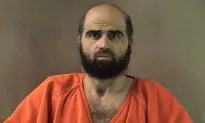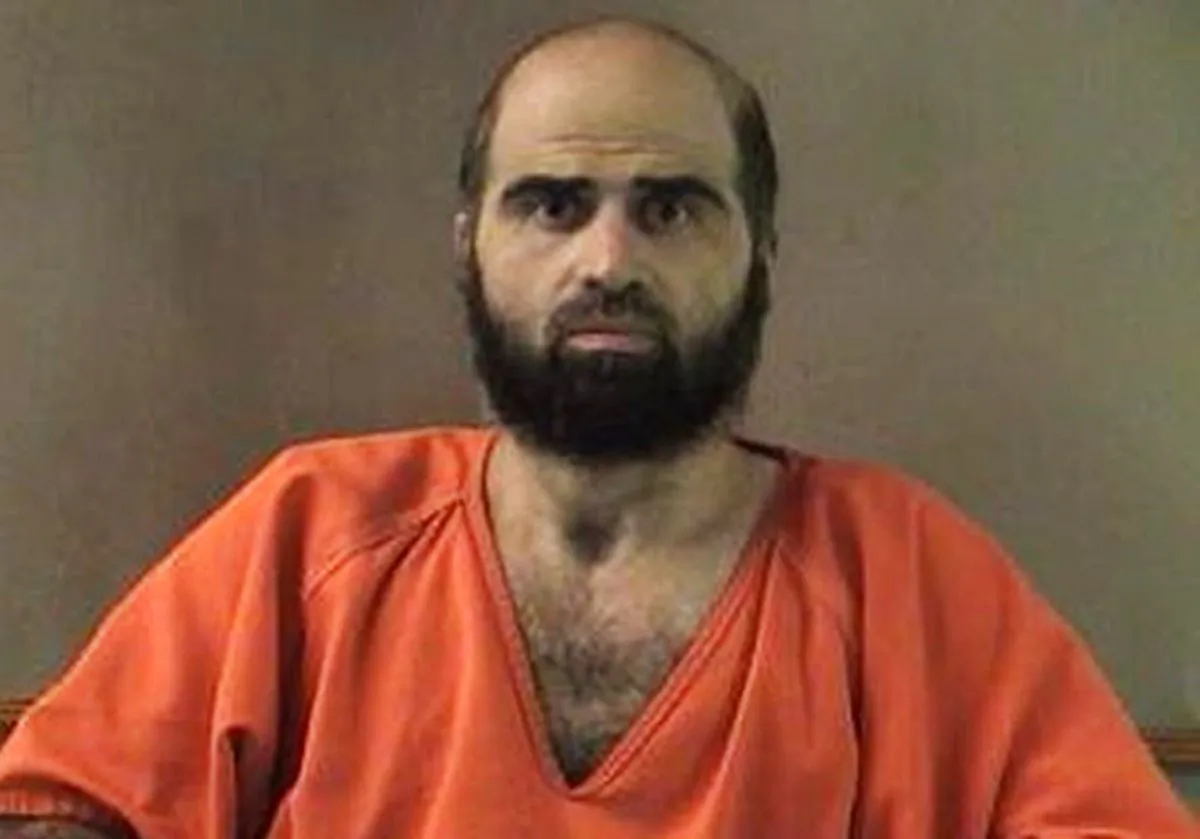

President Donald Trump has approved a firing squad execution for convicted terrorist Nidal Malik Hasan, who was sentenced to death for the 2009 Fort Hood massacre, a Pentagon official said Monday.
U.S. born Hasan killed 13 people and an unborn child and wounded 32 others during the Islamist terror attack at the Army base in Texas.
Secretary of War Pete Hegseth recommended the execution, which is to be carried out by a U.S. Army firing squad, Pentagon spokesperson Sean Parnell said in a statement on X.
Parnell described the victims of the shooting as unarmed American soldiers.
In a post on X following Parnell’s announcement, Hegseth wrote “Justice.”
The secretary of the Army will set the time and place of the execution, Parnell said.
At the time of the shooting, Hasan was a U.S. Army major and psychiatrist stationed at Fort Hood.
He was convicted on all 13 counts of premeditated murder and 32 counts of attempted premeditated murder by a military jury in August 2013 and sentenced to death.
Hasan has since remained on the military’s death row in the U.S. Disciplinary Barracks at Fort Leavenworth, Kansas. He would be the first on U.S. military death row to be executed by the military since 1961.
In April this year, the Department of Justice authorized firing squads, electrocution, and gassing as means of execution in federal cases.
Extremism ‘on Full Display’
After the terrorist attack, nine soldiers were punished in March 2011 for failing to act on warning signs exhibited by Hasan.
An Army statement at the time said: “Although no single event directly led to the tragedy at Fort Hood, certain officers clearly failed to meet the high standards expected of their profession.”
A Senate report weeks earlier had cited what Hasan’s superiors saw and did not act on.
During his medical residency and fellowship at Walter Reed Army Medical Center, evidence of Hasan’s drift toward violent Islamist extremism was “on full display,” according to the Senate Homeland Security and Governmental Affairs Committee report.
Two officers called him “a ticking time bomb,” according to the report released in February 2011.
At various times at the center, the report said, Hasan suggested revenge might be a defense for the Sept. 11 terrorist attacks, expressed sympathy with violent Islamist extremists and Osama bin Laden, and justified suicide bombers.
He also allegedly said U.S. military operations represented a war against Islam and that one risk of having Muslims in the U.S. military was fratricide of fellow service members.
The report said that his superiors took no punitive action.
It found that “the officers who kept Hasan in the military and moved him steadily along knew full well of his problematic behavior,” and that the officer who assigned him to Fort Hood—and later decided to deploy him to Afghanistan—told an officer there, “you’re getting our worst.”
 Friends Read Free
Copy
Facebook
Tweet
Friends Read Free
Copy
Facebook
Tweet