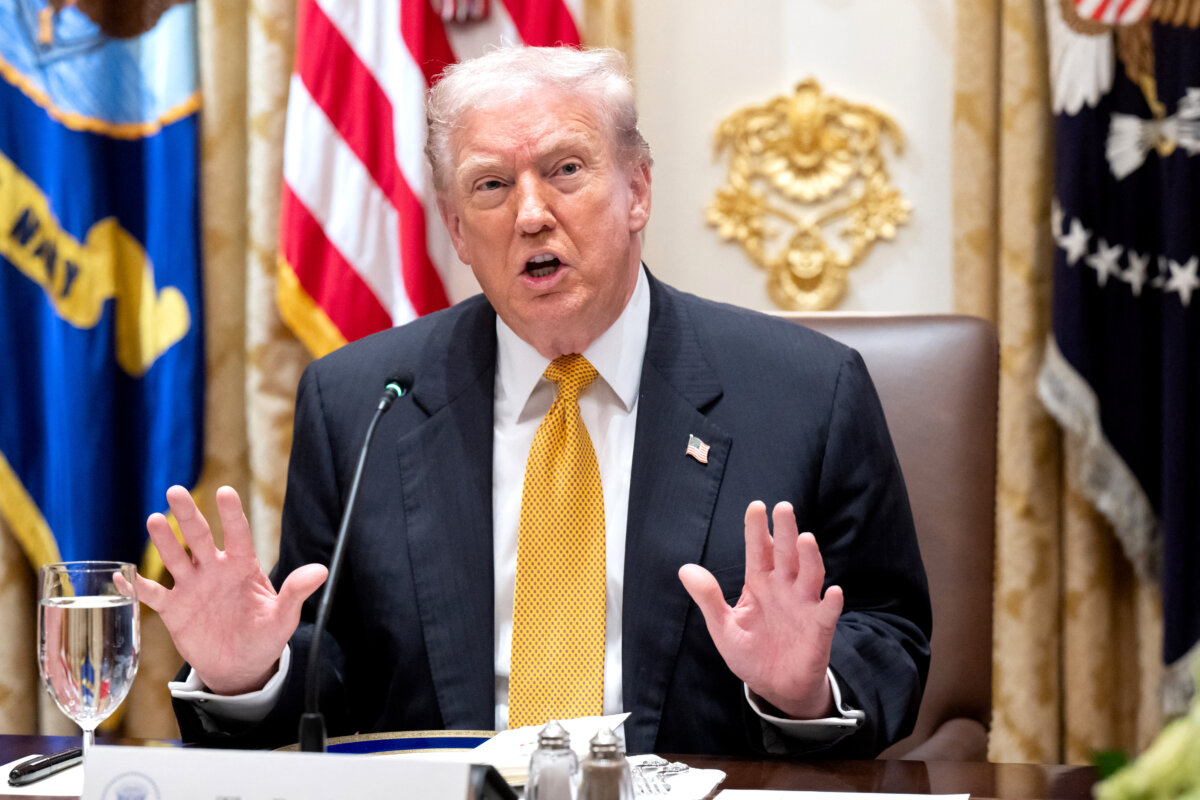

President Donald Trump is urging Republican lawmakers to redirect federal dollars that would go to insurers under the Affordable Care Act, commonly known as Obamacare, to individual Americans, a potential compromise on an issue at the heart of the prolonged federal government shutdown.
“I am recommending to Senate Republicans that the Hundreds of Billions of Dollars currently being sent to money sucking Insurance Companies in order to save the bad Healthcare provided by ObamaCare, be sent directly to the people so that they can purchase their own, much better, healthcare, and have money left over,” Trump wrote in a Truth Social post on Nov. 8.
“In other words, take from the big, bad Insurance Companies, give it to the people, and terminate, per Dollar spent, the worst Healthcare anywhere in the World, ObamaCare.”
The White House did not immediately respond to a request for comment on how Trump’s proposed direct payment plan would work in practice.
Meanwhile, Sen. Rick Scott (R-Fla.) quickly signaled support, saying he is drafting legislation to implement Trump’s proposal.
“We must stop taxpayer money from going to insurance companies and instead give it directly to Americans in HSA-style accounts and let them buy the health care they want,” Scott wrote on X, referring to health savings accounts, which allow people to save pre-tax dollars for future qualified medical expenses.
“This will increase competition and drive down costs.”
Trump has previously floated the idea of direct payments to taxpayers in other areas.
In February, as the Department of Government Efficiency pursued cost-cutting measures, Trump suggested that some of the money saved could be returned to taxpayers. He later discussed the possibility of using tariff revenue to fund “a dividend to the people of America.”
Senate Deadlock Drags On
Trump’s comments came hours before lawmakers reconvened at noon on Nov. 8, as the longest shutdown in history entered its 39th day with no breakthrough in sight.
On Nov. 7, Senate Republicans and Democrats again rejected each other’s proposals to restore pay for hundreds of thousands of federal workers affected by the shutdown.
A proposal by Senate Minority Leader Chuck Schumer (D-N.Y.) would fund the government while extending enhanced Affordable Care Act subsidies for one year. In exchange, Democrats offered to drop their demand for a longer-term extension of Affordable Care Act tax credits.
Senate Majority Leader John Thune (R-S.D.) has maintained that Affordable Care Act funding should be addressed only after the government reopens.
“The Democrat leader’s proposal is a non-starter for the Republican majority,” Thune said on Nov. 8.
“The Democrat leader wants to believe that this is a simple proposal, that it is some sort of compromise—but it is not.
“The American people are tired of Washington taking their hard-earned money and spending it on costly government programs that fail to follow through on their promises.”
Also rejected on Nov. 7 was the Shutdown Fairness Act, sponsored by Sen. Ron Johnson (R-Wis.), which would have guaranteed pay for all federal employees throughout the shutdown, with payments backdated to Oct. 1, when the shutdown began.
The measure had the endorsement of the American Federation of Government Employees, the largest federal worker union, which called the plan “long overdue.”
Johnson tried to advance his bill through unanimous consent, but Sen. Gary Peters (D-Mich.) objected, saying that the legislation could allow the Trump administration to selectively limit pay to certain workers.
Peters instead promoted a counterproposal, the Military and Federal Employee Protection Act, which mirrors Johnson’s bill but explicitly prohibits the administration from repurposing funds for anything other than paying the employees.
Johnson said that his proposal already covers every employee and does not allow any “picking and choosing.”
 Friends Read Free
Copy
Facebook
Tweet
Friends Read Free
Copy
Facebook
Tweet