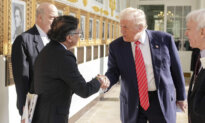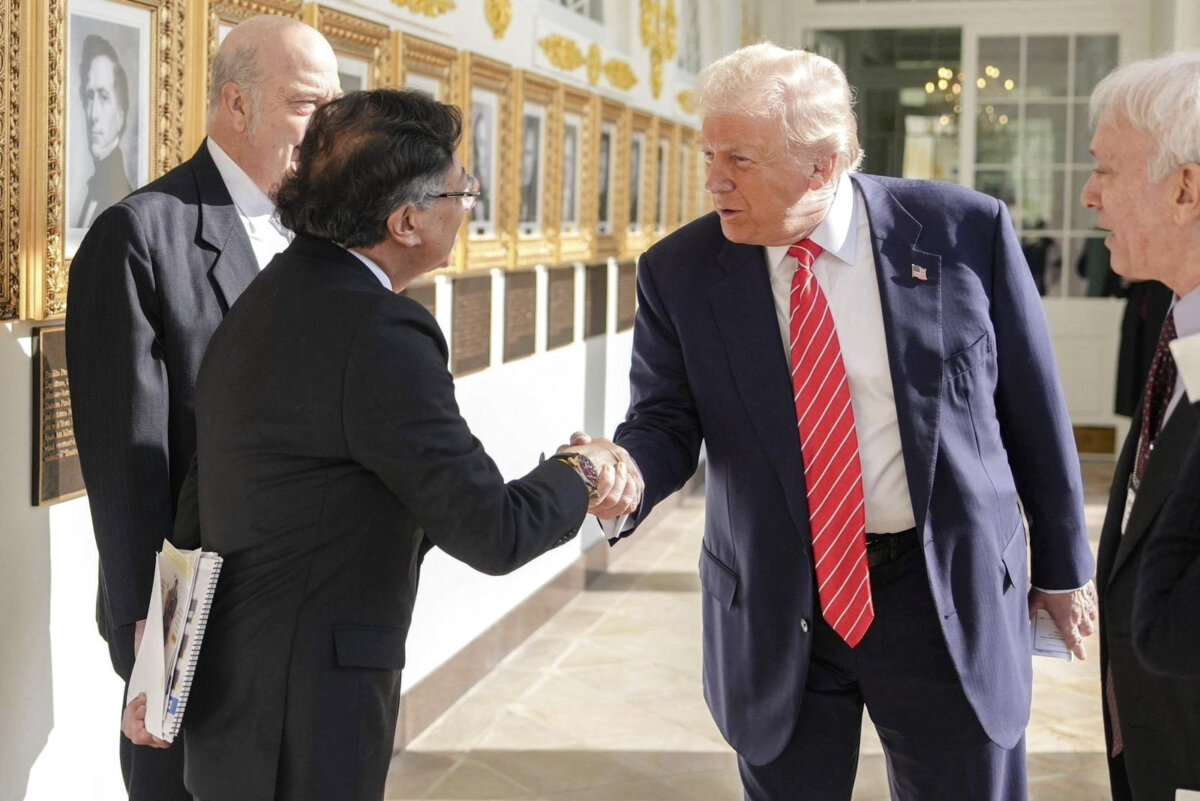
President Donald Trump hosted Colombian President Gustavo Petro for a bilateral discussion at the White House in Washington on Feb. 3.
The two countries will cooperate on countering terrorism and narcotrafficking, according to the president.
“We’re working on that. We’re working on some other things too, including sanctions,” Trump said during a bill signing ceremony following the meeting. “We had a very good meeting. I thought it was terrific.”
The leaders’ first in-person meeting comes after the two traded barbs in recent months.
“He and I weren’t exactly the best of friends, but I wasn’t insulted because I never met him,” Trump said. “I didn’t know him at all, and we got along very well.”
The Oval Office meeting—which included Vice President JD Vance; Secretary of State Marco Rubio; and Rep. Bernie Moreno (R-Ohio), a Colombian American, in the U.S. delegation, and Rosa Yolanda Villavicencio, minister of foreign relations; Pedro Arnulfo Sánchez Suárez, minister of defense; and Daniel García-Peña Jaramillo, ambassador to the United States, representing Colombia—lasted nearly two hours and remained closed to the press.
The two spoke over the phone in January, with Trump announcing the meeting shortly after and foreshadowing plans to sit down with the Colombian leader.
“It was a Great Honor to speak with … Petro, who called to explain the situation of drugs and other disagreements that we have had,” Trump wrote in a Jan. 7 Truth Social post. “I appreciated his call and tone and look forward to meeting him in the near future.”
Discussions are expected to include efforts to mitigate narcotrafficking, following Trump’s threats late last year that Petro “has to watch, because, you know, he’s got drug factories.”
“We know where they are,” Trump said. “He’d better close them up fast.”
Colombia remains a hotbed of coca leaf growing and cocaine production, long a primary source of the illegal drug. U.S. efforts to stem the flow date back decades.
A September 2025 presidential determination on major illicit drug-producing countries from the U.S. State Department described the state of the narcotic industry in Colombia.
“Coca cultivation and cocaine production have surged to all-time records under President Gustavo Petro, and his failed attempts to seek accommodations with narco-terrorist groups only exacerbated the crisis,” the presidential determination said.
“For this reason, I have designated Colombia as having failed demonstrably to meet its drug control obligations,” Trump said in the determination.
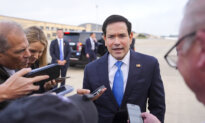
Secretary of State Marco Rubio has recommended more cooperation between Colombian and U.S. officials to bring narcotraffickers to justice.
Petro later rejected the allegations with a lengthy social media post, emphasizing his efforts to remove 30,000 hectares of cocaine plants and replace them with other agricultural products.
“I ordered the largest seizure of cocaine in world history,” Petro posted on X on Jan. 5. “I stopped the growth of coca leaf crops and began a great voluntary crop substitution plan by the coca-growing peasant.”
Trump has prioritized dismantling international drug trafficking networks with a series of actions since taking office for a second term.
Boats loaded with illicit narcotics have been targeted by the U.S. military in recent months as part of Operation Southern Spear.
Petro said many of the approximately 105 individuals killed by the strikes were Colombians.
A semi-submersible vessel carrying drugs was struck in October, with a Colombian passenger surviving, along with an Ecuadorian, while two others were killed.
Talks are also expected to center around Venezuela, following the capture of former President Nicolás Maduro and his wife, Cilia Flores, by U.S. forces in January.
Tensions escalated in the region as leaders traded rhetorical barbs.
Petro suggested that the southwest region of the United States had been stolen and cautioned against any attempt to forcibly remove him from office.
“If you arrest the president whom a good part of my people want and respect, you will unleash the popular jaguar,” he wrote on X early last month.
This followed Trump telling reporters Petro was a “very bad guy” and “no friend of the United States.”
The administration sanctioned Petro, along with his wife, son, and the nation’s interior minister, with a set of actions last October.
 Friends Read Free
Copy
Facebook
Tweet
Friends Read Free
Copy
Facebook
Tweet