
President Donald Trump on Monday directed the Commerce Department to launch an incentive program designed to increase U.S. production of primary aluminum, a metal the administration considers to be in short supply despite national-security tariffs already in place.
The action, under Section 232 of the Trade Expansion Act of 1962, means the secretary of commerce may solicit and approve “onshoring plans” from companies that pledge to build new primary aluminum facilities, expand existing ones, or refurbish outdated smelters in the United States, with construction under any approved plan having to start by Jan. 20, 2029.
Companies with approved plans may then import a quantity of primary aluminum equal to the reasonably anticipated annual output of the new or expanded U.S. facility at half the Section 232 duty rate that would otherwise be applicable. The reduced-rate import allowance is limited to the value of the company’s investment on refurbishment projects.
The White House says the action supports the goal of increasing domestic production of the primary aluminum used in high-strength alloys for military equipment, including armored vehicles, naval vessels, spacecraft, missiles, and other strategic products, according to a fact sheet released with the proclamation.
Trump stated in the proclamation that the secretary of commerce had reported that existing aluminum tariffs are bolstering the American aluminum industries and countering the national security threat first identified in Proclamation 9704 in 2018.
Yet the secretary also noted that “the domestic production and supply of primary aluminum, which is critical to the U.S. economy and defense industrial base, is still in insufficient supply.”
The new program builds on earlier Section 232 actions, such as Proclamation 11021 of April 2 and Proclamation 11032 of June 1, which changed tariff rates and coverage for aluminum, steel, and copper.
It also continues along the line of similar incentives created in 2025 for certain aluminum and steel producers linked to medium- and heavy-duty vehicle manufacturing.
Under the new rules laid out Monday, the commerce secretary will examine each onshoring plan’s timeline, the commercial viability of its goals and cost projections, expected annual primary aluminum output, and how the benefits of the reduced tariff will be disbursed. Plans must be consistent with the need to address the national-security threat found in the 2018 aluminum proclamation.
Approved plans will undergo ongoing monitoring and enforcement. Companies may be required to submit compliance reports, which the department can have audited.
If a company falls short of its commitments, the secretary may suspend the tariff benefit. In instances of fraud or deliberate misrepresentation, the revocation can be made retroactive, and additional duties, fines, or penalties may be collected to the extent permitted by law.
The White House fact sheet outlined the program as a way to “drive new investment into the U.S. aluminum industry” to decrease reliance on foreign primary aluminum. U.S. demand for primary aluminum currently outpaces the output of existing American smelters, according to the document.
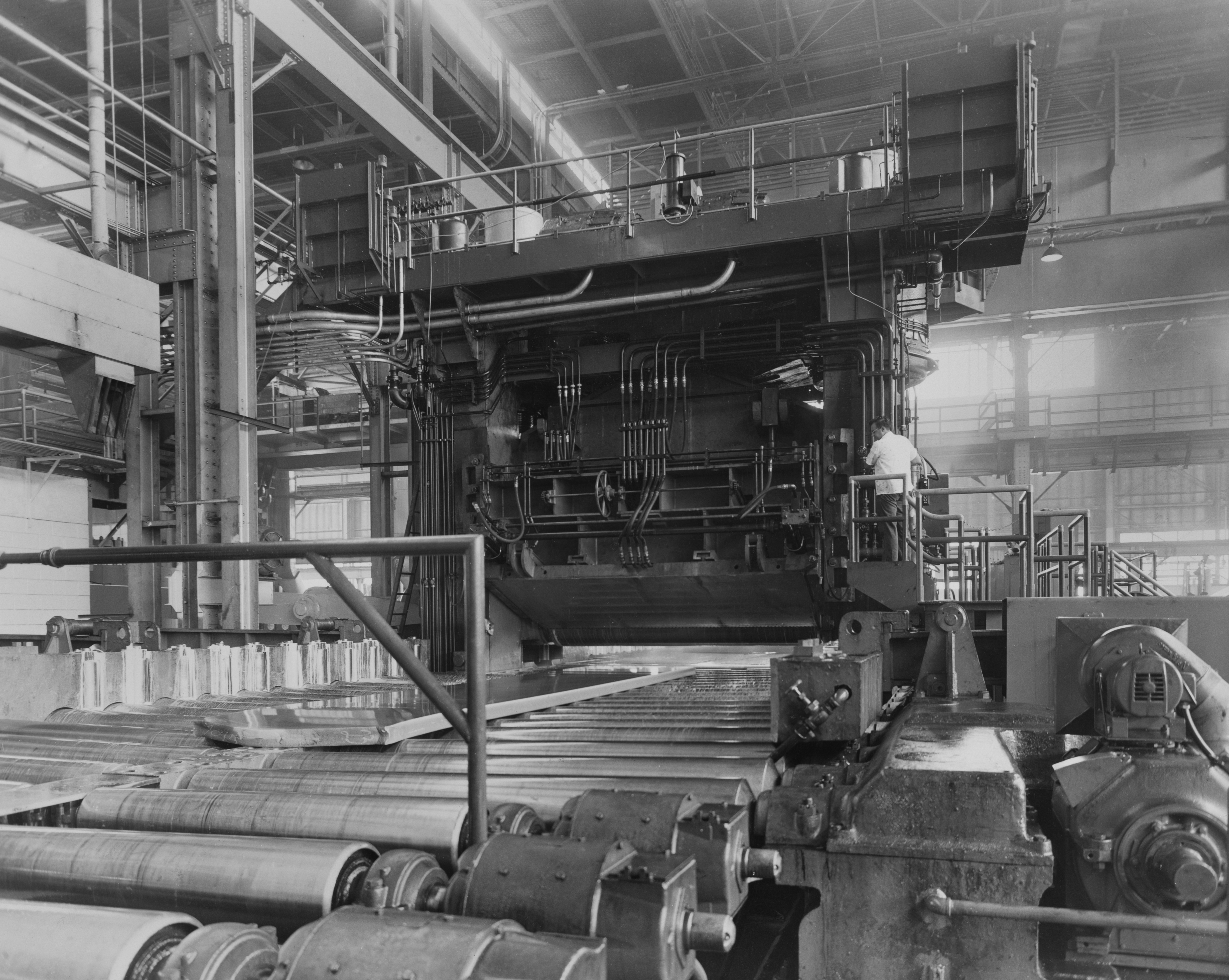 A man operating an aluminum rolling mill at the Davenport Works (DPW) of the Aluminum Company of America (later known as the Alcoa Corporation) in Davenport, Iowa, circa 1965. (Aluminum Company of America/FPG/Archive Photos/Getty Images)
The Monday proclamation advances that approach by connecting temporary tariff relief directly to concrete commitments to expand U.S. primary aluminum production.
 Friends Read Free
Copy
Facebook
Tweet
Friends Read Free
Copy
Facebook
Tweet