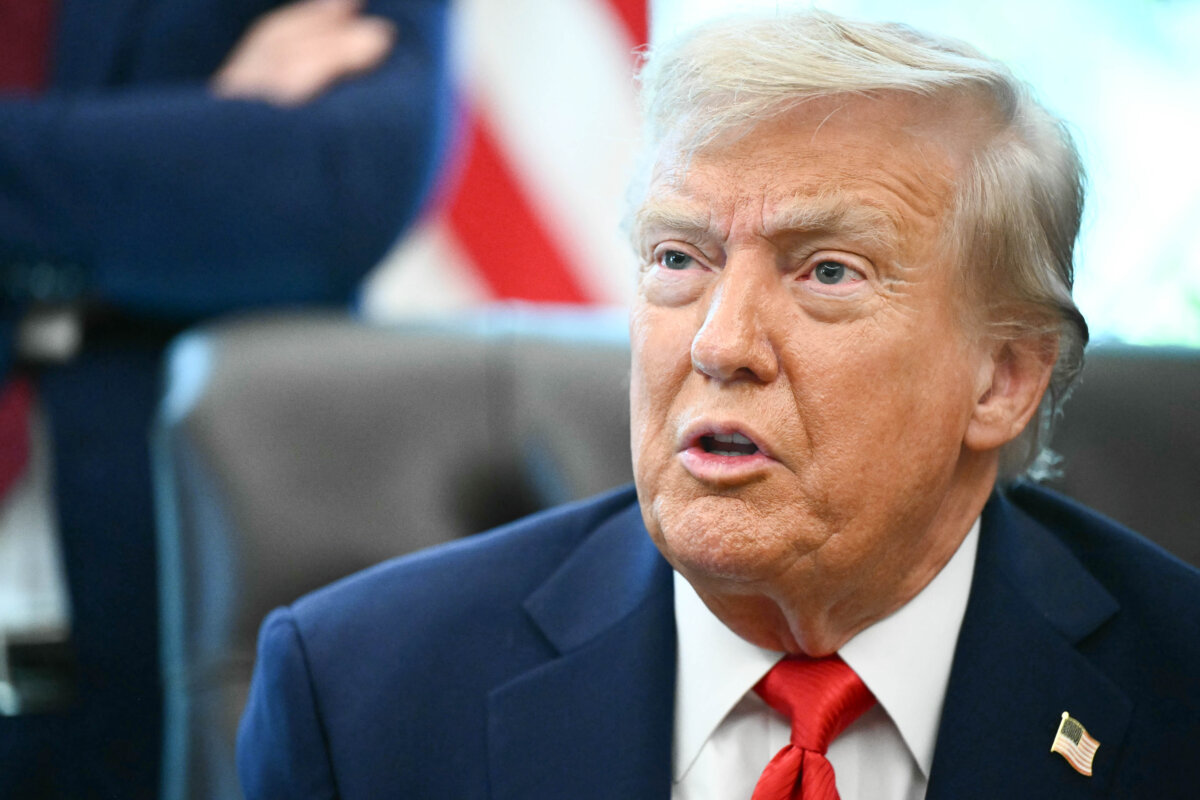

President Donald Trump signed an executive order on Aug. 28 aimed at ending collective bargaining with federal unions in some departments.
The order applies to unions in certain federal agencies, including NASA, the Patent and Trademark Office, and the National Weather Service, the White House said in a statement, adding that it would affect departments with “national security missions.”
Collective bargaining is the process by which labor unions negotiate with an employer on behalf of a group of employees, usually to broker the terms and conditions of employment, including pay and benefits.
The order, “Further Exclusions from the Federal Labor-Management Relations Program,” states that agencies and agency subdivisions whose primary function is “intelligence, counterintelligence, investigative, or national security work” should be exempt from the Federal Service Labor-Management Relations Statute.
That law established the rights and obligations for labor organizations and employees in the federal government, including employees’ rights to organize, and the duty to bargain in good faith.
In a fact sheet for the order, it lists several affected agencies or agency subdivisions, including NASA, Hydropower Facilities in the Bureau of Reclamation, the National Environmental Satellite, Data, and Information Service (NESDIS), the National Weather Service (NWS), the National Oceanic and Atmospheric Administration (NOAA), the U.S. Agency for Global Media (USAGM), and the Office of the Commissioner of Patents, Patent and Trademark Office (PTO).
“NASA develops and operates advanced air and space technologies, like satellite, communications, and propulsion systems, that are critical for U.S. national security,” the fact sheet states, explaining why the agency was included.
For the National Weather Service, it states the agency “was first established as a subdivision of the U.S. Army Signal Service Corps.”
“Today NWS and NESDIS provide weather and climate data that inform the weather forecasting used to plan U.S. military deployments. Weather forecasts have long been [a] critical factor in the success or failure of military operations,” the fact-sheet continues.
Further, the fact sheet suggests that “certain procedural requirements in Federal labor-management relations can create delays in agency operations.”
“These delays can impact the ability of agencies with national security responsibilities to implement policies swiftly and fulfill their critical missions.”
Reuters contributed to this report.
 Friends Read Free
Copy
Facebook
Tweet
Friends Read Free
Copy
Facebook
Tweet